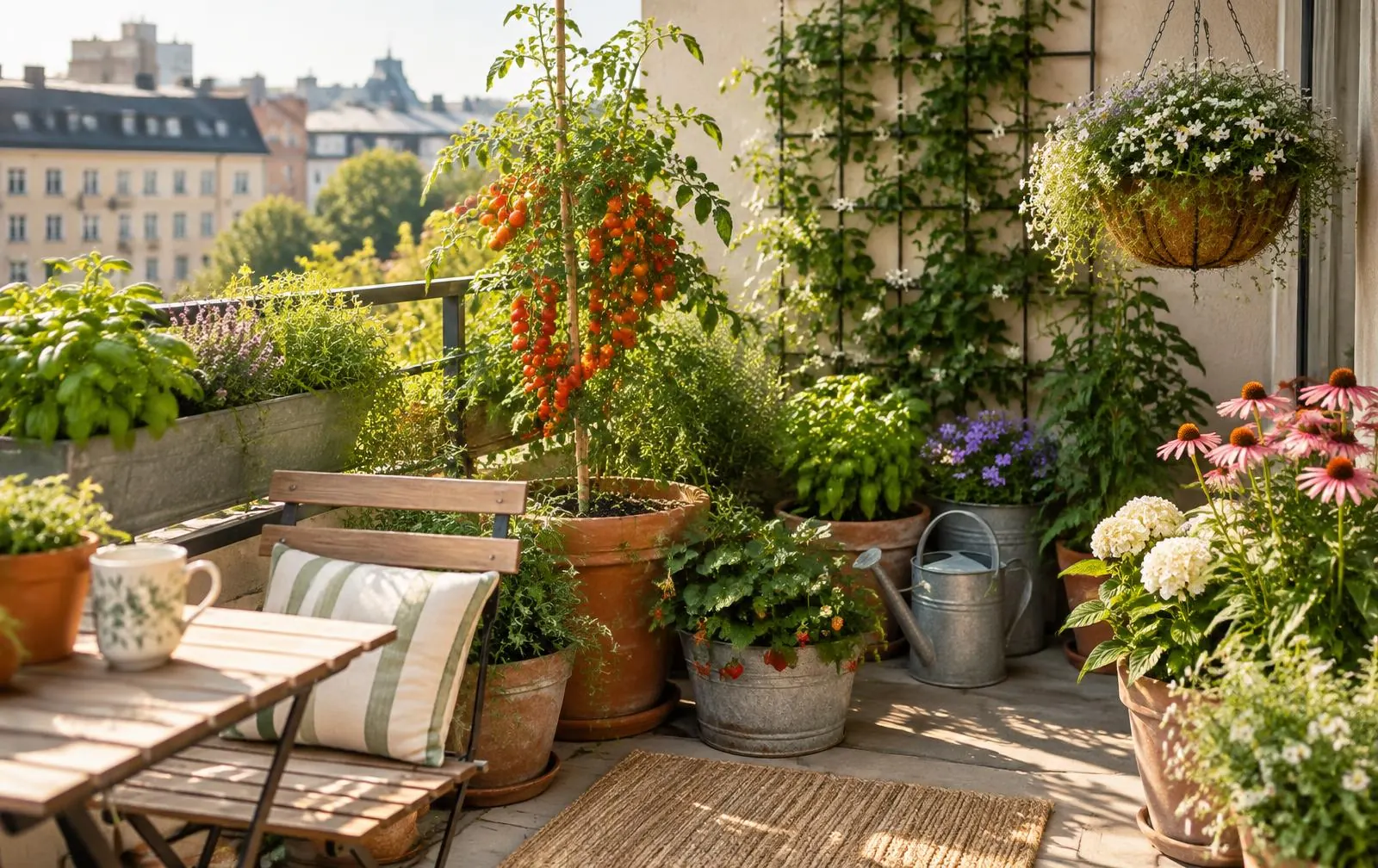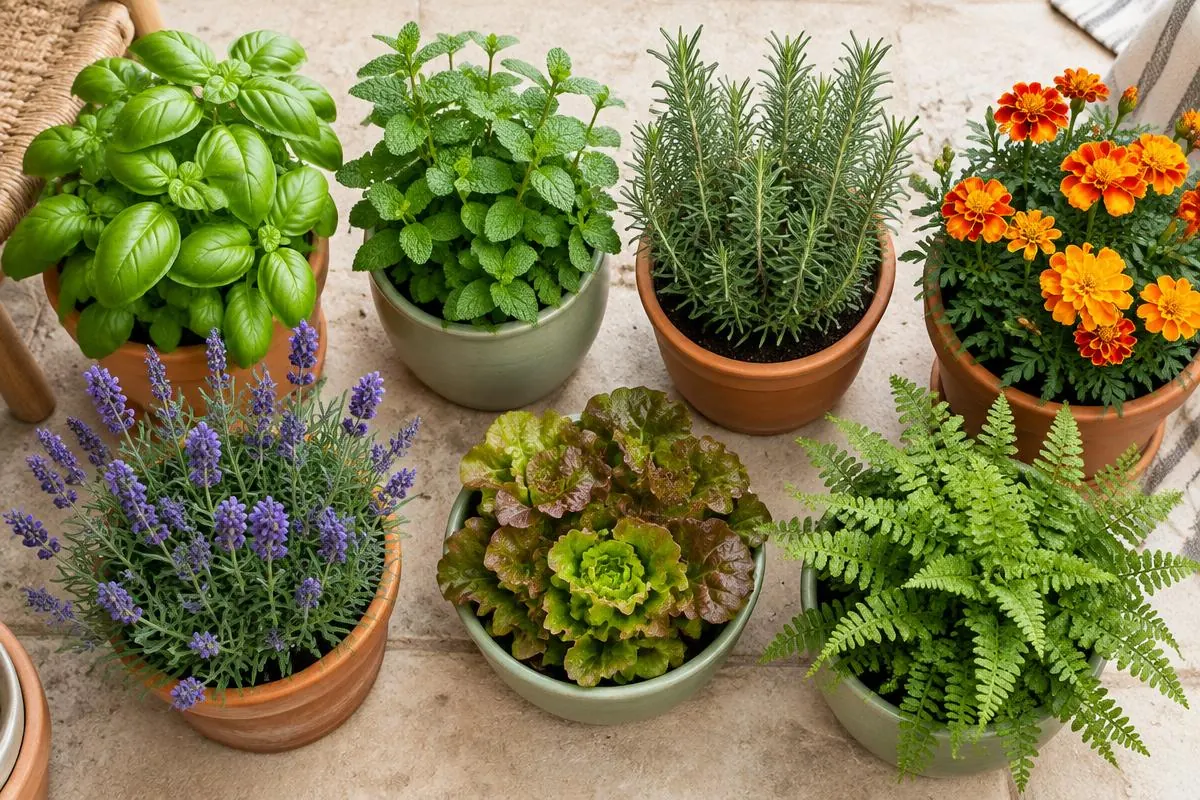
Compare practical pot materials, drainage, sizes, and weights for a safer balcony garden.
Affiliate disclosure: This guide may eventually include clearly labeled affiliate links. BalconyBloom would earn a commission at no added cost to you. No retailer links are active today.
Start smaller than you think. A few well-matched plants teach you more than a crowded balcony that is difficult to water and inspect.
Before you begin
A successful container setup starts with observation, not shopping. Note the hours of direct sun, the strongest wind direction, access to water, and how much weight and floor space you can safely use. Check building rules before attaching anything to a railing.
- Watch the light at 9am, noon, and 3pm
- Measure usable floor and railing space
- Plan a clear walking and drainage path
Compare pot materials and sizes
Choose fewer plants and give each one enough root room. Compact varieties are easier to support, water, and inspect. A container with a drainage hole is more important than a decorative finish.
- Match the plant to the light you actually have
- Use fresh container potting mix, not garden soil
- Group plants with similar watering needs
| Plant type | Suggested depth | Best for |
|---|---|---|
| Leafy herbs & greens | 15–20 cm | Broad window boxes |
| Compact flowering plants | 20–25 cm | Railing and floor pots |
| Fruiting crops | 30 cm+ | Large stable containers |
Set up for healthy roots
Fill clean pots with a quality potting mix and leave a small watering lip at the top. Raise drainage holes slightly so excess water can escape. Add supports at planting time to avoid disturbing roots later.
Useful setup essentials
Look for a container with an open drainage hole, fresh peat-free or locally appropriate potting mix, a small watering can, and supports sized to the mature plant.
No paid product links
Prevent waterlogged roots
Check the potting mix with a finger before watering. Water slowly until a little drains from the base, then empty saucers where needed. Inspect leaf undersides weekly so pests and stress are caught early.
- Water the soil rather than the leaves
- Feed lightly according to the product label
- Remove damaged foliage with clean snips
Common questions
Are terracotta pots good for balconies?
They are breathable and attractive but dry quickly and can be heavy. They suit drought-tolerant plants and attentive watering.
Can I use a pot without drainage?
Use it as an outer cachepot with a draining nursery pot inside, and empty any collected water after watering.