How often to water balcony plants: check soil with your finger and pot weight, adjust for sun, wind and pot size, spot over- and underwatering, and plan for heat.
Start smaller than you think. A few well-matched plants teach you more than a crowded balcony that is difficult to water and inspect.
Why there's no universal watering schedule
How fast a pot dries depends on many things at once: its size and material, the plant, the weather and where it sits on your balcony. A rule like 'water every two days' will overwater some plants and underwater others. As a rough example, in midsummer a small pot of basil in full sun may need water daily, while a large, shaded pot of heuchera may only need it once or twice a week.
How to check if a plant needs water
Two quick checks cover almost every container.
The finger test
Push a finger about 1 in (2–3 cm) into the mix. If it feels dry at that depth, most plants need water. If it's still damp, wait and check again later. For drought-tolerant herbs, check a little deeper, about 2 in (5 cm).
The pot-weight test
Lift or tilt the pot just after watering to learn how heavy it feels when wet. A pot that feels noticeably lighter needs water. This is especially useful for hanging baskets and small pots.
Other clues
Mix pulling away from the edge of the pot, or a lighter color on the surface, both suggest it's drying out. A simple moisture meter can help, but the finger test is free and reliable.
What changes how often you need to water
Use these factors to predict which pots to check first.
Pot size
Small pots hold less water and dry out much faster than large ones. Grouping several small plants in one larger container usually means less frequent watering.
Pot material
Unglazed terracotta loses moisture through its sides, so it dries faster. Plastic, glazed ceramic and metal hold moisture longer, but dark metal and plastic can heat up in sun.
Sunlight and wind
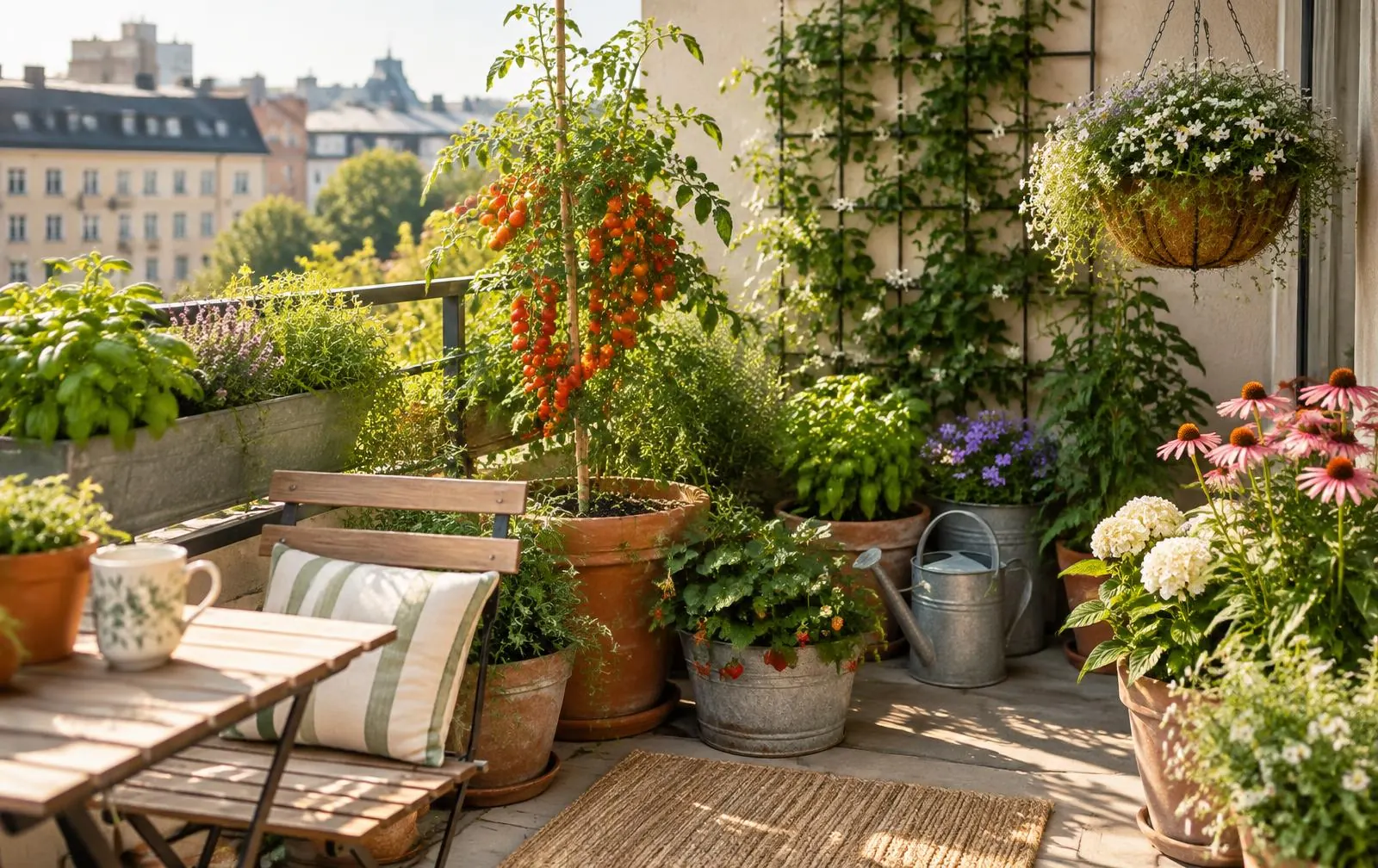
Full sun and wind both speed up drying. High, exposed balconies can dry pots much faster than sheltered ground-level ones.
Temperature and season
Plants use more water in hot weather and while actively growing. In cool spring and fall weather, and in winter, they need far less.
Plant type and size
Large, leafy and fruiting plants such as tomatoes use a lot of water. Succulents and Mediterranean herbs use much less. A plant that has filled its pot with roots will dry out faster.
Related guide: Best Pots and Containers for Balcony Gardening
How to water: timing and drainage
Good technique matters as much as frequency.
- Water in the morning when possible, so plants have moisture for the hottest part of the day and leaves dry quickly
- Water slowly at the base until a little drains from the bottom; this wets the whole root ball
- If water runs straight through a very dry pot, water again a few minutes later, or stand small pots in a tray of water for 10–15 minutes
- Empty saucers after watering so roots don't sit in water
- Make sure drainage water won't drip onto balconies or people below
- Every container needs drainage holes; gravel at the bottom doesn't replace them
Signs of underwatering and overwatering
Both problems can cause wilting, so check the soil before you water.
Signs of underwatering
- Leaves: Wilting or drooping, then crisp, brown edges
- Soil: Dry, light, and pulling away from the pot
- Recovery: Plants usually perk up within a few hours of a thorough watering
Signs of overwatering
- Leaves: Yellowing, especially lower leaves, or wilting even though the soil is wet
- Soil: Constantly damp, heavy, sometimes smelly or with fungus gnats
- Fix: Let the mix dry out, check drainage holes aren't blocked and empty saucers. Root rot can be hard to reverse, so prevention matters
Watering vegetables vs Mediterranean herbs
These two groups need opposite approaches.
Vegetables and leafy herbs
Tomatoes, peppers, lettuce, basil and parsley prefer consistently moist (not soggy) soil. Letting them dry out completely can cause bitterness, bolting, cracked fruit or blossom-end rot.
- Check: Daily in warm weather
Mediterranean herbs
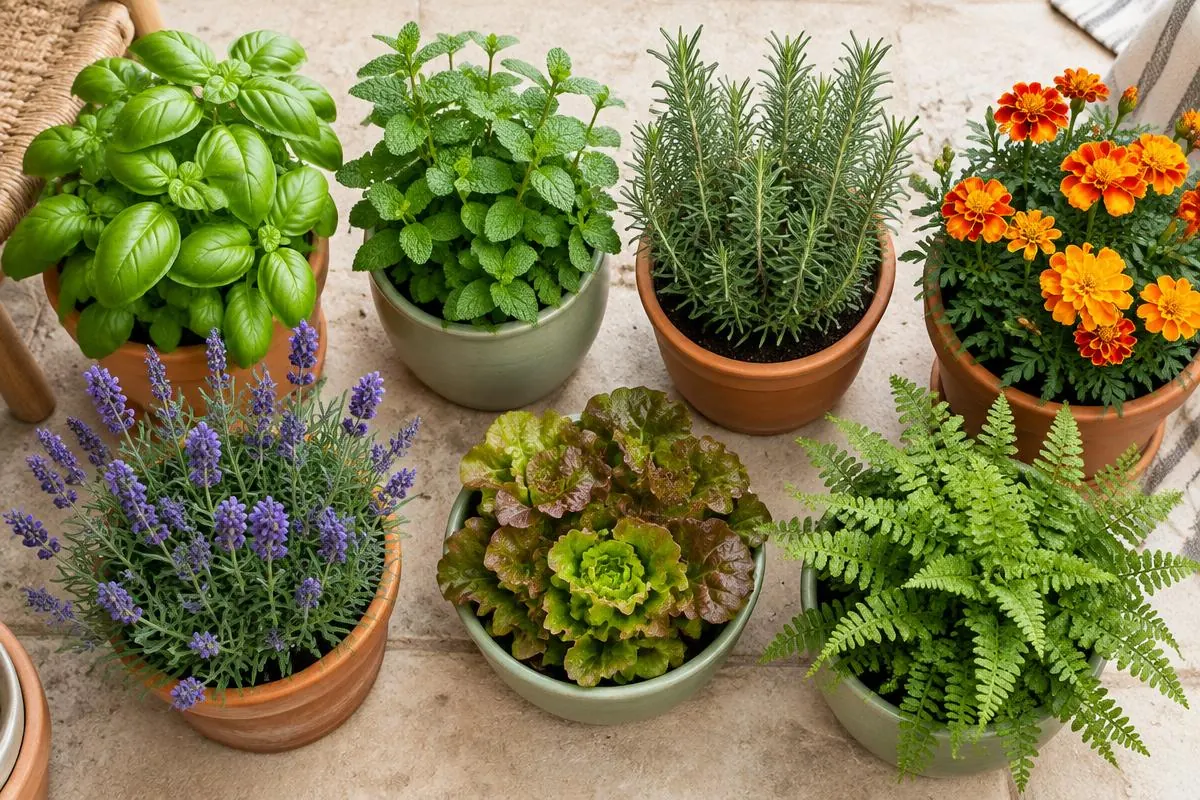
Rosemary, thyme, lavender, oregano and sage come from dry climates. They prefer to dry out somewhat between waterings and are more likely to suffer from too much water than too little.
- Check: Every few days; water when the mix is dry about 2 in down
Related guides: 10 Easy Vegetables to Grow in Containers · 12 Herbs That Grow Well on Balconies
Hot weather, rain and vacations
Weather changes on a balcony can be more extreme than in the ground.
During hot weather
Check pots morning and evening. Move small pots out of afternoon sun, group pots together so they shade each other, and mulch the surface. Plants may wilt briefly in afternoon heat even when moist; if they recover by evening, they don't need extra water.
After rain
Rain often doesn't reach pots under an overhang or a balcony above. Check the soil rather than assuming plants are watered. After heavy rain, empty saucers and make sure pots drain.
When you're away
For a few days, water thoroughly, group pots in shade and use saucers temporarily. For longer trips, self-watering pots, drip spikes or a neighbor's help work better. Test any system for a few days before you leave.
Watering decision checklist
Run through these questions before watering each pot:
- Is the mix dry about 1 in down (or about 2 in for Mediterranean herbs)?
- Does the pot feel lighter than after watering?
- Has it been hot, sunny or windy since you last watered?
- Did rain actually reach this pot?
- Is this a thirsty plant (tomato, basil, lettuce) or a drought-tolerant one (rosemary, thyme, succulent)?
- If yes to dry: water slowly until it drains, then empty the saucer. If still damp: wait and check again later
Common questions
How often should I water balcony plants in summer?
Often daily for small pots and thirsty plants in full sun, and every few days for larger pots or drought-tolerant plants. Check the soil rather than following a fixed schedule.
Is it better to water plants in the morning or evening?
Morning is usually best, because plants get water before the heat of the day and leaves dry quickly. Evening watering is fine in hot weather if you water the soil rather than the leaves.
How do I know if I'm overwatering?
Soil that stays wet, yellowing lower leaves, and wilting even when the soil is moist are common signs. Let the mix dry out more between waterings and check that drainage holes are clear.
How can I water balcony plants while on vacation?
For a few days, water deeply and move pots into shade. For longer trips, use self-watering pots, drip spikes or ask a neighbor, and test your setup before leaving.