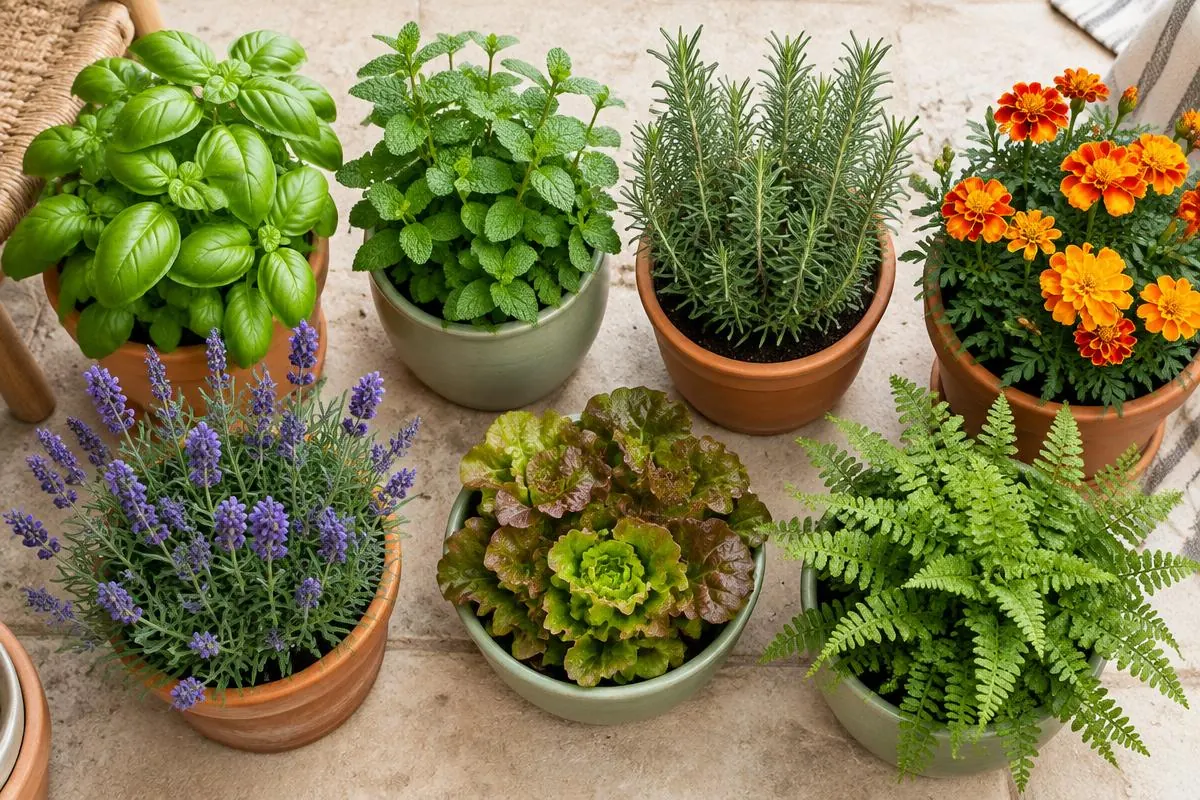
Twelve herbs that grow well in balcony pots, with the light, container size, watering, harvesting, common problems and indoor options for each.
Start smaller than you think. A few well-matched plants teach you more than a crowded balcony that is difficult to water and inspect.
Group herbs by how much water they like
The most common herb mistake is watering everything the same way. Herbs that share a pot or a tray should share watering needs.
- Moisture-loving: basil, parsley, cilantro, dill, mint, chives, lemon balm
- Dry-tolerant (Mediterranean): rosemary, thyme, oregano, sage, bay
- Give mint its own pot, whatever else you grow
Leafy herbs that like steady moisture
These soft-leaved herbs grow fast and wilt quickly if their pots dry out.
1. Basil
A fast, fragrant summer herb that rewards warm, bright balconies and regular picking.
- Light: 5–6+ hours of direct sun
- Container: 6–8 in (15–20 cm) pot per plant
- Watering: Keep evenly moist; check daily in hot weather
- Harvesting: Pinch the top pair of leaves above a leaf joint to keep plants bushy
- Indoors or outdoors: Best outdoors in summer; indoors it needs a very sunny window or a grow light
Common problems: Black leaf patches after cold nights, and early flowering that slows new leaves.
2. Parsley
Steady and leafy, parsley handles cooler weather and part shade better than basil.
- Light: 3–6 hours of sun
- Container: 8 in (20 cm) deep pot for its long taproot
- Watering: Keep moderately moist
- Harvesting: Cut outer stems at the base and leave the center growing
- Indoors or outdoors: Outdoors from spring to fall; grows indoors on a bright windowsill
Common problems: Flowering in its second year or in heat, and caterpillars on the leaves.
3. Cilantro (coriander)
A quick, cool-season herb that's best sown little and often, since each sowing lasts only a few weeks.
- Light: 4–6 hours of sun; afternoon shade in warm weather
- Container: At least 8 in (20 cm) deep; it dislikes being moved
- Watering: Keep evenly moist
- Harvesting: Cut outer leaves when plants are a few inches tall
- Indoors or outdoors: Best outdoors in spring and fall; indoor plants tend to be weak
Common problems: Bolting (running to seed) in heat or when dry. Slow-bolt varieties help.
4. Dill
Feathery and aromatic, dill attracts beneficial insects when it flowers. Compact types suit containers best.
- Light: 6+ hours of sun
- Container: At least 10–12 in (25–30 cm) deep for the taproot
- Watering: Keep moderately moist
- Harvesting: Snip leaves as needed; harvest seed heads once they turn brown
- Indoors or outdoors: Outdoors; it grows too tall and leggy indoors
Common problems: Tall plants blowing over. Choose dwarf varieties such as 'Fernleaf' for windy balconies.
Easy perennials and spreaders
These herbs come back year after year in many climates and are hard to fail with.
5. Chives
Tough, tidy and perennial, chives also give purple flowers that bees visit.
- Light: 4–6 hours of sun; tolerates some shade
- Container: 6 in (15 cm) pot or a section of a railing trough
- Watering: Water when the top inch is dry
- Harvesting: Cut leaves about 2 in above the soil; they regrow quickly
- Indoors or outdoors: Outdoors is best; a pot can grow on a bright windowsill
Common problems: Thin growth in deep shade, and tired clumps after a few years. Divide them in spring.
6. Mint
Vigorous and forgiving, mint copes with part shade, but its roots will take over any shared container.
- Light: 3–6 hours of sun
- Container: Its own 8 in (20 cm) pot
- Watering: Likes consistent moisture
- Harvesting: Cut stems often; cut back by a third when it gets leggy
- Indoors or outdoors: Outdoors; it grows indoors in bright light but becomes spindly
Common problems: Rust-colored leaf spots in crowded, damp pots.
7. Lemon balm
A mint relative with lemon-scented leaves for teas, and similar tolerance of part shade.
- Light: 4–6 hours of sun; afternoon shade is fine
- Container: 8–10 in (20–25 cm) pot
- Watering: Keep moderately moist
- Harvesting: Pick leaves regularly and trim before it flowers for the best flavor
- Indoors or outdoors: Outdoors
Common problems: Self-seeding if allowed to flower. Trim flower stems to keep it contained.
Mediterranean herbs for sunny, dry spots
These herbs come from hot, dry hillsides. They want full sun, gritty free-draining mix, and less water than you might expect. Terracotta pots help excess moisture escape.
8. Rosemary
A woody, evergreen herb for hot, bright and breezy balconies.
- Light: 6+ hours of direct sun
- Container: 10–12 in (25–30 cm) pot with excellent drainage
- Watering: Let the top of the mix dry between waterings
- Harvesting: Snip sprig tips; avoid cutting into old bare wood
- Indoors or outdoors: Outdoors; in freezing climates it can winter indoors by a bright, cool window
Common problems: Root rot from overwatering, and powdery mildew in still, humid air.
9. Thyme
Low, tough and fragrant, thyme suits shallow pots and the edges of railing boxes.
- Light: 6+ hours of sun
- Container: Shallow 6 in (15 cm) pot or railing box
- Watering: Water sparingly once established
- Harvesting: Snip soft stem tips regularly so plants don't go woody in the center
- Indoors or outdoors: Best outdoors; a very sunny window can work
Common problems: Rotting in soggy pots, and woody stems over time.
10. Oregano
A spreading perennial that's easy in sun and develops the strongest flavor in lean, well-drained mix.
- Light: 6+ hours of sun
- Container: 8 in (20 cm) wide pot
- Watering: Let the mix dry slightly between waterings
- Harvesting: Cut stems just before flowering for the best flavor
- Indoors or outdoors: Outdoors; a sunny window indoors
Common problems: Weak flavor and floppy growth from rich soil or too much fertilizer.
11. Sage
Soft gray leaves and good drought tolerance make sage a handsome, practical pot plant.
- Light: 6+ hours of sun
- Container: 10 in (25 cm) pot
- Watering: Water when the top couple of inches are dry
- Harvesting: Pick individual leaves; trim lightly after flowering
- Indoors or outdoors: Outdoors
Common problems: Mildew in damp, crowded conditions, and legginess after a few years.
12. Bay laurel
A slow-growing evergreen shrub that can live for years in a large pot and supplies leaves for cooking.
- Light: Full sun to part shade
- Container: Start with 10–12 in (25–30 cm) and move to a larger pot as it grows
- Watering: Water when the top of the mix dries; never leave it waterlogged
- Harvesting: Pick mature leaves as needed
- Indoors or outdoors: Outdoors in mild climates; bring it indoors to a bright, cool spot where winters freeze
Common problems: Frost damage in cold winters, and scale insects on stems and the backs of leaves.
Related guide: Best Plants for Sunny Balconies
Growing herbs indoors vs outdoors
Most herbs grow best outdoors on a balcony in the warmer months. Indoors, the main limit is light: even a bright window gives far less than outdoor sun.
- Easiest indoors: parsley, chives and mint on a bright windowsill
- Possible indoors with a very sunny window or grow light: basil, thyme, oregano
- Winter-indoors candidates in cold climates: rosemary and bay, kept bright and cool
- Short-lived and better outdoors: cilantro and dill
Harvesting for bushier herbs
Regular harvesting is part of the care routine. Cutting just above a pair of leaves makes most herbs branch and grow fuller.
- Never remove more than about a third of a plant at once
- Harvest in the morning when leaves are full of moisture
- Pinch off flower buds on basil, cilantro and mint to prolong leaf production
Balcony safety for herb pots
Herb pots are small, but a few precautions still matter on a balcony.
- Fix railing boxes with brackets made for your railing type, and keep pots on the inside of the rail
- Use saucers or trays so drainage water doesn't drip onto balconies below
- Some herbs, including mint, oregano and bay, appear on the ASPCA toxic plant list for cats and dogs. If you have pets, check each herb before buying
Common questions
Can different herbs share one pot?
Yes, if their sun and water needs match. Rosemary, thyme and oregano pair well; basil and parsley prefer more consistent moisture. Keep mint in its own pot.
Which herbs grow in shade on a balcony?
Mint, parsley, chives and lemon balm cope with three to four hours of sun. Mediterranean herbs such as rosemary and thyme need full sun.
Why does my cilantro keep bolting?
Heat, long days and dry soil all push cilantro to flower. Sow in spring or fall, keep it moist, give it afternoon shade and sow a new batch every few weeks.
Can I keep balcony herbs over winter?
Chives, mint, thyme, oregano and sage are perennials that often survive outdoors in many climates. Rosemary and bay are less cold-tolerant and may need to come indoors where winters freeze. Basil won't survive cold.