Sun-loving flowers, herbs and edibles for bright balconies, with light needs, pot sizes, watering and difficulty, plus ways to handle heat, drying soil and wind.
Start smaller than you think. A few well-matched plants teach you more than a crowded balcony that is difficult to water and inspect.
Morning sun vs intense afternoon sun
Six hours of morning sun and six hours of afternoon sun are not the same. Morning sun (typical of east-facing balconies) is cooler and gentler. Afternoon sun (west- and south-facing) arrives when air and surfaces are already hot, so pots dry faster and leaves can scorch. Track your balcony's light first so you know which you have.
Related guide: How to Determine How Much Sun Your Balcony Gets
Edible plants for sunny balconies
Pot sizes are practical minimums for one plant; bigger pots dry more slowly.
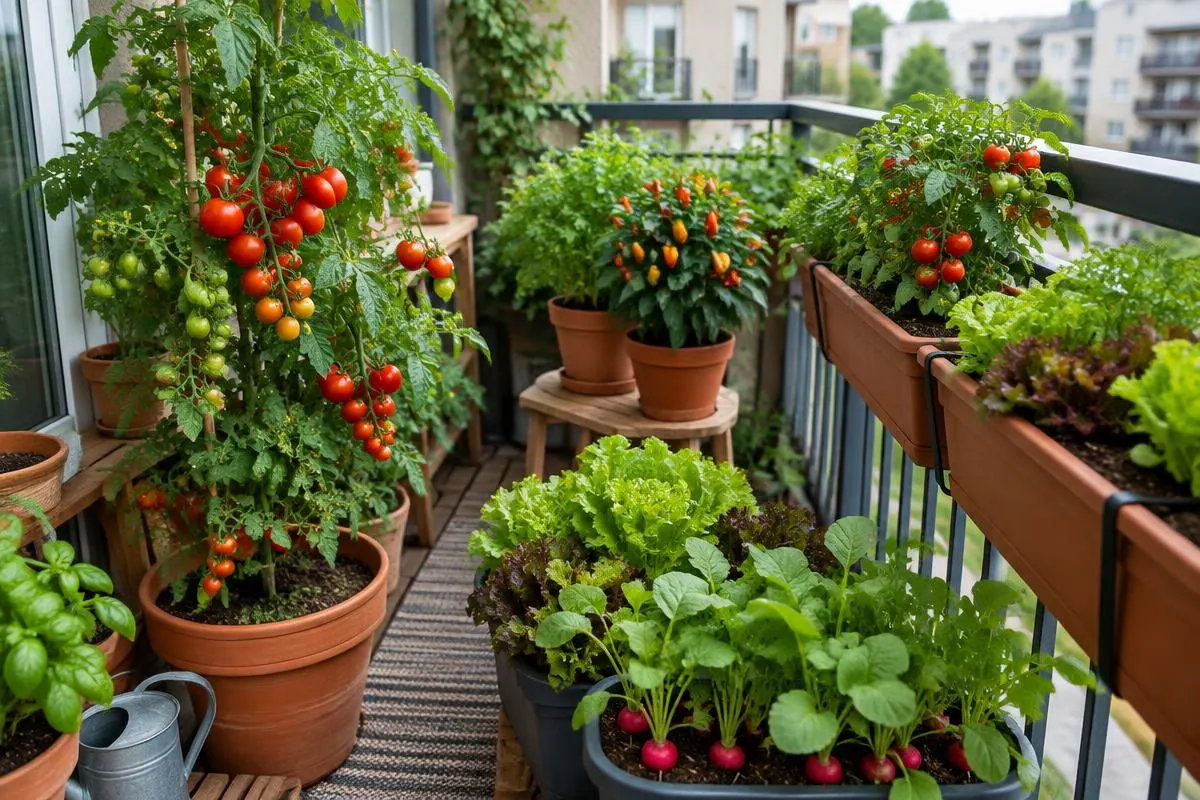
Cherry tomatoes
The classic sunny-balcony crop. Fruit set may slow in prolonged hot spells.
- Light: 6–8+ hours
- Pot: 5 gal (20 L)+
- Water: High; often daily in summer
- Difficulty: Moderate
Pets: ASPCA lists the green leaves and stems as toxic to cats and dogs; ripe fruit is considered non-toxic.
Chili peppers
Love heat and handle hot sun well once established.
- Light: 6–8+ hours
- Pot: 3–5 gal (12–20 L)
- Water: Moderate; even moisture
- Difficulty: Moderate
Basil
Thrives in warmth and sun; may need afternoon shade in very hot climates to stay tender.
- Light: 6+ hours
- Pot: 8 in (20 cm)
- Water: Keep evenly moist
- Difficulty: Easy
Strawberries
Fruit best with plenty of sun but appreciate relief in extreme heat.
- Light: 6+ hours
- Pot: 6–8 in (15–20 cm) per plant
- Water: Evenly moist
- Difficulty: Moderate
Rosemary
Mediterranean, heat- and drought-tolerant once established.
- Light: 6–8+ hours
- Pot: 10–12 in (25–30 cm)
- Water: Low; let mix dry between
- Difficulty: Easy
Thyme
Compact and tough in hot, dry sun; hates soggy soil.
- Light: 6+ hours
- Pot: 6–8 in (15–20 cm)
- Water: Low
- Difficulty: Easy
Related guides: How to Grow Tomatoes on a Balcony · How to Grow Strawberries in Containers · 12 Herbs That Grow Well on Balconies
Flowers and ornamentals for full sun
These add color and many attract pollinators.
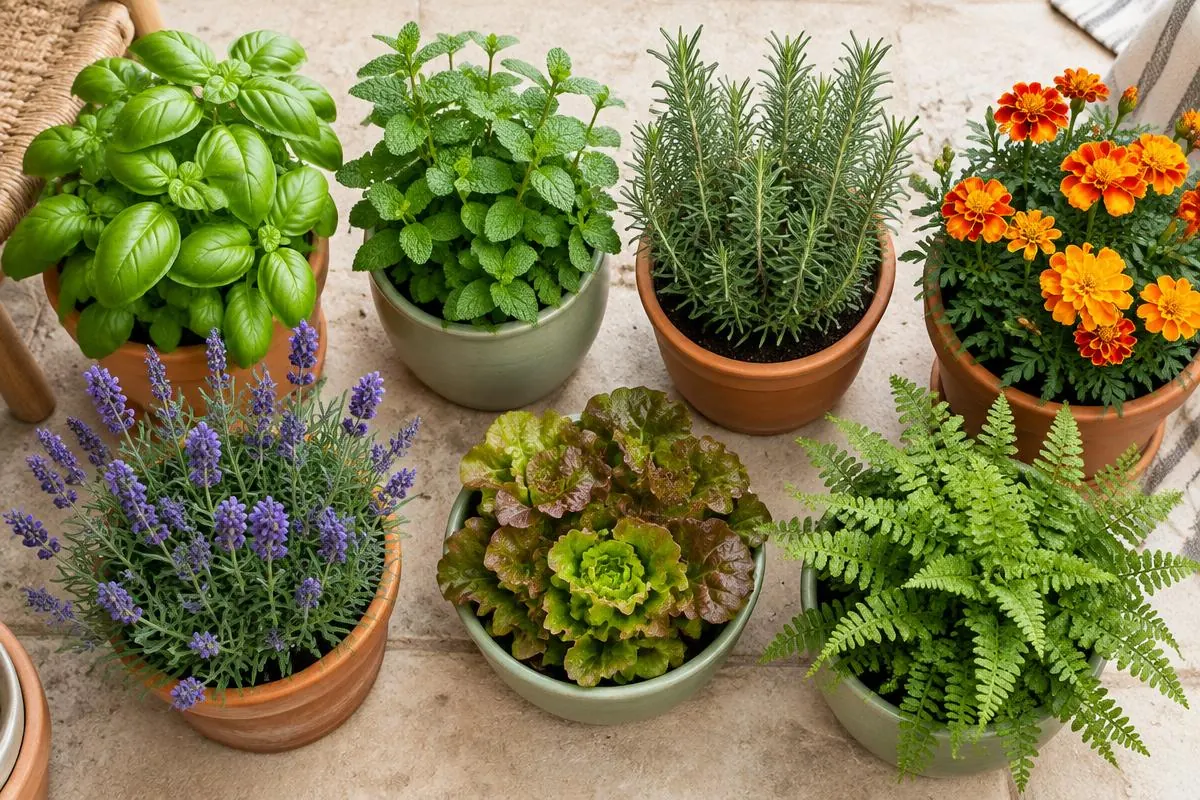
Lavender
Drought-tolerant and fragrant; needs sharp drainage.
- Light: 6–8+ hours
- Pot: 10–12 in (25–30 cm)
- Water: Low
- Difficulty: Moderate
Pets: ASPCA lists lavender as toxic to cats and dogs; signs include nausea and vomiting.
Marigolds
Cheerful, compact and long-blooming in sun.
- Light: 6+ hours
- Pot: 6–8 in (15–20 cm)
- Water: Moderate
- Difficulty: Easy
Nasturtiums
Edible flowers and leaves; trailing types suit railings. Flower best in poorer soil.
- Light: 6+ hours (tolerate some shade)
- Pot: 8 in (20 cm)
- Water: Moderate
- Difficulty: Easy
Geraniums (zonal pelargoniums)
Classic balcony flowers that tolerate heat and some dryness.
- Light: 6+ hours
- Pot: 8–10 in (20–25 cm)
- Water: Moderate; let surface dry
- Difficulty: Easy
Pets: ASPCA lists Pelargonium (common zonal and florist geraniums) as toxic to cats and dogs. Other plants called 'geranium' may differ — check the specific plant.
Heat-tolerant choices for hot afternoon sun
On west- and south-facing balconies with reflected heat, the toughest choices are Mediterranean herbs (rosemary, thyme, lavender), succulents such as sedum, geraniums and chili peppers. No container plant is immune to extreme heat: in heat waves even these may need extra water and temporary shade.
- Shade cloth or a movable screen during the hottest hours can protect plants
- Pale-colored pots stay cooler than dark ones
- Group pots so they shade each other's sides
Managing drying soil, hot containers and wind
Most failures on sunny balconies come from roots overheating or drying out.
Use bigger pots
Larger volumes of mix hold more water and stay cooler. Small pots can dry out within hours in summer.
Water deeply, early
Water in the morning until it drains from the base. In hot weather check pots daily, sometimes twice. Self-watering pots help.
Mulch the surface
A layer of bark, straw or gravel (for Mediterranean herbs) slows evaporation.
Shelter from wind
Wind multiplies drying. Use heavy, wide-based pots, keep tall plants low and sheltered, and secure railing planters to the inside of the railing.
Related guides: How Often Should You Water Balcony Plants? · Best Pots and Containers for Balcony Gardening
Climate and pet-safety notes
In hot, dry climates, morning sun with afternoon shade may produce better results than all-day sun for basil, lettuce and strawberries. In cool or cloudy climates, full sun is an advantage for heat lovers. Several sun plants — including tomato leaves and stems, lavender and zonal geraniums (Pelargonium) — are listed as toxic to cats and dogs by the ASPCA, so check before placing them within reach of pets. Have a shadier spot? See our guide to shade plants.
Related guide: Best Plants for Shady Balconies
Plant profiles
Common questions
What counts as full sun?
For most garden plants, full sun means about six or more hours of direct sunlight a day, though definitions vary slightly.
Can pots get too hot?
Yes. Small, dark containers in afternoon sun can overheat roots. Larger, light-colored pots, grouping and temporary shade help.
How often should I water on a sunny balcony?
Check daily in summer. Many pots need water every day in hot weather, sometimes twice, but always check the mix first rather than following a fixed schedule.
What are the easiest edibles for a sunny balcony?
Basil, thyme, rosemary and cherry tomatoes are good starting points. Chili peppers and strawberries also do well with consistent watering.