Fifteen reliable balcony plants for sun, shade and wind, with light, pot size, watering and difficulty for each, plus climate and safety checks.
Start smaller than you think. A few well-matched plants teach you more than a crowded balcony that is difficult to water and inspect.
How to choose plants for your balcony
Before picking from the list, spend a day noting when direct sun reaches your plants. Most plant labels use simple bands: full sun means six or more hours of direct sun, part sun or part shade means roughly three to six hours, and shade means less than three. Wind, heat reflected from walls and how high up you live matter almost as much as light.
- Count hours of direct sun, not general brightness
- Expect pots to dry faster than garden soil, especially on high or windy balconies
- Check the weight limit and any building rules before adding large containers or railing boxes
Related guide: How to Determine How Much Sun Your Balcony Gets
Flowering plants for sunny balconies
These five flowers give long seasons of color in bright spots. Most are grown as annuals in cold climates, so treat them as one-season plants unless you can bring them indoors.
1. Geraniums (zonal pelargoniums)
A balcony classic because they flower for months, cope with a missed watering and come in compact sizes that suit railing boxes.
- Sunlight: 6+ hours of direct sun for the most flowers; tolerate some afternoon shade
- Container: 6–8 in (15–20 cm) pot per plant, or 10 in (25 cm) apart in a box
- Watering: Let the top inch of mix dry, then water thoroughly; they dislike soggy roots
- Difficulty: Easy
Climate note: Frost-tender. Bring them inside before the first frost or treat them as annuals.
2. Petunias and calibrachoa
Trailing types spill over railings and hanging baskets, softening hard edges with a lot of color from a small footprint.
- Sunlight: 6+ hours of direct sun
- Container: Hanging basket or 10–12 in (25–30 cm) pot for 2–3 plants
- Watering: Keep evenly moist; baskets may need water daily in summer heat
- Difficulty: Easy, but they need regular feeding to keep flowering
Climate note: Grown as annuals in most climates. Wind can tear petals, so a sheltered rail works best.
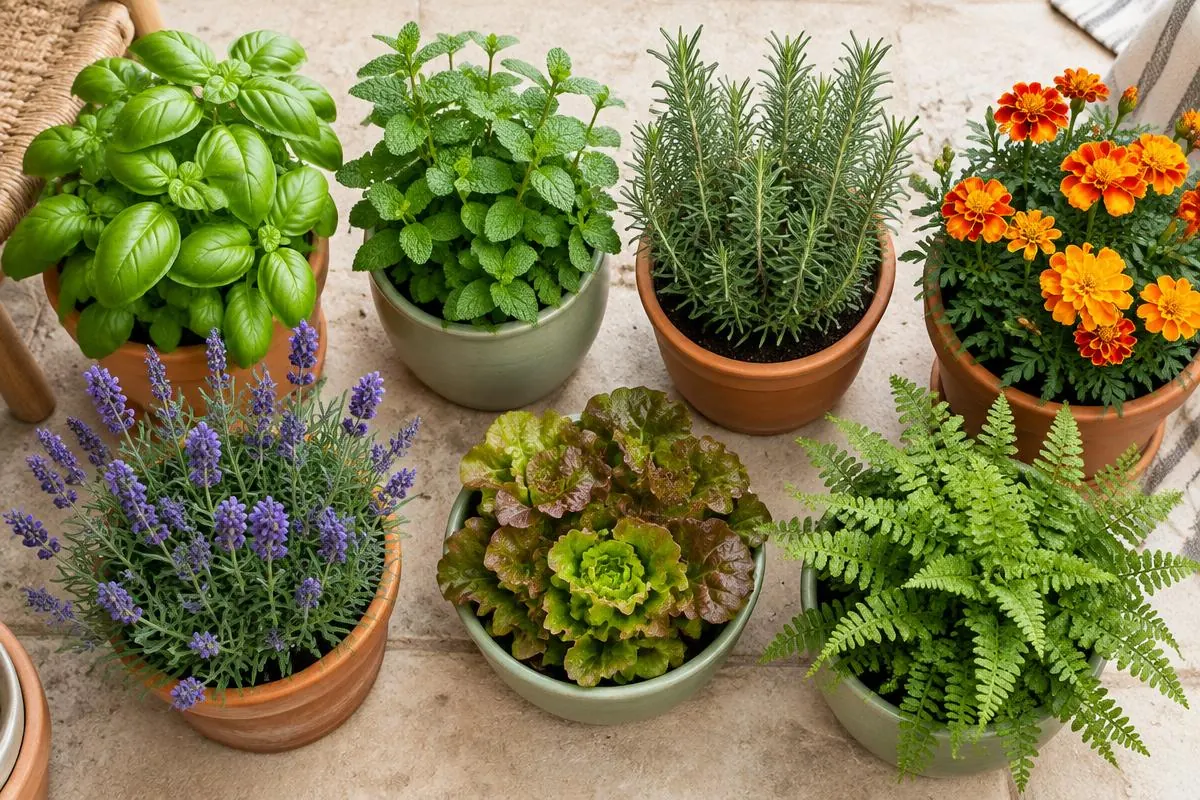
3. Marigolds
Fast, cheerful and cheap, compact French marigolds fill gaps and the edges of larger pots, and bloom until cool weather arrives.
- Sunlight: 5–6+ hours of sun
- Container: 6–8 in (15–20 cm) pot or the edge of a larger container
- Watering: Water at the base when the top inch is dry
- Difficulty: Easy
Watch for: Powdery mildew in crowded, still air. Space plants so air can move between them.
4. Nasturtiums
They grow quickly from large, easy seeds and trail or climb, which makes them useful for rails, baskets and small trellises.
- Sunlight: 4–6+ hours of sun
- Container: 8 in (20 cm) pot, basket or railing box
- Watering: Moderate; too much water or fertilizer gives leaves instead of flowers
- Difficulty: Easy
Watch for: Aphids on stem tips. Check new growth weekly and rinse them off early.
5. Lavender
Fragrant, drought-tolerant and loved by bees, lavender suits hot, bright and breezy balconies where softer plants struggle.
- Sunlight: 6+ hours of direct sun
- Container: 12 in (30 cm) pot with very good drainage
- Watering: Water when the mix is dry a few inches down; wet roots are its main risk
- Difficulty: Moderate
Climate note: Hardiness varies by type. In cold areas, check the plant label or shelter the pot against a wall in winter.
Related guide: Best Plants for Sunny Balconies
Tough plants for hot or windy balconies
High-rise and exposed balconies dry plants out fast. These choices hold up better to wind, heat and the occasional forgotten watering.
6. Sedum and other hardy succulents
Fleshy leaves store water, so low-growing sedums handle heat, wind and shallow pots better than most plants.
- Sunlight: 6+ hours of sun is best; some tolerate part sun
- Container: Shallow, wide pot about 4–6 in (10–15 cm) deep with drainage
- Watering: Water only when the mix is completely dry; use a gritty succulent or cactus mix
- Difficulty: Easy
Climate note: Many sedums are very cold-hardy, but tender succulents such as echeveria need frost protection. Check the label.
7. Compact ornamental grasses and sedges
Small grasses and sedges such as carex or blue fescue move in the wind instead of snapping, adding texture to exposed spots.
- Sunlight: Varies: blue fescue likes full sun; many carex handle part shade
- Container: 10–12 in (25–30 cm) pot per plant
- Watering: Moderate; let the surface dry between waterings once established
- Difficulty: Easy
Tip: Choose compact types labeled for containers. Tall grasses can catch wind and tip over light pots.
8. Rosemary
A woody herb that doubles as a small evergreen shrub, handling sun, wind and dry spells while giving you something to cook with.
- Sunlight: 6+ hours of direct sun
- Container: 10–12 in (25–30 cm) pot with excellent drainage
- Watering: Let the top of the mix dry between waterings
- Difficulty: Moderate
Climate note: Cold tolerance varies by variety. In freezing winters, move it to a sheltered spot or indoors by a bright window.
Related guide: Small Balcony Garden Ideas
Plants for shady balconies
North-facing balconies and spots under an overhang still have good options. These four plants prefer gentle light and can scorch in strong afternoon sun.
9. Begonias
Wax and tuberous begonias flower in shade where most bedding plants won't, and their leaves stay attractive between blooms.
- Sunlight: 2–4 hours of gentle or morning sun; bright shade
- Container: 8–10 in (20–25 cm) pot or a window box
- Watering: Keep lightly moist but never waterlogged; let the surface dry slightly
- Difficulty: Easy
Pet note: The ASPCA lists begonias as toxic to cats and dogs, with the roots and tubers most concentrated. Keep them out of reach of pets that chew plants. They are also frost-tender, so treat them as annuals or bring them indoors before frost.
10. Heuchera (coral bells)
Grown for colorful foliage in shades from lime to deep purple, heuchera brightens dim corners for most of the year.
- Sunlight: Under 2–4 hours of sun; protect from harsh afternoon sun
- Container: 10 in (25 cm) pot with drainage
- Watering: Keep lightly moist; don't let it sit in water
- Difficulty: Easy
Watch for: Crowns lifting out of the soil over time. Replant slightly deeper in spring.
11. Ferns
Outdoor ferns such as Boston ferns in summer, or hardy types like Japanese painted fern, add soft texture to balconies that see little direct sun.
- Sunlight: Shade or bright indirect light
- Container: 10–12 in (25–30 cm) pot or a hanging basket
- Watering: Keep consistently moist; ferns suffer quickly if they dry out
- Difficulty: Easy to moderate
Climate note: Boston ferns are frost-tender and need to come indoors in cold weather. Hardy ferns can stay out where the label says they are hardy.
12. Fuchsia
Trailing fuchsias drip with flowers from hanging baskets and suit sheltered, partly shaded balconies.
- Sunlight: Morning sun with afternoon shade
- Container: Hanging basket or 10 in (25 cm) pot
- Watering: Keep evenly moist; check baskets daily in warm weather
- Difficulty: Moderate
Climate note: Most basket fuchsias are frost-tender. Strong wind can damage stems, so pick a sheltered spot.
Related guide: Best Plants for Shady Balconies
Edible plants that look good too
If you want a harvest as well as greenery, these three are attractive enough to earn a place on a small balcony.
13. Mint
One of the few edibles that copes with part shade, and very forgiving for beginners as long as it has its own pot.
- Sunlight: 3–6 hours of sun; appreciates afternoon shade
- Container: Its own 8 in (20 cm) pot, because roots spread aggressively
- Watering: Likes consistent moisture
- Difficulty: Easy
Tip: Never plant mint in a mixed container. It will crowd out its neighbors.
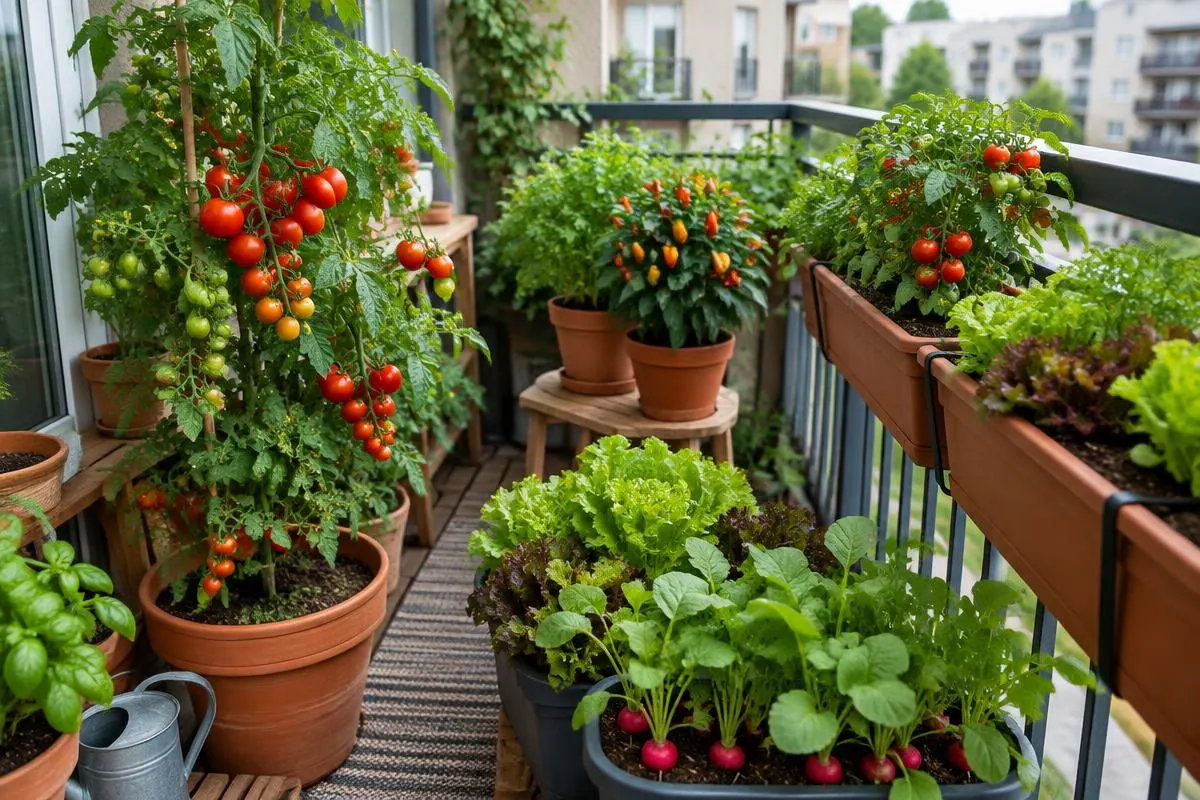
14. Cherry tomatoes
Compact or patio varieties produce generous handfuls from one large pot on a sunny balcony.
- Sunlight: 6+ hours of direct sun
- Container: At least 5 gallons (about 20 L) per plant
- Watering: Deep, consistent watering; containers can dry out daily in summer
- Difficulty: Moderate
Safety note: Stake or cage plants at planting time and keep heavy pots on the floor, not on rails, so wind can't topple them.
15. Strawberries
Compact plants that suit hanging baskets, troughs and stacking planters, which makes them ideal for vertical space.
- Sunlight: 6+ hours for the best fruit; some fruit in 4–6 hours
- Container: 8–12 in (20–30 cm) pot, trough or hanging basket
- Watering: Keep evenly moist while flowering and fruiting
- Difficulty: Easy
Watch for: Birds taking ripe berries. A light net helps on open balconies.
Related guides: How to Grow Tomatoes on a Balcony · How to Grow Strawberries in Containers
Climate and safety checks before you buy
A few checks prevent the most common balcony problems.
- Frost: plants labeled tender or annual won't survive freezing nights outdoors. Plan to bring them in or replace them each year.
- Weight: wet soil is heavy. Spread large pots out and keep the heaviest ones near walls rather than at the edge.
- Railings: secure railing boxes with brackets made for your railing type, and never hang pots on the outside of a high balcony.
- Drainage: make sure water draining from pots won't drip onto neighbors below. Use saucers where needed.
- Pets and children: some common ornamental plants can be harmful if chewed. The ASPCA's toxic plant list includes several plants in this guide as toxic to cats and dogs, including begonias, geraniums, lavender, mint and tomato plants (the leaves and stems). If you have pets, check every plant against that list or ask your vet before buying, and keep pots out of reach of pets that chew.
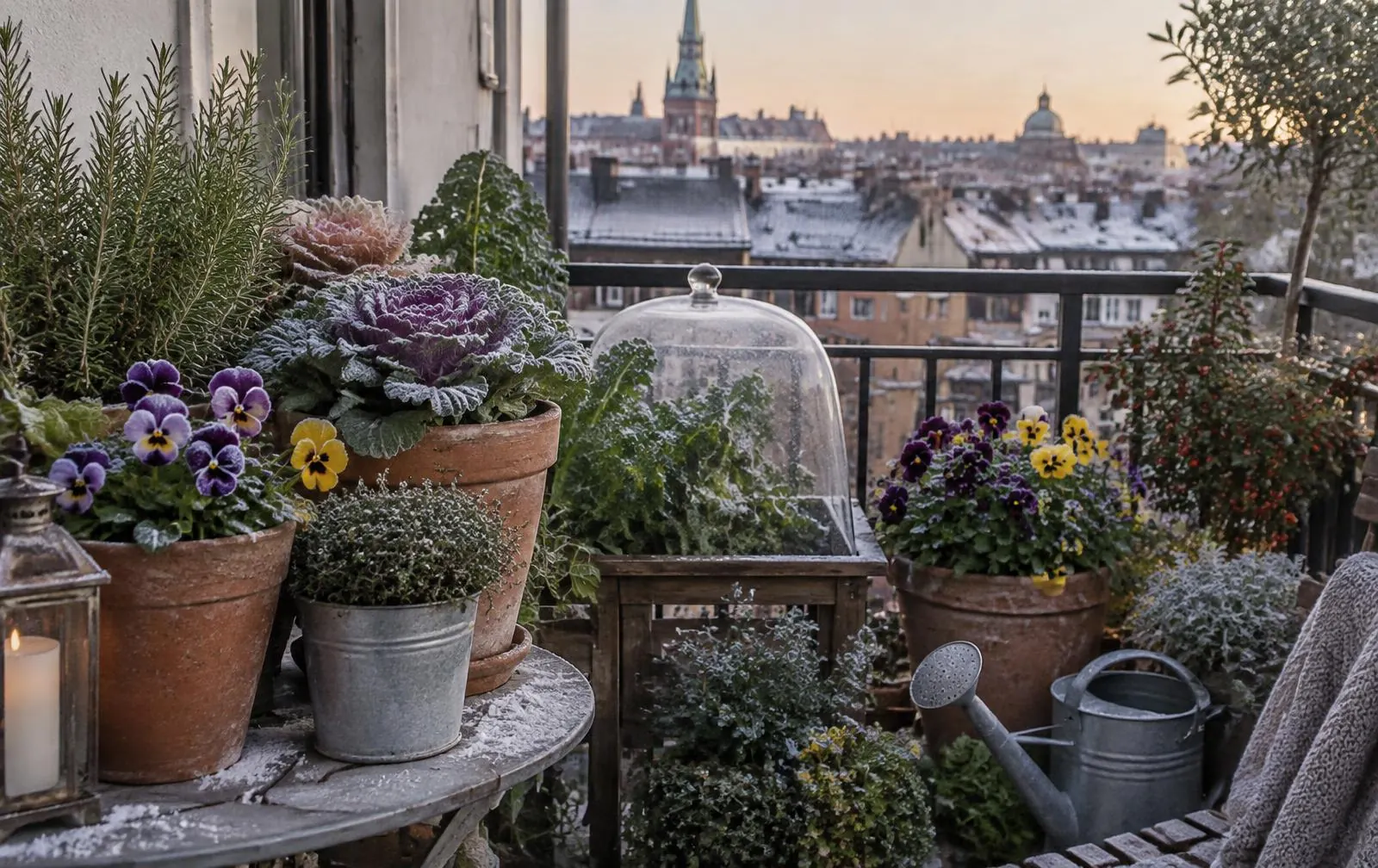
Related guide: What Plants Do Great on a Balcony in Winter
Plant profiles
Common questions
What are the easiest balcony plants for beginners?
Marigolds, nasturtiums, geraniums, mint, begonias and heuchera are forgiving when they get the right light. Start with two or three and add more once you know how quickly your pots dry out.
Which balcony plants handle wind best?
Low, sturdy plants such as sedum, compact grasses, rosemary and lavender cope better than tall or large-leaved plants. Use heavier pots and keep them close to walls.
What can I grow on a balcony with no direct sun?
Ferns, begonias, heuchera and fuchsias are good choices for bright shade. Most flowering annuals and fruiting edibles need more sun than a fully shaded balcony provides.
Do balcony plants survive winter?
It depends on the plant and your climate. Hardy perennials, sedums and some grasses can stay outside in many areas. Tender plants such as geraniums, begonias and Boston ferns need to come indoors before frost.