Learn what full sun, part sun, part shade and full shade mean, how to track direct sunlight on your balcony, and how to pick plants from the results.
Start smaller than you think. A few well-matched plants teach you more than a crowded balcony that is difficult to water and inspect.
Full sun, part sun, part shade and full shade
These terms describe hours of direct sunlight — sun falling straight on the leaves with no roof, wall or tree in the way. Bright daylight in the shade does not count. The hour ranges below are common guidelines, not universally agreed categories: seed companies, nurseries and extension services define them differently, and the middle terms overlap.
Full sun
Generally about 6 or more hours of direct sun a day. Fruiting crops such as tomatoes and peppers usually need this to crop well.
- Approximate hours: About 6+ direct
Partial sun
Often described as around 3–6 hours of direct sun, depending on the source. Usually used for plants that like sun but tolerate some relief, especially from hot afternoon sun.
- Approximate hours: Around 3–6 direct (varies by source)
Partial shade
Overlaps heavily with partial sun and is also often described as around 3–6 hours of direct sun, typically in the morning, with shade during the hottest part of the day. Many labels use the two terms almost interchangeably.
- Approximate hours: Around 3–6 direct (varies by source)
Full shade
Generally little or no direct sun — but not darkness. The plant still receives open daylight. Deep shade — very little light at all, such as under a deep overhang facing a wall — suits very few plants.
- Approximate hours: Little or none
How to track sunlight in one day
Pick a clear day and check the balcony at regular intervals. You only need a phone or a notepad.
Step 1: Mark your growing spots
Note the places you might actually put pots: the floor by the railing, the back wall, a shelf, a railing planter. Light can differ a lot between them.
Step 2: Check every hour or two
From about 8am to 6pm, record whether each spot is in direct sun, shade, or dappled light. A quick photo from the same position each time works well.
Step 3: Add up the direct-sun hours
Count the hours each spot spent in direct sun and note whether they came in the morning or afternoon. Afternoon sun is usually hotter and more drying.
Step 4: Repeat as seasons change
Check again a few months later. A spot that gets 6 hours in midsummer may get far less in spring or autumn when the sun is lower.
How balcony direction affects light (Northern Hemisphere)
Direction is a useful starting point, but buildings and overhangs often matter more. In the Southern Hemisphere, swap north and south.
South-facing
Usually the most sun and warmth, often enough for tomatoes, peppers and Mediterranean herbs. In summer it can be very hot and drying.
West-facing
Shade in the morning, then strong afternoon sun. Good for sun lovers, but containers can overheat and dry fast in late afternoon.
East-facing
Gentle morning sun and afternoon shade. Often ideal for herbs, leafy greens, strawberries and plants that wilt in hot afternoons.
North-facing
Little or no direct sun for much of the year, though some may get early or late summer sun. Best for shade-tolerant foliage, leafy greens and some herbs.
Related guides: Best Plants for Sunny Balconies · Best Plants for Shady Balconies
Buildings, overhangs, railings and seasons
Your real sun hours depend on what surrounds the balcony.
- Nearby buildings and trees can block the sun for hours, even on a south-facing balcony
- The balcony above acts as a roof: in summer, when the sun is high, it can shade the back of the balcony almost completely
- Solid or frosted railings shade the floor; pots on the floor may get far less sun than a railing planter
- Deciduous trees give summer shade but let winter light through
- The sun is lower in winter, so light reaches further under overhangs but for fewer hours
Why reflected heat and wind matter too
Two balconies with the same sun hours can grow very different plants. Glass, light-colored walls and concrete floors reflect heat and light, making a sunny balcony hotter and drier. Higher floors are often windier, and wind dries soil and leaves quickly, bends stems and can tip tall pots. Note both when you track the sun.
- Feel the floor and wall in mid-afternoon: hot surfaces mean faster-drying pots
- Watch which way wind funnels across the balcony and keep tall plants out of the strongest gusts
- Check building rules before adding screens or windbreaks
Related guide: How Often Should You Water Balcony Plants?
Choosing plants from your results
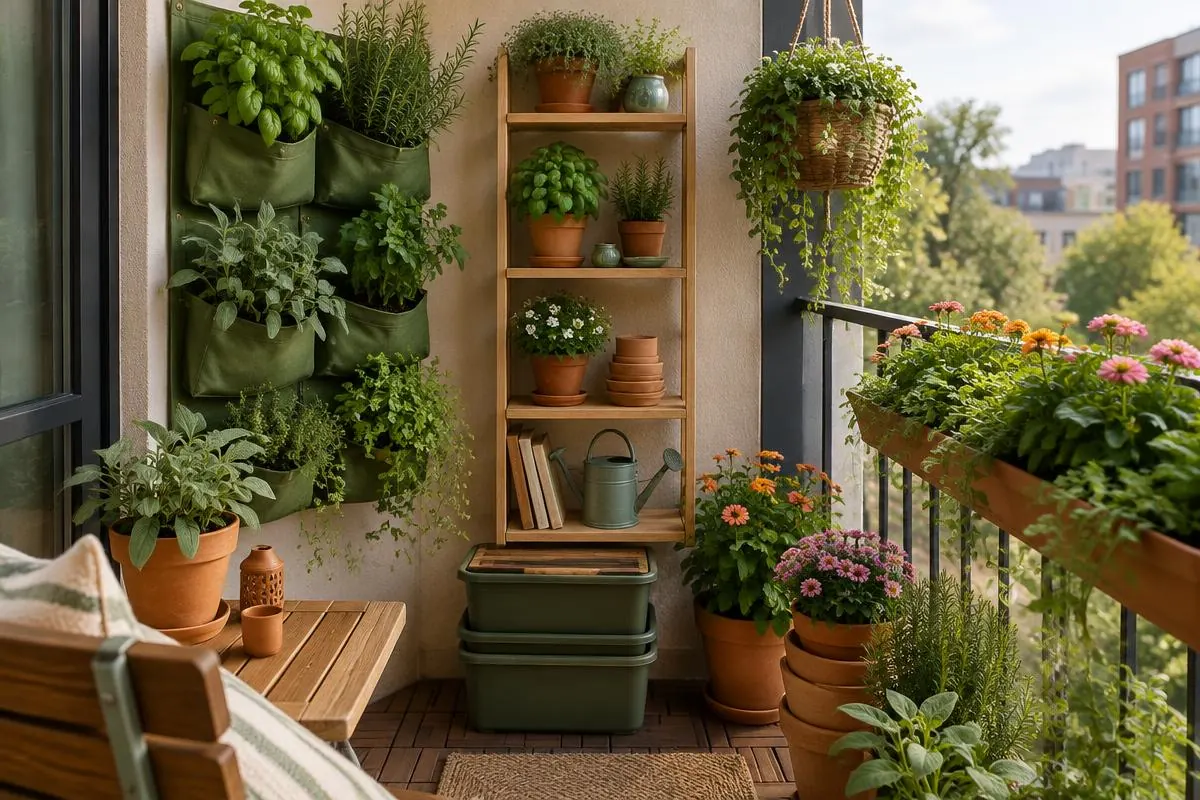
Match plants to the hours each spot actually gets, not to the label you hope for. Within a balcony you can often use the brightest spot for one sun lover and the shadier back for leafy plants.
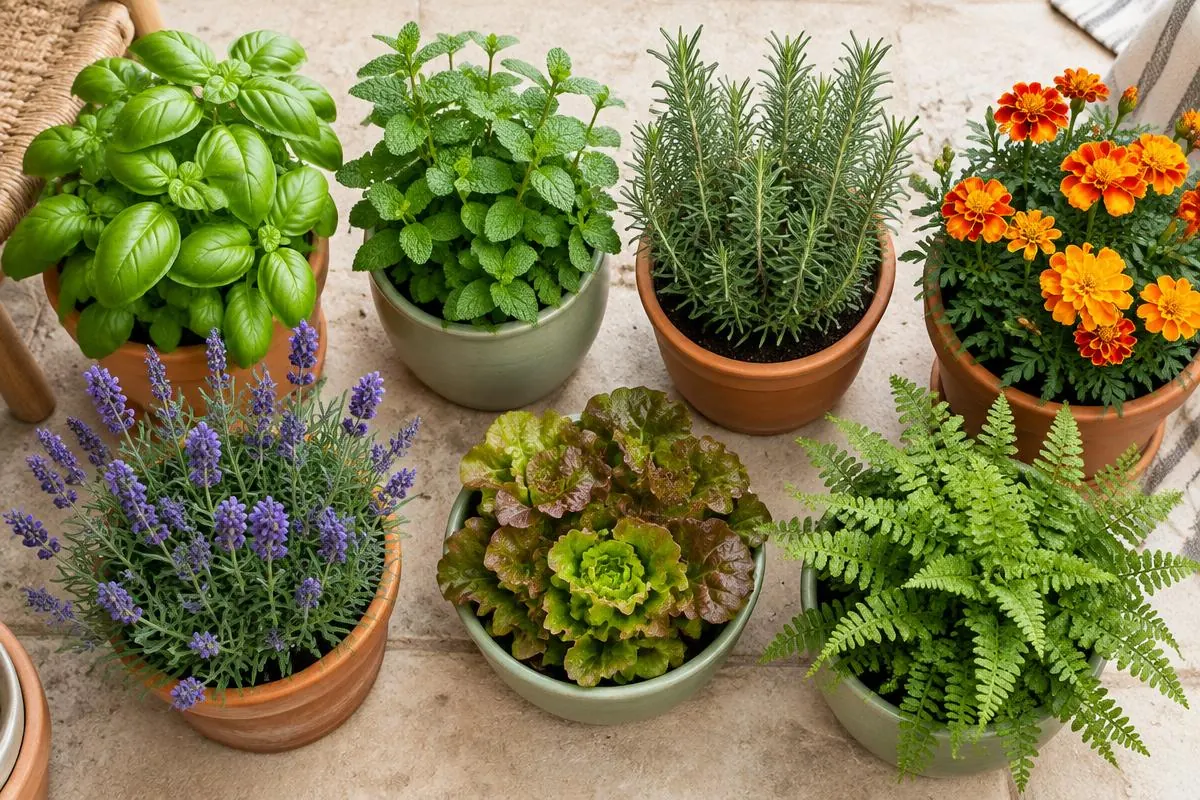
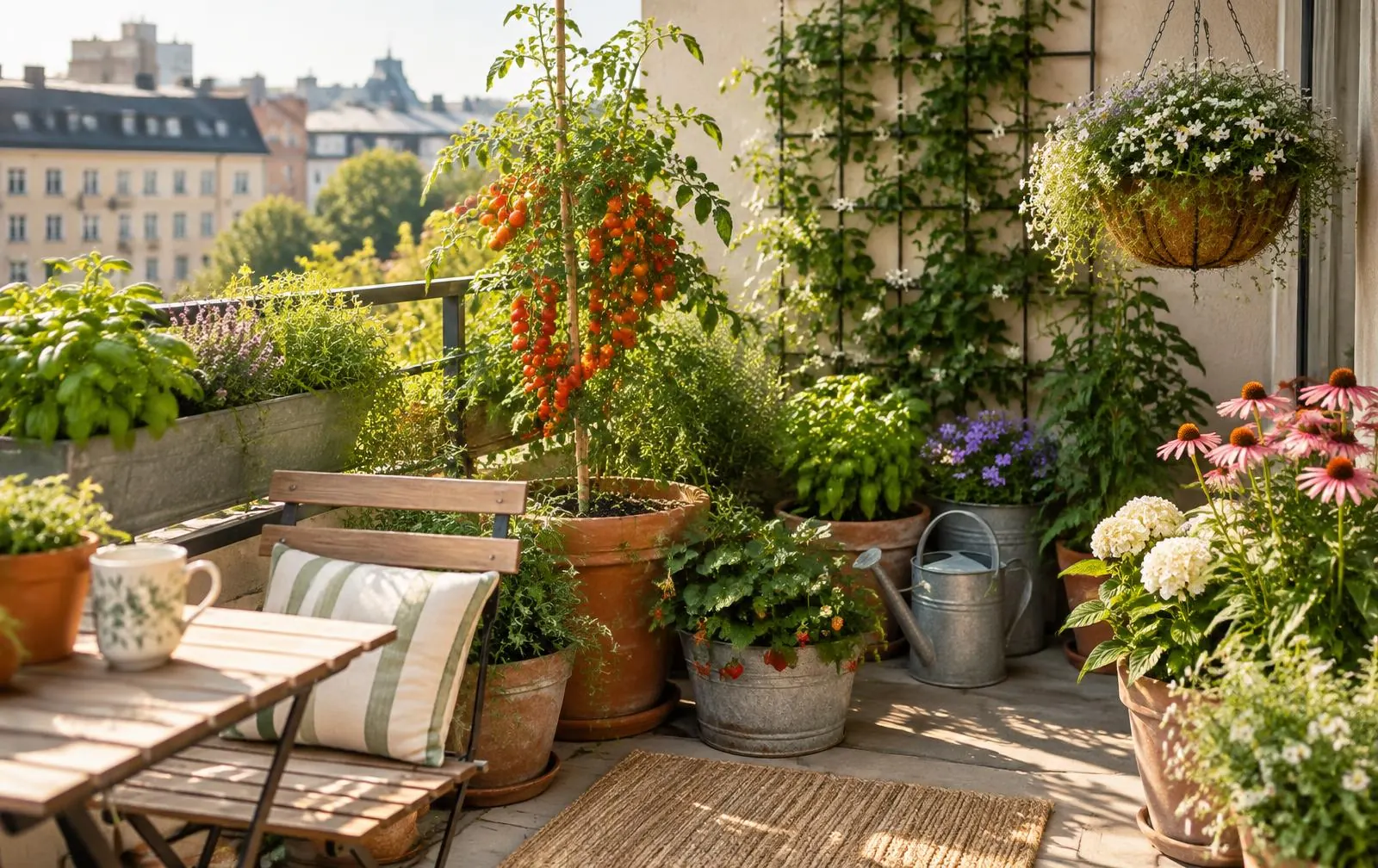
- 6+ hours: cherry tomatoes, chili peppers, basil, rosemary, thyme, lavender
- 4–6 hours: strawberries, nasturtiums, marigolds, chives, many herbs
- Around 3–4 hours: lettuce, parsley, mint, heuchera
- Little or no direct sun: shade-tolerant foliage such as ferns, heuchera or hostas; edibles will be slow
Related guides: 15 Best Plants for Apartment Balconies · 12 Herbs That Grow Well on Balconies · 10 Easy Vegetables to Grow in Containers
Sunlight tracking checklist
Use this list on your tracking day.
- Choose a clear day and list each possible pot spot
- Check and note sun/shade at roughly 8am, 10am, noon, 2pm, 4pm and 6pm
- Total the direct-sun hours per spot and note morning vs afternoon
- Note hot surfaces, reflected glare and windy corners
- Note the overhang shadow line on the floor at midday
- Repeat in another season, or recheck in spring and autumn
- Match plants to each spot's hours before buying
Common questions
Does bright indirect light count as full sun?
No. Full sun usually means around six or more hours of direct sun on the leaves. A bright balcony with no direct sun is closer to partial or full shade for plant purposes.
Can I use a phone app to measure sunlight?
Sun-path and light-meter apps can help, but checking the balcony yourself at intervals is simple and accounts for buildings and overhangs that apps may not.
Is morning sun the same as afternoon sun?
Not quite. Morning sun is usually cooler and gentler; afternoon sun is hotter and dries pots faster. Plants labeled part shade often do best with morning sun.
Why does my balcony get less sun in spring than in summer?
The sun's height and path change through the year, so shadows from buildings, trees and the balcony above shift. Recheck in each growing season.