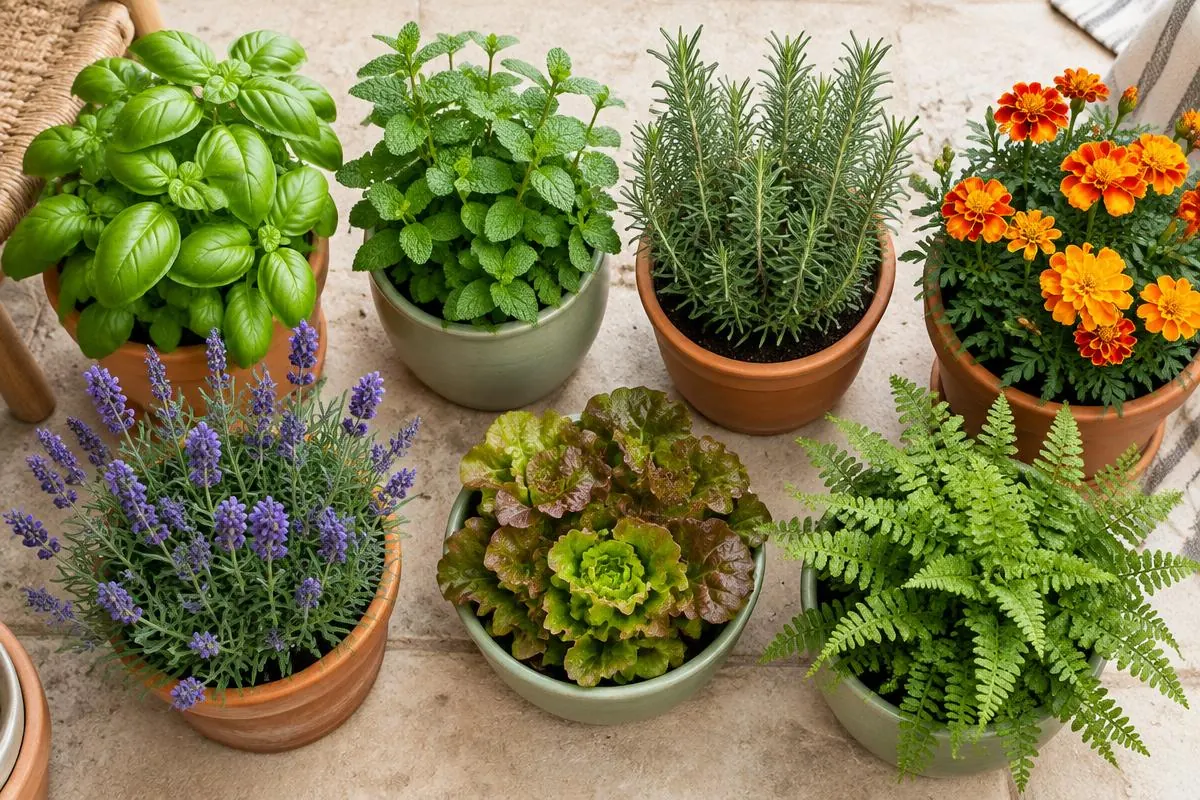
Balcony gardening for beginners works best when you flip the usual question around. Instead of picking plants first and hoping they fit, start with what your balcony can offer — sunlight, space, climate, and container size — and the list of what to grow on a balcony practically writes itself.
A balcony garden doesn't need to be big or ambitious to be satisfying. A few well-chosen pots of balcony herbs, a couple of container vegetables, or a box of flowers that suits your light will teach you more in one season than a crowded, struggling collection ever could.
Start with your sunlight
Light is the single biggest factor in what you can grow. Spend a couple of days noticing how the sun moves across your balcony, then match plants to what you find. Most seed packets and plant labels describe sun needs as hours of direct light per day.
Full sun (6 or more hours)
If your balcony faces south or sits above surrounding rooftops, you can grow almost anything. Fruiting balcony vegetables like tomatoes, peppers, and chillies need this much light, as do sun-loving flowers such as marigolds, zinnias, and lavender. Herbs like rosemary, thyme, and basil also do their best here.
Part sun or part shade (3 to 6 hours)
Most balconies land in this range, and it suits a surprising amount. Leafy greens — lettuce, spinach, rocket, chard — actually prefer some relief from afternoon sun. So do mint, parsley, chives, and most annual flowers like pansies, nasturtiums, and snapdragons.
Shade (less than 3 hours)
Shady balconies can still grow food and flowers, just a smaller menu. Mint, parsley, and chives cope; lettuce and other salad leaves tolerate it; and foliage-and-bloom plants like hostas, ferns, begonias, and impatiens will brighten the space. Growth is slower, so be patient and don't overwater.
Check your balcony at 9am, noon, 3pm, and 6pm on a clear day. Count the hours with direct sun on the spot where pots will sit — not the whole balcony.
Match plants to your balcony size
Small-space gardening is about honest measurements. Measure the floor area you can spare and the railing length you could hang planters from, then choose plants that will still fit — and still leave you room to sit — when fully grown.
Tiny balconies and Juliet landings
Think vertical and shallow: railing planters with trailing flowers or salad leaves, one or two slim pots of herbs by the door, and a hanging basket. Compact varieties — bush tomatoes, dwarf chillies, alpine strawberries — give you a harvest without taking over.
Small and medium balconies
You have room for a proper mix: a large pot with a cherry tomato or dwarf courgette, a window box of cut-and-come-again salad, three or four herb pots, and something flowering for the pollinators. Group pots so they shade each other's soil and water less often.
Large balconies and terraces
Resist filling every corner. Pick a theme — a salad garden, a cutting-flower patch, a herb collection — and leave walking space. Large containers hold moisture longer and open up bigger crops like aubergines, tomatillos, or even a dwarf fig in a warm, sheltered spot.
Let your climate have the final say
Two balconies with identical light can grow very different plants. Your local climate sets the length of the growing season, how hot your pots get, and what survives winter.
- Hot, dry climates: choose drought-tough plants — rosemary, thyme, sage, lavender, chillies — and use large pots with mulch on top.
- Cool, short seasons: favour quick crops (salad leaves, radishes, spinach) and cold-tolerant picks like kale and peas.
- Windy, high floors: low, bushy plants and sturdy stakes beat tall top-heavy ones; windbreaks and heavier pots matter more than plant choice.
- Frosty winters: treat most herbs and vegetables as annuals, or overwinter hardy ones like thyme and chives against a sheltered wall.
When in doubt, check your local first and last frost dates — they tell you when you can start planting and when to expect the season to end. See our guide to winter balcony plants for cold-season ideas.
Pick containers that fit the plant
Container size is the limit most beginners hit first. A pot that's too small dries out in hours and stunts roots; a generous one forgives missed waterings and grows better plants. As a rule, bigger is safer — and always choose pots with drainage holes.
| Container | Depth | Grows well |
|---|---|---|
| Window box / railing planter | 15–20 cm | Salad leaves, herbs, pansies, trailing nasturtiums |
| Medium pot (25–35 cm) | 25–35 cm | Mint, parsley, bush basil, strawberries, dwarf chillies |
| Large pot (40 cm+) | 40 cm+ | Tomatoes, peppers, aubergines, dwarf courgettes, roses |
| Hanging basket | 20–25 cm | Trailing tomatoes, strawberries, lobelia, ivy-leaf geraniums |
Not sure which pots to buy? Our guide to pots and containers compares materials, weights, and drainage.
Balcony herbs: the easiest first win
If you only start one thing, start with balcony herbs. They're cheap, forgiving, and useful in the kitchen within weeks. Most like a sunny spot and a medium pot with good drainage.
- Mint — tolerates shade and neglect; give it its own pot, as it spreads aggressively.
- Basil — loves full sun and warmth; pinch it often and it keeps producing.
- Parsley and chives — happy in part shade, productive for months.
- Rosemary and thyme — sun-lovers that shrug off heat and dry spells.
See all 12 herbs that grow well on balconies for the full list and care notes.
Balcony vegetables worth the space
Balcony vegetables reward a little planning. Choose compact or "patio" varieties, give fruiting crops your sunniest corner, and let leaves do the work in shadier spots.
- Salad leaves — the fastest payoff; sow a little every few weeks and snip as needed.
- Cherry tomatoes — the classic container crop; needs the sunniest spot and a tall support.
- Chillies and peppers — compact, decorative, and happy in a warm, sunny pot.
- Radishes and baby carrots — quick roots for shallow troughs, ready in weeks.
- Peas and dwarf beans — vertical growers, ideal for railing planters with a small trellis.
Ten easy vegetables to grow in containers covers sow-to-harvest times and pot sizes.
Flowers that earn their spot
Flowers aren't just decoration on a balcony garden — they draw in pollinators that improve your vegetable and herb harvests, and they keep the space feeling like a retreat rather than an allotment.
- Full sun: marigolds, zinnias, lavender, geraniums, petunias.
- Part shade: nasturtiums, snapdragons, begonias, fuchsias.
- Shade: impatiens, ferns, hostas, cyclamen in the cool season.
Edible flowers like nasturtiums and pansies do double duty — pretty in the pot and bright on a salad.
Shady balcony vs sunny balcony: quick picks
Still short on time? Here's the short version of what to grow on a balcony, sorted by light.
| Light | Herbs | Vegetables | Flowers |
|---|---|---|---|
| Sunny (6h+) | Basil, rosemary, thyme, sage | Tomatoes, chillies, peppers | Marigolds, zinnias, lavender |
| Part sun (3–6h) | Mint, parsley, chives | Salad leaves, chard, peas | Nasturtiums, snapdragons |
| Shade (under 3h) | Mint, chives | Lettuce, spinach, rocket | Impatiens, begonias, ferns |
For deeper detail, see best plants for sunny balconies and best plants for shady balconies.
Your first balcony garden: a simple starting combination
If you want one concrete answer instead of a framework, here it is — a first balcony garden that works on most small balconies with at least four hours of sun:
- One large pot (40 cm+) with a cherry tomato and a stake
- One medium pot of basil beside it
- A window box of cut-and-come-again salad leaves
- One pot of mint on its own, in the least sunny corner
- A railing planter of nasturtiums for colour and pollinators
That's five containers, one hour of setup, and a season of harvests. Water when the top few centimetres of soil feel dry, feed lightly every couple of weeks, and sidestep the mistakes most beginners make.