Cold-hardy greens, herbs, and flowers that thrive in balcony containers through winter, plus simple ways to protect pots from frost.
Start smaller than you think. A few well-matched plants teach you more than a crowded balcony that is difficult to water and inspect.
Plants that shrug off the cold
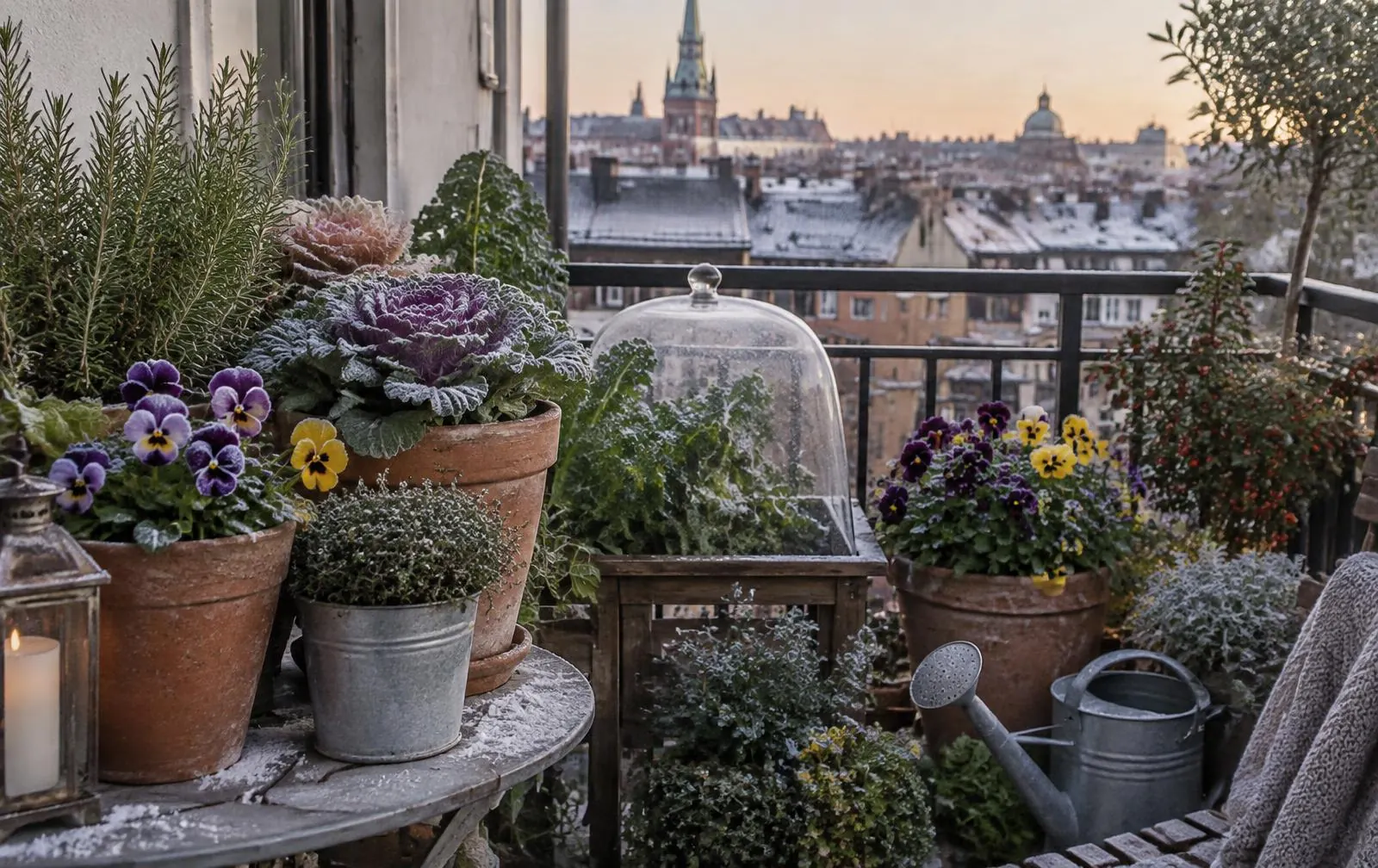
The best winter container plants tolerate cold, low light, and life in a pot, which is a harder combination than growing in the ground. Leafy greens such as kale, spinach, mâche (corn salad), and winter-hardy lettuce keep growing in cool weather. Woody herbs like rosemary, thyme, and sage stay evergreen through most temperate winters, while chives and parsley die back and often return in spring. For color when little else is blooming, pansies, violas, hellebores, winter-flowering heather, and ornamental cabbage and kale take frost in stride.
- Check how cold your winters actually get before buying—containers feel every degree
- Choose compact varieties that fit the pots you already own
- Group plants with similar water needs so winter watering stays simple
Protect the roots, not just the leaves
Roots in containers are far more exposed than roots in garden soil, so protecting the pot matters as much as protecting the plant. A hard freeze can damage roots directly and crack fragile containers. Group pots together against a sheltered wall, wrap vulnerable containers with fleece or bubble wrap, and lift pots onto feet so drainage cannot freeze shut. Water far less than in summer—cold mix stays wet for weeks—but do not let pots dry out completely before a hard freeze.
- Move the most tender pots to the most sheltered corner, ideally against the building
- Use a cloche or row cover over greens on the coldest nights
- Empty saucers so standing water cannot freeze and crack them
| Plant type | Suggested depth | Best for |
|---|---|---|
| Leafy herbs & greens | 15–20 cm | Broad window boxes |
| Compact flowering plants | 20–25 cm | Railing and floor pots |
| Fruiting crops | 30 cm+ | Large stable containers |
Use the transition weeks well
The weeks between growing seasons are one of the easiest planting windows of the year. In autumn, plant spring-flowering bulbs such as tulips and daffodils directly in your containers, sow hardy greens while days are still mild, and top up tired potting mix. Clear out summer plants that have finished, scrub empty pots, and add a layer of mulch to insulate roots. Come spring, your balcony will already be halfway planted.
- Plant bulbs in containers now for the first color of spring
- Sow spinach, mâche, and other hardy greens before deep cold arrives
- Refresh potting mix and mulch the surface to insulate roots
Useful setup essentials
Look for a container with an open drainage hole, fresh peat-free or locally appropriate potting mix, a small watering can, and supports sized to the mature plant.
No paid product links
Plant profiles
Common questions
Can I really grow vegetables on a balcony in winter?
Yes, in most temperate climates, if you stick with genuinely cold-hardy crops such as kale, spinach, and mâche, give them the sunniest spot you have, and cover them with a cloche on the coldest nights. Expect slow growth rather than the quick harvest of summer.
Will my pots survive the winter outside?
Frost-resistant materials such as thick plastic, fiberglass, wood, and high-fired stone usually do; thin terracotta and unglazed ceramic can crack. Group pots, keep drainage open, and move your most fragile containers against a wall or indoors.