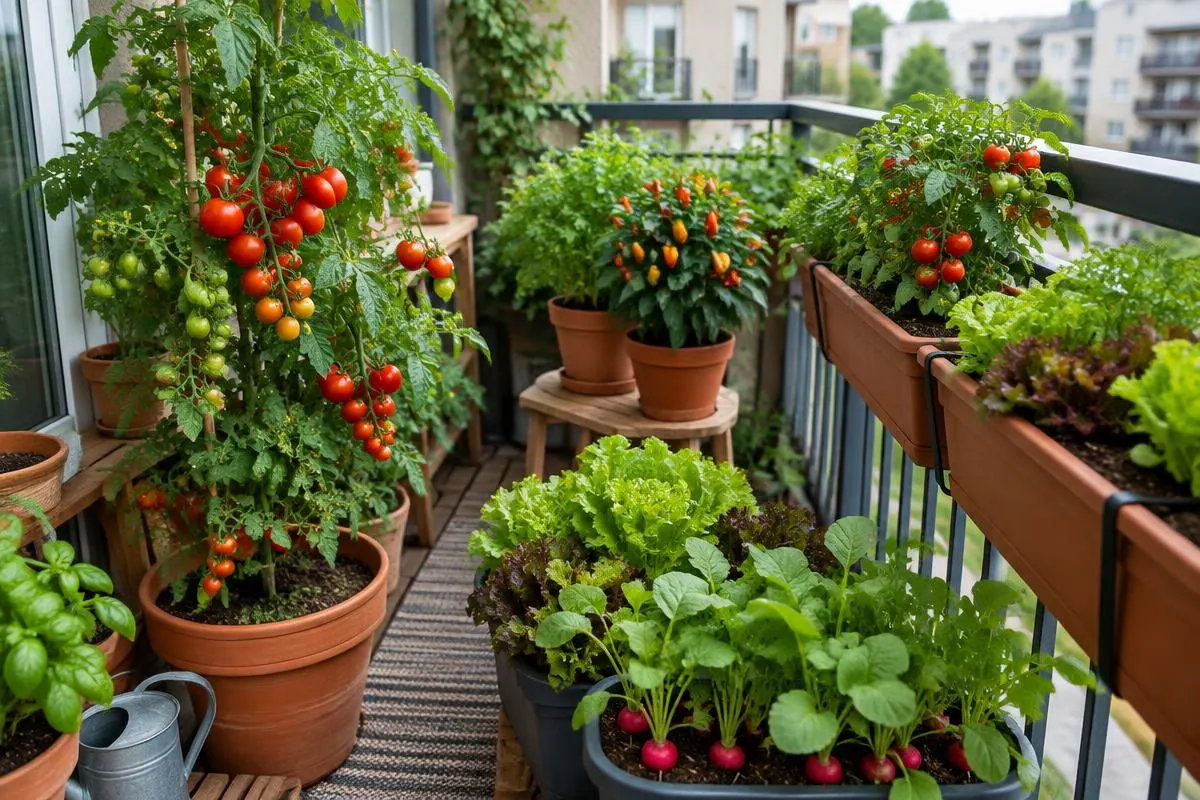
Grow tomatoes on a balcony: compact varieties, pot sizes, sun, support, watering, feeding, harvesting and fixes for cracking and blossom-end rot.
Affiliate disclosure: This guide may eventually include clearly labeled affiliate links. BalconyBloom would earn a commission at no added cost to you. No retailer links are active today.
Start smaller than you think. A few well-matched plants teach you more than a crowded balcony that is difficult to water and inspect.
Choose a tomato type that fits a balcony
Tomato plants grow in two main ways. Determinate (bush) tomatoes stop at a set height and ripen much of their crop over a few weeks. Indeterminate (vining) tomatoes keep growing and fruiting until cold weather, often reaching six feet or more. For most balconies, compact determinate, dwarf or patio types are the easiest starting point.
Determinate, patio and dwarf types
Usually 1–4 ft (30–120 cm) tall, needing only a short stake or small cage. Plant labels often say 'patio', 'compact', 'bush' or 'container'.
- Examples: 'Tiny Tim', 'Tumbling Tom' (trailing, good for baskets), 'Patio Princess', 'Bush Early Girl'. These are examples only; availability varies by region
- Best for: Small balconies, railing-height spots and beginners
Indeterminate cherry tomatoes
Cherry types such as 'Sungold' or 'Sweet Million' are very productive but grow tall and need a strong stake, cage or string support.
- Best for: Larger, sheltered balconies with full sun and room for a tall plant
- Trade-off: More harvest over a longer season, but more pruning and tying
Related guide: 10 Easy Vegetables to Grow in Containers
Pot size, potting mix and drainage
Root room is the biggest factor in container tomato success. Small pots dry out within hours on a hot day, which stresses plants and leads to many of the problems below.
- Dwarf and very compact types: at least 3–5 gallons (12–20 L)
- Most patio and determinate types: at least 5 gallons (about 20 L) per plant
- Indeterminate types: 10–20 gallons (40–75 L) gives more steady growth
- Use fresh potting mix made for containers, never garden soil, which compacts in pots
- Every pot needs drainage holes. Raise it slightly on pot feet so water can escape
- Lighter-colored pots stay cooler in strong sun than dark plastic ones
Related guide: Best Pots and Containers for Balcony Gardening
Sunlight and placement
Tomatoes need at least 6 hours of direct sun for a good crop, and 8 or more is better. With 4–6 hours you may still get some cherry tomatoes, but expect a smaller harvest. Very hot balconies can be too much of a good thing: fruit set tends to decline as temperatures climb, and flowers may drop without setting fruit during prolonged heat. The sharpest drop is usually when hot days run into the high 80s to 90s°F (around 30–35°C) alongside warm nights, and setting often resumes once it cools.
- South- or west-facing balconies in the Northern Hemisphere usually get the most sun
- A wall behind the pot adds reflected warmth, which helps in cooler climates
- On windy, high balconies, place pots near walls and secure supports so plants can't topple
- Check your building's weight guidance: a 5-gallon pot of wet mix is heavy
Related guide: How to Determine How Much Sun Your Balcony Gets
Planting and supporting tomatoes
Plant out only after your last frost date. Nights around 50°F (10°C) are an approximate minimum rather than a target — consistently warmer nights are preferable, and plants grow more steadily once nights stay well above that. Tomatoes stall or are damaged in cold weather.
Plant deeper than the nursery pot
Tomatoes grow new roots along buried stems. Remove the lowest leaves and set the plant so the soil comes up to the next set of leaves. This gives a stronger root system.
Add support at planting time
Push in a stake or cage now, before roots spread. Tie stems loosely with soft ties as they grow. Adding supports later can damage roots.
Pruning (mostly for indeterminate types)
Indeterminate tomatoes are often trained to one or two main stems by pinching out side shoots ('suckers') that grow between the main stem and a leaf. Determinate types need little or no pruning, because removing shoots reduces their harvest.
Watering and fertilizing
Consistency matters more than any fixed schedule. Water deeply until a little drains from the base, then let the top inch of mix dry slightly before watering again. In hot summer weather, containers may need water every day, sometimes twice.
- Water the soil, not the leaves, ideally in the morning
- A layer of mulch, such as straw or bark, slows evaporation from the pot surface
- Start feeding a few weeks after planting with a tomato or balanced fertilizer, following the label
- Too much nitrogen gives leafy plants with few fruit, so a tomato feed (higher in potassium) is helpful once flowers appear
Related guide: How Often Should You Water Balcony Plants?
Pollination and harvesting
Tomato flowers are self-pollinating, but they need movement to release pollen. Outdoors, wind and insects usually do this. On sheltered balconies, gently shaking the flower clusters or tapping the stake on dry, warm mornings can improve fruit set.
- Pick when fruit is fully colored and gives slightly to gentle pressure
- Cherry tomatoes often ripen in clusters, so check every day or two at peak season
- Fruit picked just as it starts to color can finish ripening indoors at room temperature
- At season's end, remove plants before frost. Green fruit can ripen indoors
Common tomato problems and fixes
Most container tomato problems come back to watering, feeding or weather.
Blossom-end rot
A dark, sunken patch on the bottom of the fruit. It's linked to the plant not getting enough calcium into the fruit, usually because of uneven watering rather than a lack of calcium in the mix.
- Fix: Water more consistently, mulch the pot and avoid letting it dry out completely. Affected fruit won't recover, but new fruit usually improves
Yellow leaves
Yellowing on the oldest, lowest leaves is normal as plants age. Widespread yellowing can point to overwatering, poor drainage, lack of nutrients, or leaf diseases such as early blight (brown spots with rings).
- Fix: Check drainage first, feed according to the label, and remove spotted lower leaves. Keep leaves dry when watering
Cracked or split fruit
Usually caused by a sudden flood of water after dry spells, often after heavy rain, which makes fruit swell faster than its skin can stretch.
- Fix: Water steadily, and pick ripe fruit before heavy rain is forecast
Flowers but no fruit
Common causes are extreme heat, cold nights, too little sun or too much nitrogen fertilizer.
- Fix: Give more sun if possible, switch to a tomato feed and gently shake flowers. Fruit set often resumes when temperatures moderate
Aphids and other pests
Aphids cluster on new growth; whiteflies and spider mites can appear in hot, sheltered spots.
- Fix: Check leaf undersides weekly. Rinse pests off with water and remove badly affected leaves
Related guide: Common Balcony Gardening Mistakes Beginners Make
A simple beginner growing plan
This plan works for one compact tomato plant. Timing depends on your local frost dates and climate.
Step 1: Before planting
Measure your sun hours and pick a compact or patio variety sold as a young plant. Buy a pot of at least 5 gallons with drainage holes, fresh potting mix and a stake or cage.
Step 2: Planting day (after the last frost)
Plant deeply, add the support, water thoroughly and place the pot in your sunniest spot.
Step 3: First month
Check the mix daily with your finger, water deeply when the top inch is dry, and tie in new growth each week.
Step 4: Flowering
Start a tomato feed following the label, mulch the pot surface and gently shake flower clusters on sheltered balconies.
Step 5: Harvest
Pick fruit as it colors, keep watering steadily and watch for pests. Before frost, harvest the remaining fruit and compost the plant.
Plant profiles
Common questions
What size pot do tomatoes need on a balcony?
Many compact and patio tomatoes need at least 5 gallons (about 20 L) per plant. Very small dwarf types can manage in 3 gallons, while tall indeterminate types do better in 10–20 gallons.
How much sun do balcony tomatoes need?
At least 6 hours of direct sun, and 8 or more for the best harvest. With less light, cherry types are the most likely to still produce some fruit.
Why are the bottoms of my tomatoes turning black?
That's usually blossom-end rot, which is linked to uneven watering. Water deeply and consistently, mulch the pot, and new fruit usually develops normally.
Do I need to hand-pollinate tomatoes on a balcony?
Usually not, because wind and insects do the job. On very sheltered balconies, gently shaking flower clusters on warm, dry mornings can help fruit set.