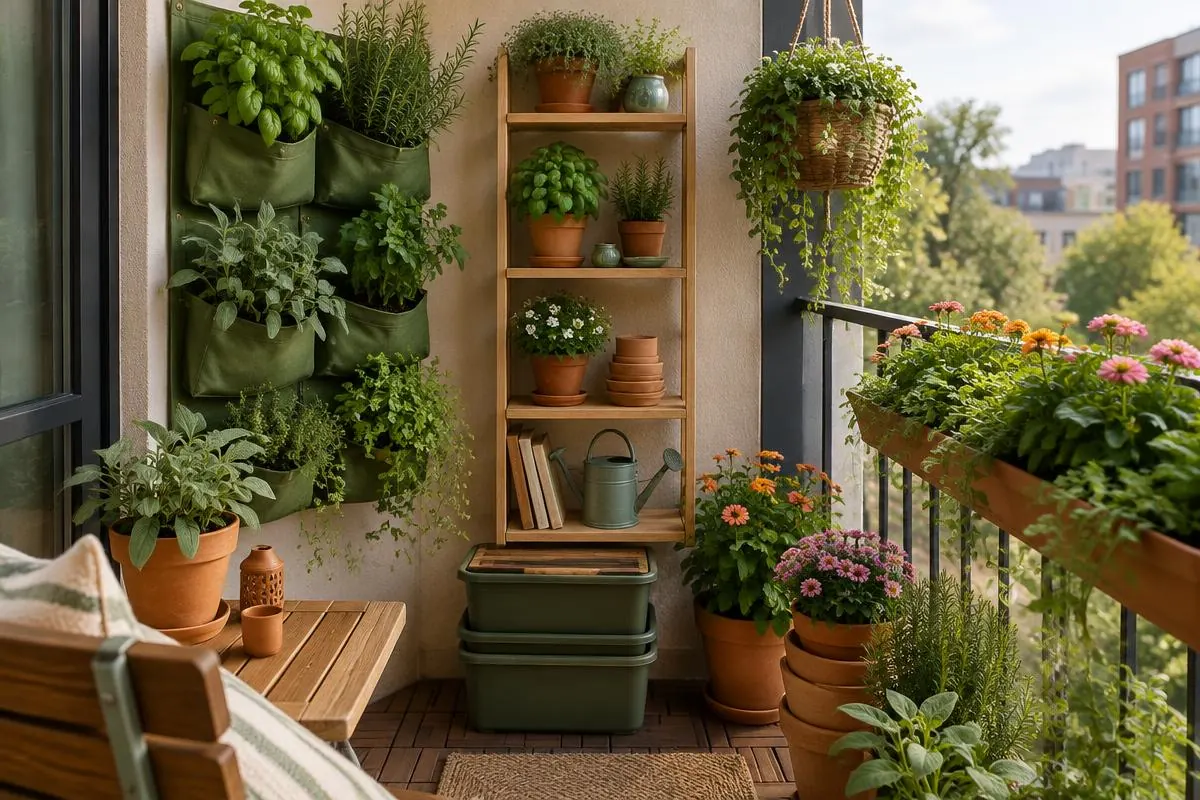
A step-by-step beginner walkthrough: check balcony safety, map sunlight, pick 2–4 plants, choose pots and potting mix, plant, water and build a weekly routine.
Start smaller than you think. A few well-matched plants teach you more than a crowded balcony that is difficult to water and inspect.
Step 1: Check building rules, weight and drainage
Before buying anything, find out what your lease, HOA or building management allows. Some buildings restrict railing planters, hanging baskets, or anything that drips onto balconies below.
- Wet potting mix, pots, plants and any stored water all add to the load on your balcony; a large wet container can be very heavy, though exact weights vary
- Follow your building rules and any confirmed load limit. Placing pots near the wall does not mean the balcony can safely hold them
- If no one can confirm the load capacity, ask building management or a qualified structural professional before adding heavy planters
- Use railing planters only if building rules allow them, and mount them securely on the inside of the railing so nothing can fall
- Find where water drains and make sure runoff won't drip onto neighbors or block the floor drain
New to balcony gardening? Follow the full learning path on our Start Here page.
Step 2: Measure your space and observe sunlight
Measure the floor, any wall space and railing length, leaving a clear path to walk and reach the door. Then spend one clear day noting how many hours of direct sun each spot gets. That number decides what will grow.
Related guide: How to Determine How Much Sun Your Balcony Gets
Step 3: Choose 2–4 beginner-friendly plants
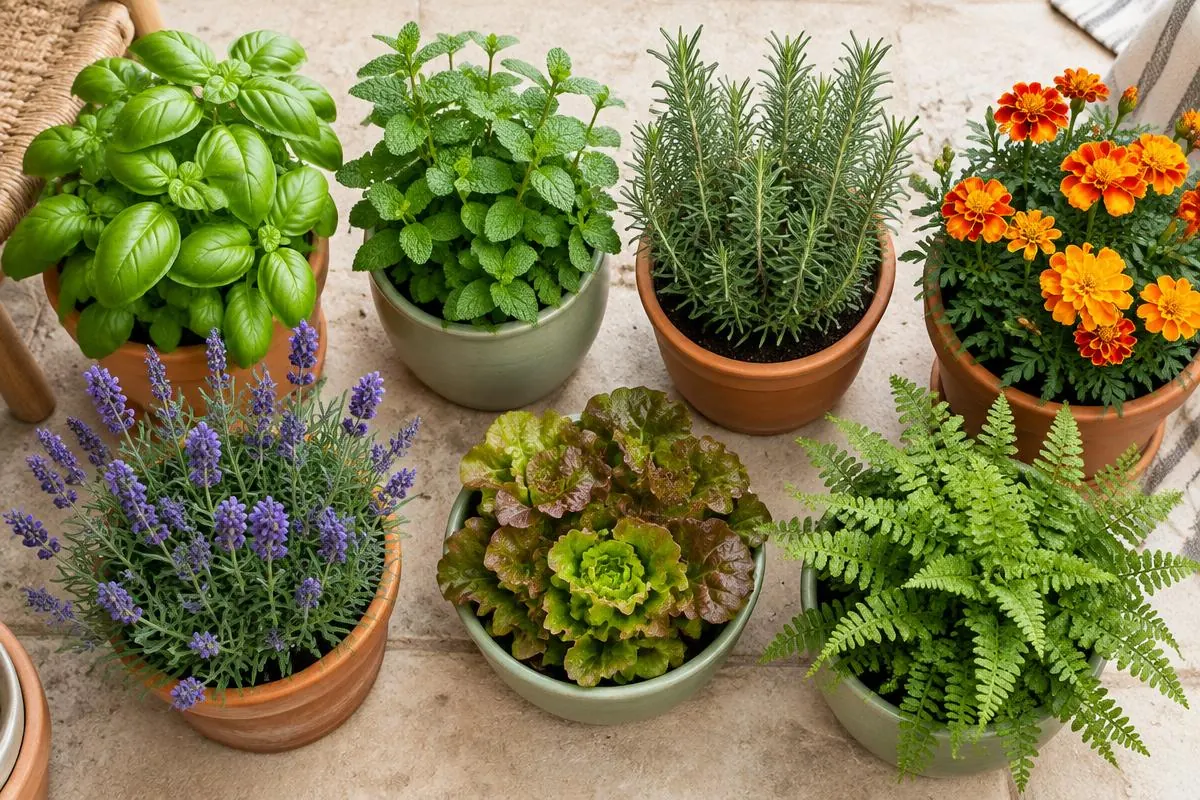
Starting small lets you learn how quickly pots dry on your balcony. Choose by light first, then by what you'll use or enjoy. Check that each plant suits your climate and season.
About 3–6 hours of sun
Chives, parsley, strawberries or nasturtiums.
Related guides: Best Plants for Sunny Balconies · Best Plants for Shady Balconies · 12 Herbs That Grow Well on Balconies
Step 4: Choose pots with drainage
Every container needs at least one drainage hole. Bigger pots hold more water and dry more slowly, so they're easier for beginners. Use saucers only where you need to protect the floor or neighbors, and empty them after watering so roots don't sit in water.
- Most herbs: about 6–8 in (15–20 cm) wide and deep
- Compact tomatoes and peppers: about 5 gallons (20 L) per plant
- Plastic and fiberglass are light; terracotta dries faster and is heavier
Related guide: Best Pots and Containers for Balcony Gardening
Step 5: Use potting mix, not garden soil
Bagged potting mix (sometimes labeled container mix) is designed to stay loose and drain well in pots. Garden soil and topsoil compact in containers, drain poorly and are heavy. Don't add gravel to the bottom of pots — it doesn't improve drainage and takes up root space.
Step 6: Plant at the right depth and spacing
Water plants in their nursery pots first. Fill the new pot so the top of the root ball sits about 1 in (2–3 cm) below the rim, leaving room to water. Plant most seedlings at the same depth they grew before — tomatoes are an exception and can be planted deeper. Firm the mix gently and water thoroughly.
- Follow spacing on the plant label; in pots, one tomato or pepper per container is usually best
- Several small herbs or lettuces can share a wider trough
- Add stakes or cages at planting time so you don't damage roots later
Related guide: How to Grow Tomatoes on a Balcony
Step 7: Check moisture and water properly
Push a finger about an inch (2–3 cm) into the mix. If it's dry, water slowly until a little runs out of the bottom. If it's still moist, wait. Lifting the pot also helps — dry pots feel much lighter. In hot summer weather, small pots may need water daily.
Related guide: How Often Should You Water Balcony Plants?
Step 8: Understand basic feeding and care
Many potting mixes contain some starter fertilizer that runs out after several weeks. After that, feed hungry plants such as tomatoes and strawberries with a fertilizer suited to them, following the label. Herbs like rosemary and thyme need little. More fertilizer is not better — too much can burn roots or give leafy growth with few flowers.
Step 9: Make a simple weekly routine
A few minutes, a few times a week, is enough.
- Check moisture every day or two in warm weather
- Once a week, look under leaves for pests and remove yellow or damaged leaves
- Harvest herbs regularly by pinching tips, which keeps them bushy
- Tie in tall stems and turn pots that lean toward the light
- Feed hungry plants on the schedule from the product label
Related guide: Balcony Garden Setup Checklist
Step 10: When a plant struggles
Check the basics before buying sprays or repotting: Is the mix soggy or bone dry? Is the plant getting the light it needs? Has the weather turned very hot, cold or windy? Are there insects on leaf undersides? Fix the most likely cause first and give the plant a week or two to respond. Our beginner mistakes guide covers the most common causes.
Related guide: Common Balcony Gardening Mistakes Beginners Make
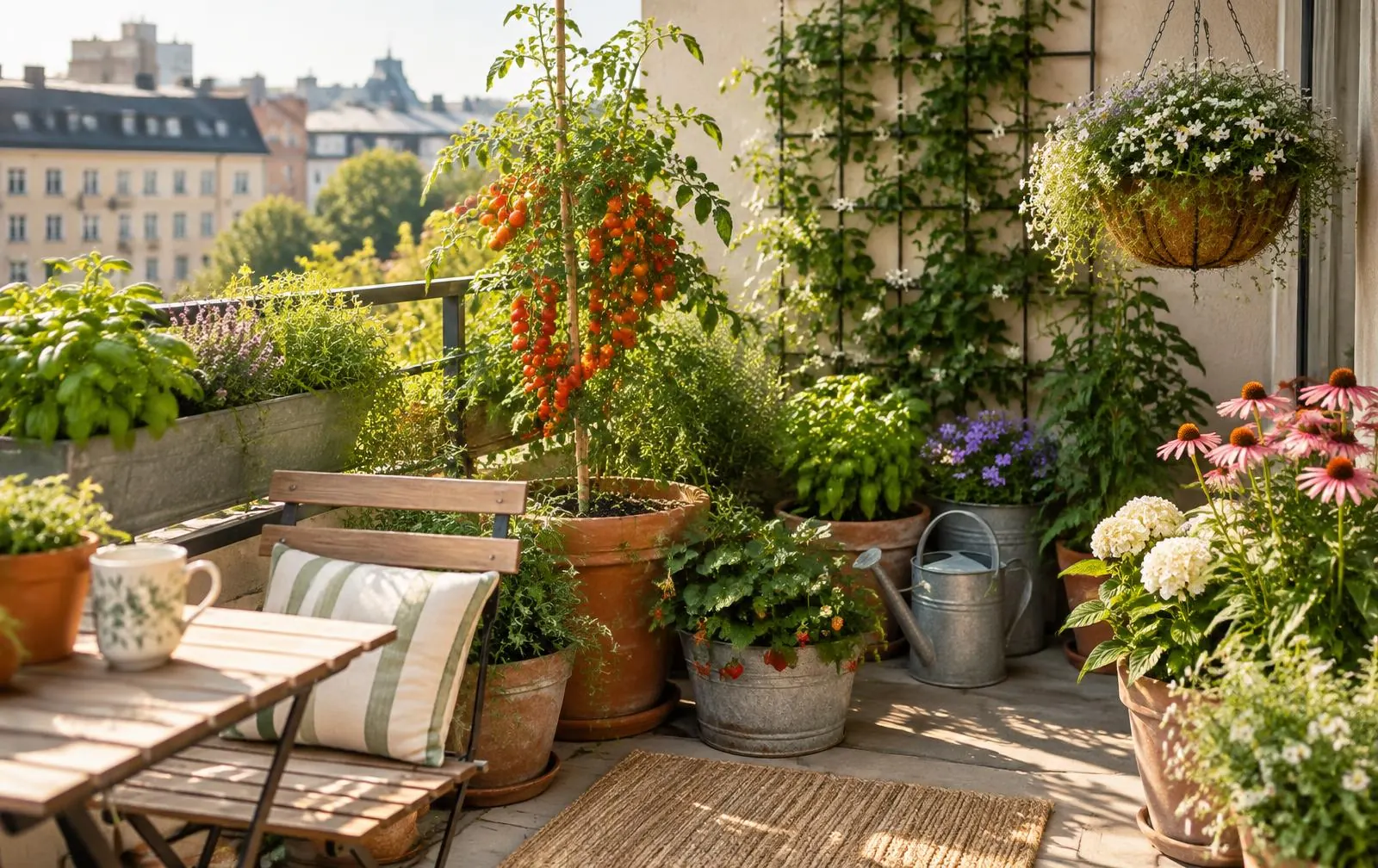
Example setup for a small sunny apartment balcony
This example suits a balcony with plenty of direct sun — tomatoes and basil generally need about 6 or more hours. For a shadier balcony, choose from our shade plants guide instead. The prices are illustrative estimates, not verified current retail prices; actual costs vary by region, container size and what you already own.
Plants
One cherry tomato, one basil, one pot of chives and one of parsley.
- Estimated cost: About $12–30 for four nursery plants
Pots
One 5-gallon (20 L) pot for the tomato and three 8 in (20 cm) pots for the herbs, all with drainage holes.
- Estimated cost: About $20–60 depending on material
Mix and tools
One or two bags of potting mix, a small watering can, a stake or small cage, and a bottle of general-purpose or tomato fertilizer.
- Estimated cost: About $25–50
Approximate total
Adding the categories above gives roughly $57–140. Reusing pots or tools you already own, or joining local plant swaps, can lower that.
- Note: Illustrative estimate, not checked with retailers
Related guide: Best Plants for Shady Balconies
Common questions
How many plants should a beginner start with?
Two to four pots is enough to learn how sun, wind and watering behave on your balcony without getting overwhelmed.
What's the easiest plant to start with?
It depends on your light. With good sun, basil or cherry tomatoes; with less sun, chives, parsley, mint or leaf lettuce.
When is the best time to start?
In spring, after your area's last frost, is easiest for most plants. Hardy herbs and greens can also be started in cooler seasons in many climates.
Can I grow a balcony garden as a renter?
Usually, yes. Check your lease and building rules, use freestanding pots, and avoid drilling or attaching anything without permission.