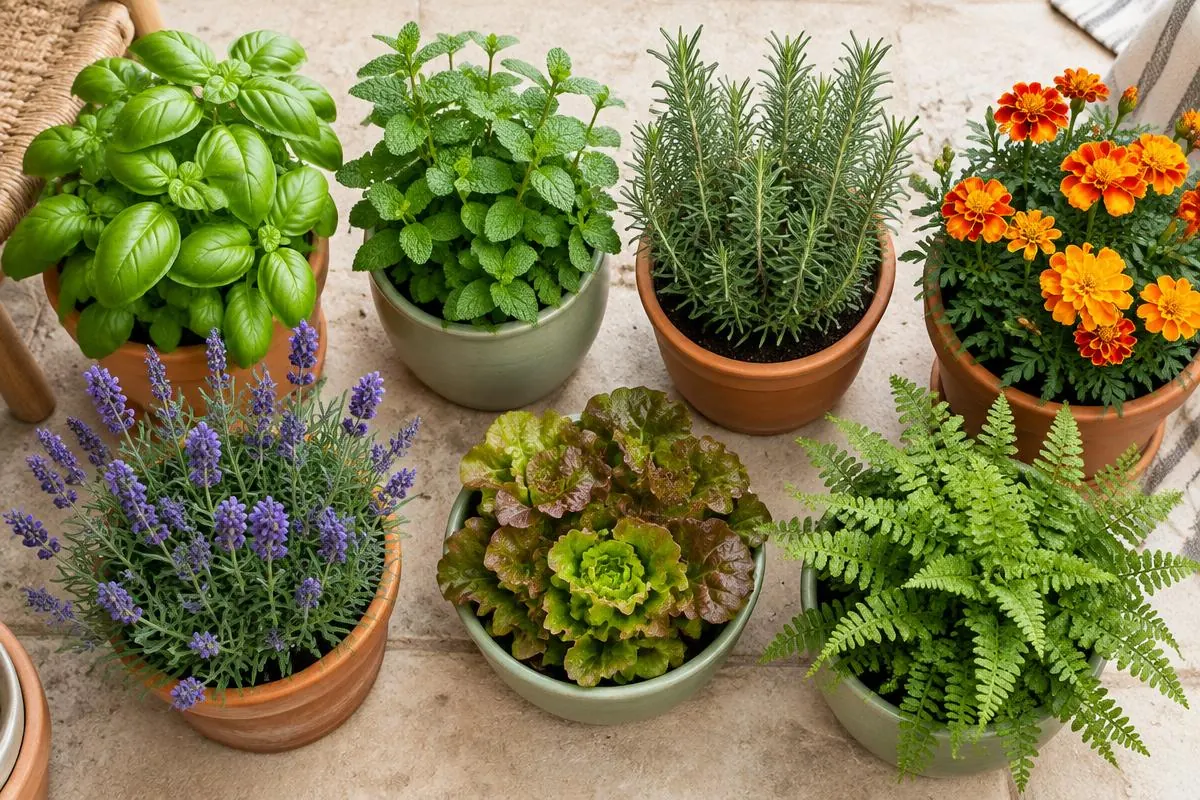
Discover herbs that grow on a shaded apartment balcony — mint, parsley, chives, cilantro and more — with sunlight needs, pots, watering and harvest tips.
Start smaller than you think. A few well-matched plants teach you more than a crowded balcony that is difficult to water and inspect.
Shade tolerance is not the same as thriving
A shade-tolerant herb will survive and produce in limited light, but it will usually grow more slowly, with a softer, sometimes milder flavour than in sun. That trade-off is fine for leafy herbs you pick often. Woody Mediterranean herbs — rosemary, thyme, oregano, sage, lavender — and basil generally need much more sun and tend to become sparse and weak in shade.
Related guide: 12 Herbs That Grow Well on Balconies
Herbs that tolerate partial shade
Start with two or three of these and expand once you know how your balcony behaves.
Mint
The most shade-tolerant culinary herb. Vigorous, so keep it in its own pot.
- Approx. sun: 2–4 hours or bright shade
Parsley
Flat-leaf and curly types both tolerate partial shade and keep producing for months.
- Approx. sun: 3–4 hours
Chives
Hardy, compact and easy. Cut a few stems at a time.
- Approx. sun: 3–4 hours
Cilantro (coriander)
Often bolts quickly in heat and full sun, so partial shade can extend the harvest.
- Approx. sun: 3–4 hours
Lemon balm
Mint relative that copes with shade; also spreads, so contain it.
- Approx. sun: 2–4 hours
Chervil, sorrel and Japanese mitsuba
Less common but naturally suited to cool, shaded conditions.
- Approx. sun: 2–3 hours
Sunlight needs comparison table
Approximate direct-sun guidelines. Your climate and the time of day the sun arrives will shift these.
| Herb | Approx. direct sun | Shade suitability |
|---|---|---|
| Mint | 2–4 hours | Good |
| Lemon balm | 2–4 hours | Good |
| Chervil, mitsuba | 2–3 hours | Good |
| Parsley | 3–4 hours | Good |
| Chives | 3–4 hours | Fair to good |
| Cilantro | 3–4 hours | Fair; bolts less in shade |
| Basil | 6+ hours | Poor |
| Rosemary, thyme, oregano | 6+ hours | Poor |
Container recommendations
Most leafy herbs are happy in pots 15–20 cm (6–8 in) deep and wide. Parsley and cilantro have longer taproots and prefer at least 20 cm depth. Give mint and lemon balm their own pots. Use fresh potting mix and containers with drainage holes.
Related guide: Best Pots and Containers for Balcony Gardening
Watering and drainage
Shaded pots dry out slowly, so overwatering is the main risk. Check the soil with a finger and water only when the top 2–3 cm is dry. Mint and parsley like steady moisture; chives tolerate drying a little between waterings. Empty saucers after rain so roots never sit in water.
Related guide: How Often Should You Water Balcony Plants?
Seasonal growing considerations
Spring and autumn are prime time on a shaded balcony. In summer, shade helps cilantro and parsley last longer before flowering. In winter, mint and chives die back in cold climates and regrow in spring; parsley often survives mild winters.
Realistic harvesting expectations
Expect smaller, regular pickings rather than big bunches. Pick little and often, never taking more than about a third of a plant at once, so it can recover with limited light. Two pots of parsley and one of mint and chives can give a steady supply for everyday cooking.
Common questions
Which herb grows best in shade?
Mint is the most shade-tolerant common culinary herb, followed by parsley, chives, lemon balm and cilantro.
Can basil grow on a shaded balcony?
Basil usually struggles in shade. It prefers about 6 or more hours of warm, direct sun.
How much sun do shade-tolerant herbs need?
Most still need roughly 2–4 hours of direct sun or very bright shade with open sky. No herb grows well in deep, dim shade.
Why does my cilantro keep bolting?
Heat and long sunny days trigger flowering. Partial shade, regular watering and small successive sowings help extend the harvest.