A realistic vegetable garden layout for a 4x6 balcony: measured container plan, walking space, vertical growing, best crops, watering and weight safety.
Start smaller than you think. A few well-matched plants teach you more than a crowded balcony that is difficult to water and inspect.
Before you plan: light, rules and weight
Measure the actual usable floor, not the advertised size, and note where the door swings. Check how many hours of direct sun each part of the balcony gets, because that decides which crops are worth growing. Read your lease or building rules about planters, railing attachments and water drainage.
- Wet potting mix is heavy: a single large container can weigh well over 20 kg (45 lb) once watered
- If you do not know your balcony's weight limit, ask building management or a qualified structural professional before adding several large planters
- Place the heaviest containers close to the building wall, not at the railing edge
- Never fasten planters to railings without written permission
Related guides: How to Determine How Much Sun Your Balcony Gets · Balcony Garden Setup Checklist
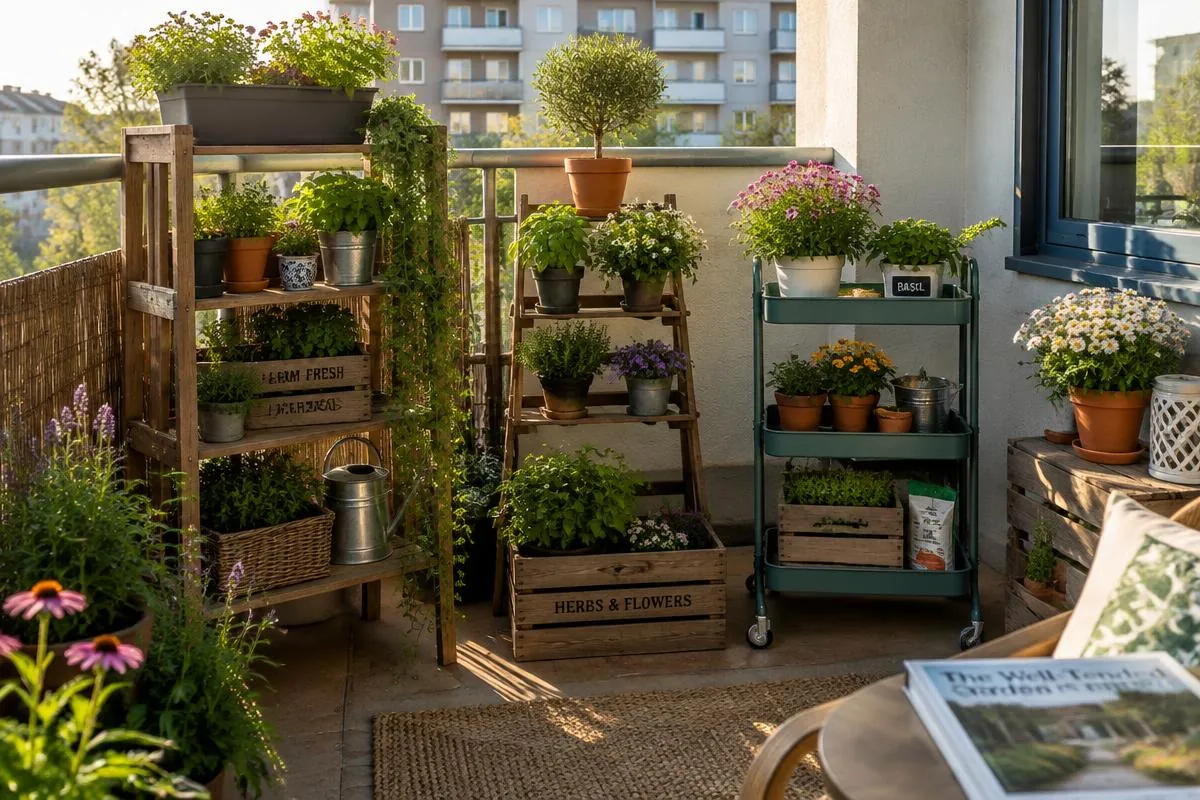
An example 4×6 balcony layout with measurements
This example assumes a balcony 6 feet wide and 4 feet deep, with the door in the middle of the back wall and at least 4–6 hours of sun at the railing side. The idea is simple: plants on three sides, a clear path in the middle.
| Zone | Size | What goes there |
|---|---|---|
| Railing side (sunniest) | 6 ft long × 12–16 in deep floor strip | Two 24-in troughs: lettuce and bush beans or peas on a freestanding trellis |
| Left side corner | 18 × 18 in | One 5-gallon (about 20 L) pot: compact cherry tomato with a cage |
| Right side corner | 18 × 18 in | One 5-gallon pot: pepper, or chard if light is limited |
| Back wall beside door | About 12 in deep | Freestanding 3-tier shelf: basil, parsley, chives, mint (in its own pot) |
| Centre path | At least 24 in wide | Kept clear for walking, watering and a folding chair |
Container placement
Put sun-hungry crops where the light is strongest — usually at the railing side but on the floor, not hanging over the edge. Leafy greens and herbs can take the slightly shadier spots near the wall. Keep tall plants such as tomatoes in the corners, where they will not shade everything else.
- Tall plants at the ends or back, short plants in front of them
- Large pots on wheeled saucers if you will need to move them
- Saucers under every pot to protect the floor and neighbours below
Walking space and accessibility
A clear path of at least 24 inches (about 60 cm) keeps the balcony usable and lets you reach every pot to water and harvest. Do not block the door, drain or any emergency route. If you use a mobility aid, widen the path and keep the main crops at a comfortable reaching height on stable shelves or raised planters.
Vertical growing options
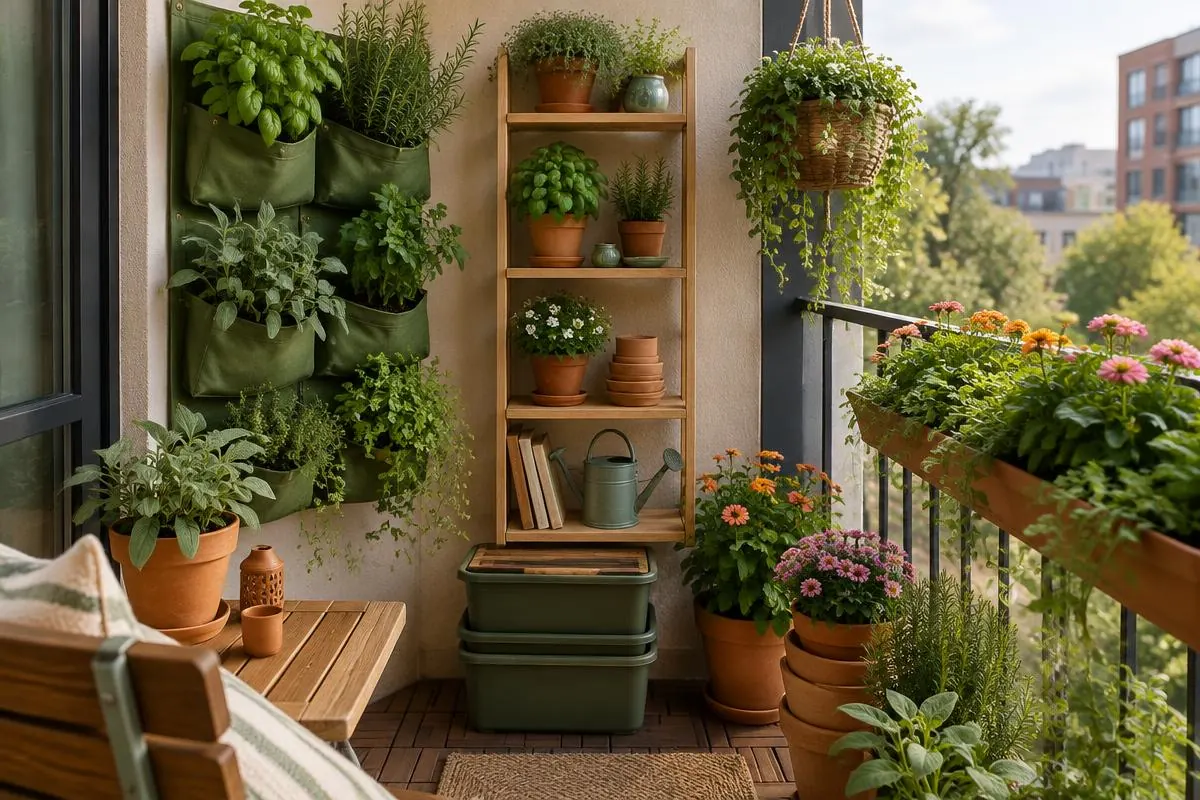
On 24 square feet, height is your extra space. Use it carefully so it does not block light or become top-heavy in wind.
- Freestanding trellis set inside a trough for peas, beans or a small cucumber
- A sturdy 3-tier shelf against the wall for herbs and salad
- Tomato cages rather than tall stakes on windy balconies
- Keep heavier pots low; only light pots on top shelves
Related guide: Vertical Gardening Ideas for Apartments
Suitable vegetables for a 4×6 balcony
Choose compact, high-value crops you will actually eat.
Compact cherry tomatoes
Productive in a large pot with 6+ hours of sun.
- Pot: At least 5 gallons / 20 L
Lettuce and salad greens
Fast, forgiving and good in the shadier zones.
- Pot: Trough 6–8 in deep
Chili or sweet peppers
Compact plants that like warmth and sun.
- Pot: 3–5 gallons
Bush beans or peas
Grow up a freestanding trellis and fix nitrogen in the soil.
- Pot: Trough at least 8 in deep
Related guides: 10 Easy Vegetables to Grow in Containers · Best Vegetables for a North-Facing Balcony
Sunlight and watering considerations
A full 4×6 balcony may need watering daily in hot summer weather, especially the tomatoes. Keep a watering can or a gentle hose connector within reach, and water in the morning. Self-watering troughs reduce daily effort. If your balcony gets under 4 hours of sun, swap tomatoes and peppers for chard, kale and more salad.
Related guide: How Often Should You Water Balcony Plants?
Common questions
How many containers fit on a 4×6 balcony?
Typically four to six medium and large containers plus a narrow shelf of herbs, while keeping a 24-inch walking path. Weight limits and building rules may lower that number.
What vegetables grow best on a small balcony?
Compact cherry tomatoes, peppers, lettuce and salad greens, bush beans or peas, and herbs offer the best return for small spaces with enough sun.
Is a 4x6 balcony too heavy for a vegetable garden?
It depends on the building. Wet containers are heavy, so place large pots near the wall and ask building management or a structural professional if you are unsure of the weight limit.
Can I attach planters to my balcony railing?
Only if your building allows it in writing and the planter is designed for that railing. Freestanding containers on the floor are the safer default.