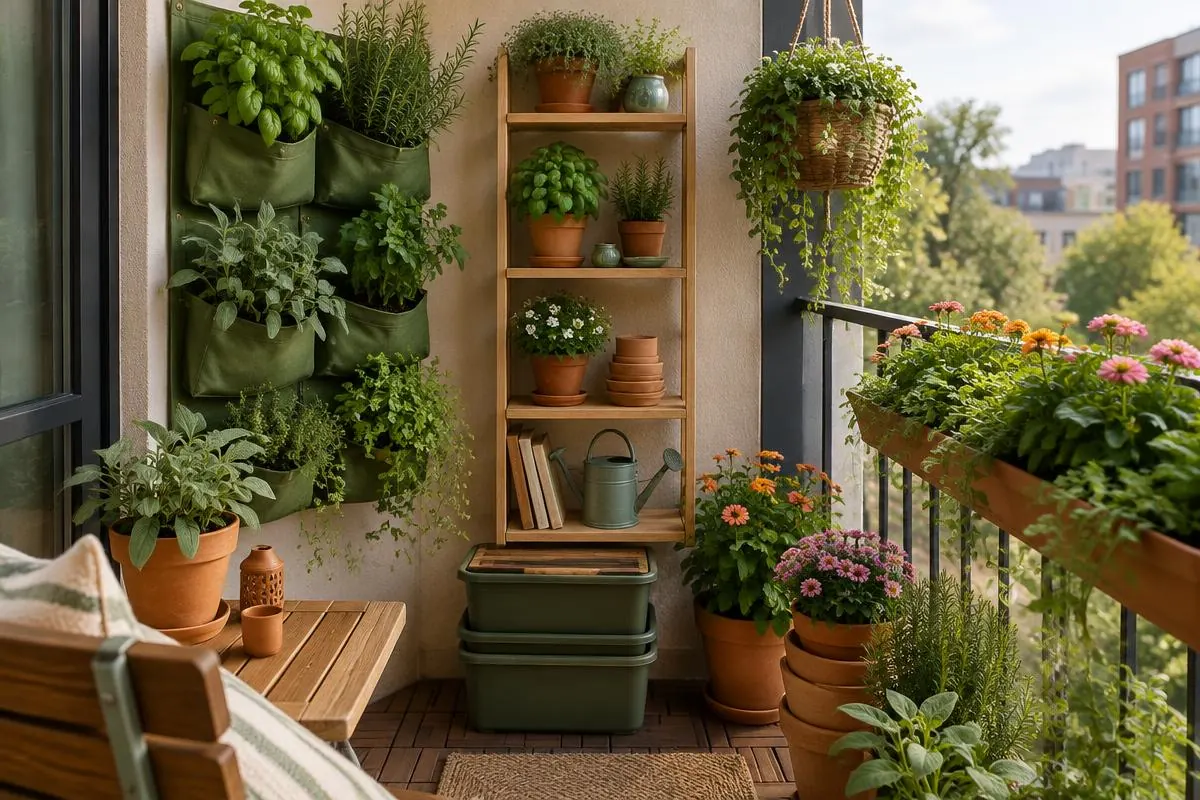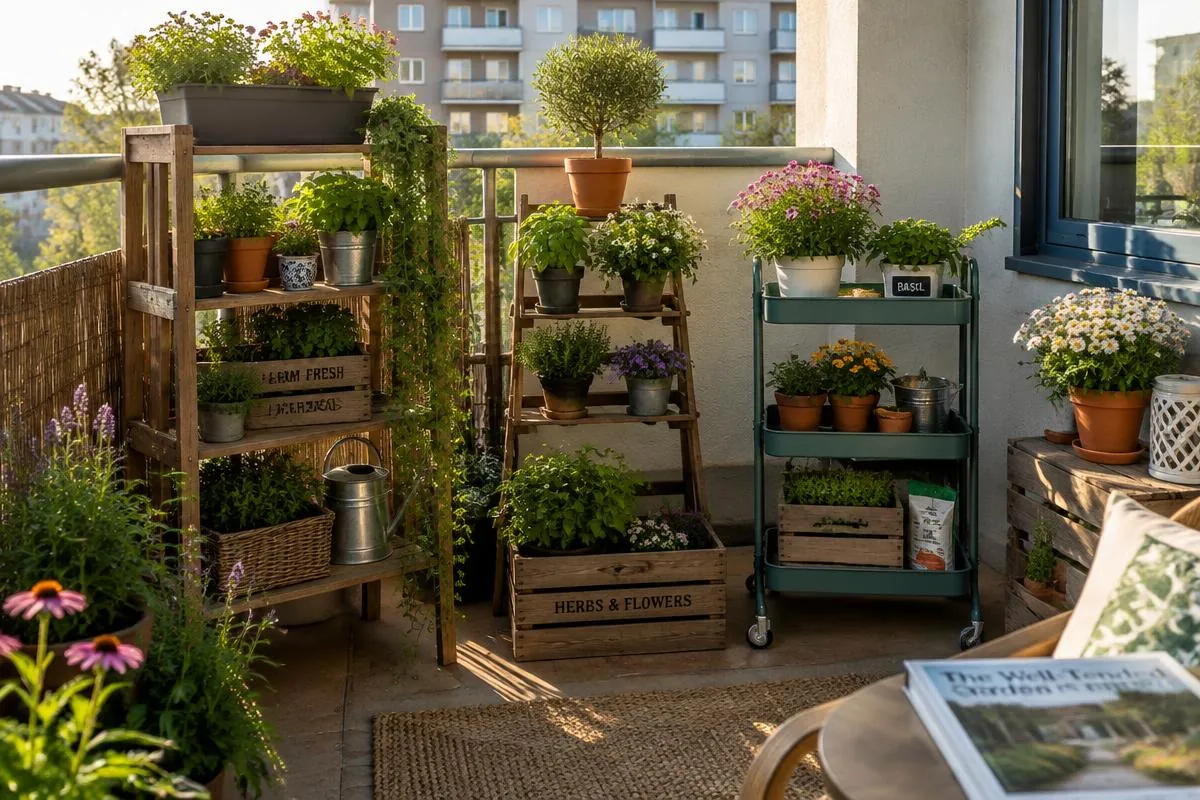
Build a lush balcony garden on a budget with 20 renter-friendly DIY ideas — thrifted shelves, repurposed carts, upcycled planters and more, with plant picks and safety notes.
Affiliate disclosure: This guide may eventually include clearly labeled affiliate links. BalconyBloom would earn a commission at no added cost to you. No retailer links are active today.
Start smaller than you think. A few well-matched plants teach you more than a crowded balcony that is difficult to water and inspect.
Before you start: rules, weight and wind
A budget garden fails when it ignores the balcony it lives on, not when it looks improvised. Check your building rules first — especially anything that touches railings or walls — and treat every freestanding piece as furniture that must stand safely on its own. Wet potting mix, pots, plants and stored water all add weight quickly, so start with fewer, larger containers than with many small ones.
- Follow your apartment or building rules, and never drill without written permission
- If your balcony's weight limit is unknown, ask building management or a qualified structural professional before adding heavy planters
- Keep the door, walkways and drainage paths clear
- Nothing loose should sit where wind or a bump could push it over the railing edge
Related guides: Vertical Gardening Ideas for Apartments · Small Balcony Garden Ideas
1. A storage tub disguised as a side table
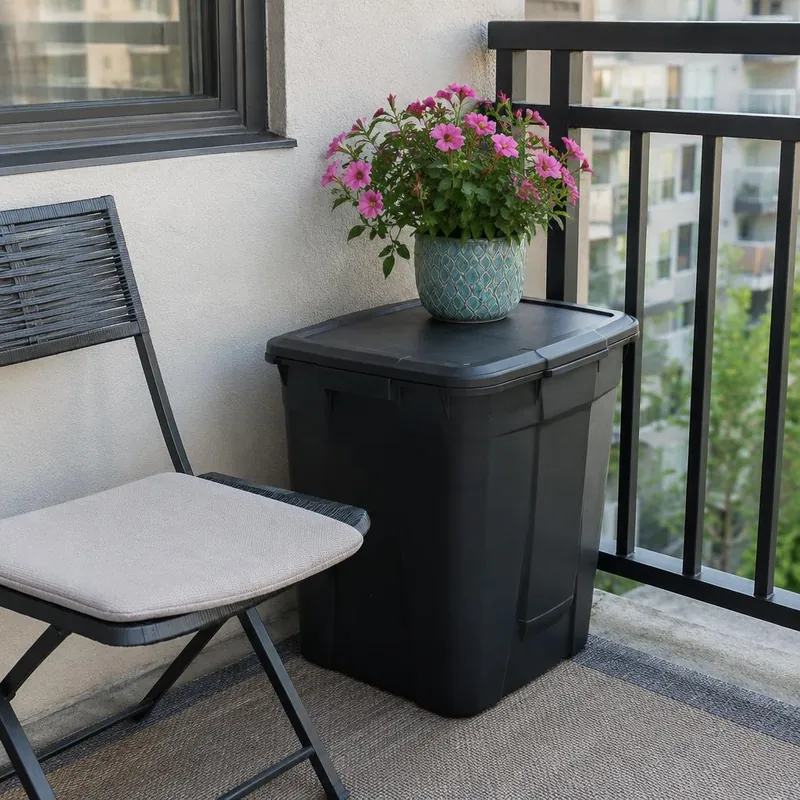
A lidded storage tub is the cheapest multitasker on this list: it hides tools, spare potting mix and empty pots, and its flat lid works as a side table for a plant or a cup of coffee. Choose a tub sold for outdoor use, sit it on the leeward side of the balcony, and keep the contents light. Never store fertilizers, fuels or other hazardous materials inside a covered tub on a balcony.
- Good plants on top: a compact flowering pot such as marigolds or geraniums (keep Pelargoniums away from pets)
- Find it: big-box stores, discount shops, or a spare tub you already own — often $8–15 new, less secondhand
- No drilling and no assembly
- Weight: light empty, so empty it before storms and keep the lid latched
2. A freestanding folding ladder shelf
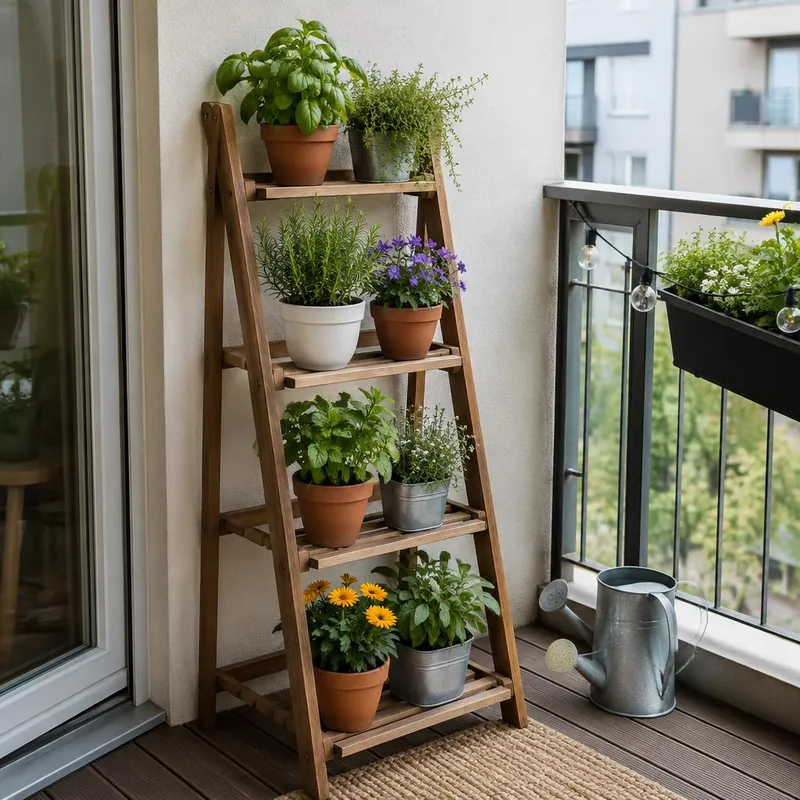
Decorative ladder shelves lean in an A-frame, so they need no wall fixing — just open them fully and check that the feet sit level. Because they lean, they belong against the wall side of the balcony, not near the railing edge, and they shouldn't carry heavy pots on the top steps. Look for solid wood or weather-rated metal rather than indoor particleboard, which swells after the first rain.
- Good plants: herbs on the upper steps, trailing flowers lower down
- Find it: thrift stores, online marketplaces and discount home stores, often $15–40 secondhand
- No drilling; minimal or no assembly
- Watch out: place the heaviest pots on the bottom steps and check stability after wind
3. A no-assembly folding plant stand
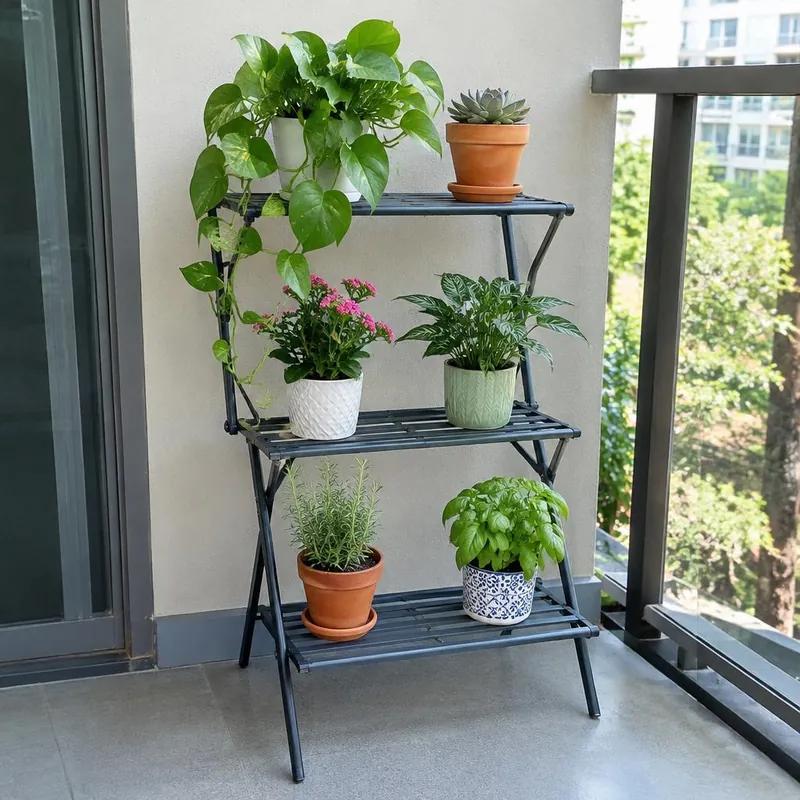
Folding plant stands unfold like a chair and are ready in seconds — no tools, no loose parts, and they store flat in a closet over winter. Metal versions handle weather far better than most glued wooden ones. Check the weight rating if you plan to use larger pots, because cheap stands can bow under a fully watered 10-inch container.
- Good plants: mixed small pots — herbs, succulents, compact flowers
- Find it: garden centers and online retailers from about $20–35; sometimes secondhand
- No drilling and no assembly — it unfolds ready to use
- Drainage: put a saucer under each pot so water doesn't pool on the stand
4. A thrifted metal tea cart
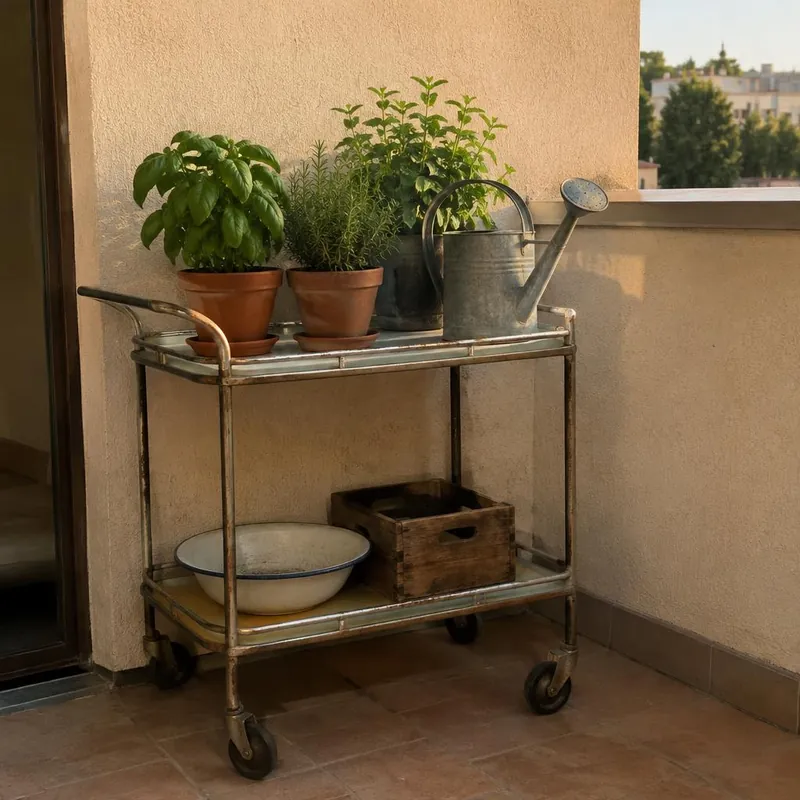
Old metal tea and bar carts are thrift-store gold: two or three shelves of growing space on a small footprint, with wheels that let you chase the sun or roll everything out of a storm. Check that the frame is solid steel or aluminum and the casters lock or roll smoothly; wobbly casters plus heavy pots is a bad combination. Rust can be sanded and painted with exterior-grade paint, but skip carts with deep flaking rust in the joints.
- Good plants: a complete herb collection on wheels, or a mix of herbs and flowers
- Find it: charity shops and online marketplaces, commonly $15–45
- No drilling and no assembly beyond tightening casters
- Watch out: lock or chock the wheels so it can't roll in wind
5. A repurposed rolling utility cart
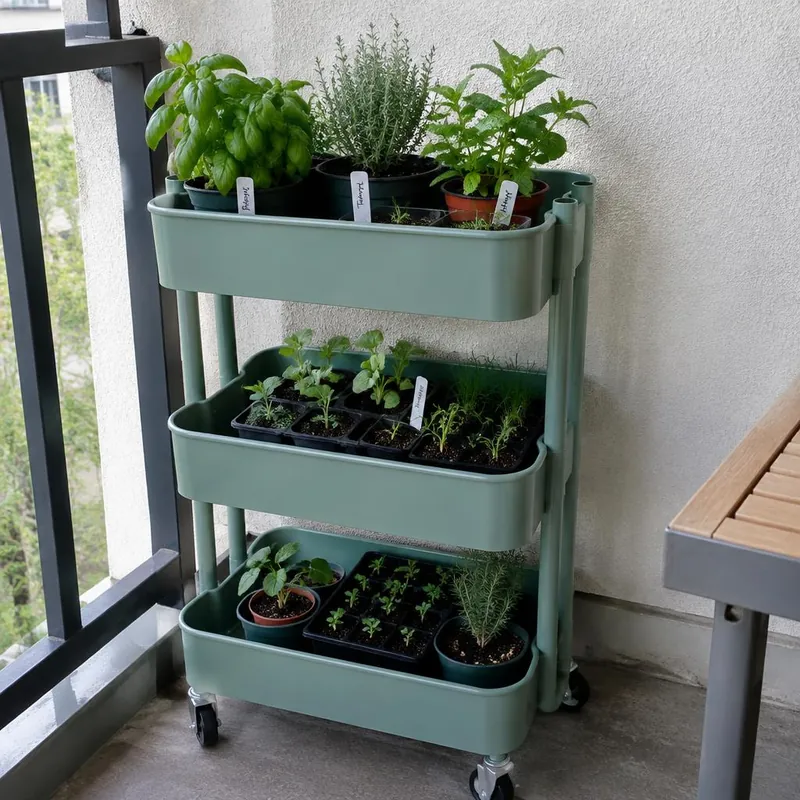
The popular tiered plastic utility carts are cheap, light and genuinely weatherproof, which makes them the easiest cart option. The shallow trays suit seedlings and small pots more than deep-rooted crops. Move it around to follow light through the season, and keep it against the wall on windy days.
- Good plants: seedlings, leafy herbs, lettuce, small flower pots
- Find it: discount and home stores from about $15–25 new; plentiful secondhand
- Some snap-together assembly, no drilling
- Drainage: drill-free option — set nursery pots inside the trays on pebbles and empty collected water after watering
6. Weather-suitable wire shelving
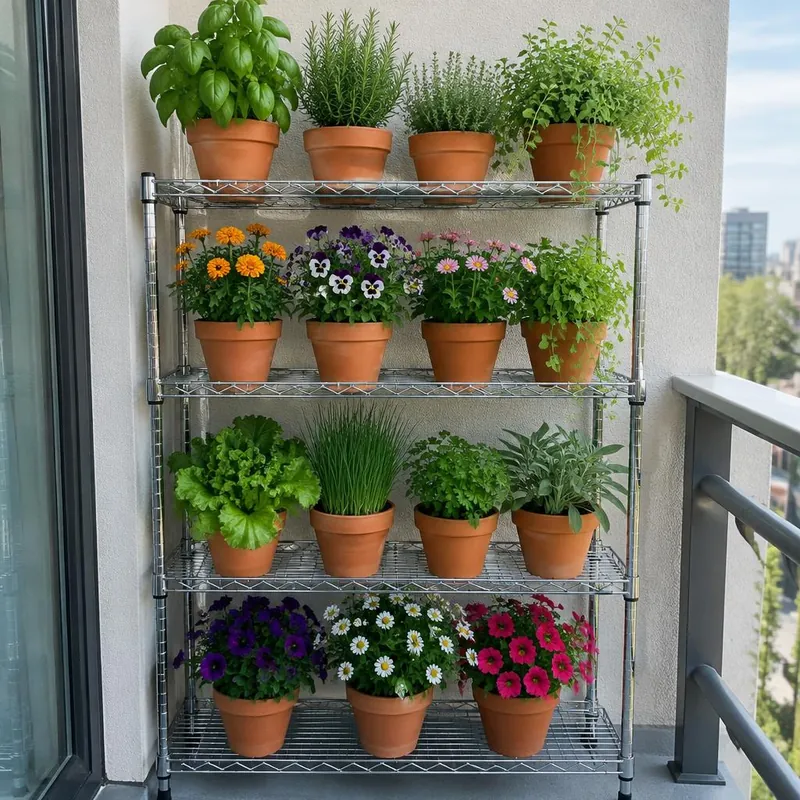
The chrome wire racks sold for kitchens and garages hold a surprising number of pots and let air and light through every shelf, which keeps foliage healthier than solid boards. For balconies, choose coated wire or stainless and keep it out of driving rain if you can — cheap chrome will rust at the joints over a season or two. Assemble it fully, level it, and load the heaviest pots on the bottom shelf.
- Good plants: a full herb and salad garden in matching pots
- Find it: homeware stores roughly $30–60; often cheap secondhand
- Assembly required (poles and clips); no drilling
- Watch out: tall units are top-heavy in wind — keep the top shelf nearly empty
7. Narrow tiered plant stands
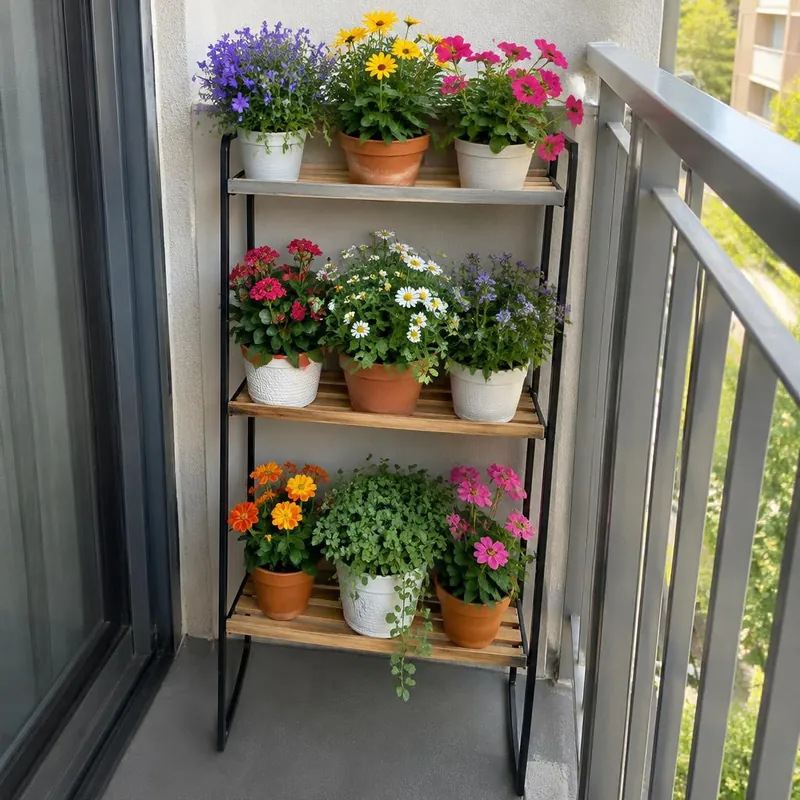
Slim three-tier stands are designed exactly for this problem: maximum plants in a sliver of floor. Because they're narrow and light, they're also the easiest to knock over, so tuck them against the wall and put the heaviest pot on the bottom tier. Wooden versions age faster than metal — a yearly coat of exterior oil helps.
- Good plants: a row of compact flowers or one herb per tier
- Find it: garden centers and online from about $20–35
- Some light assembly, no drilling
- Watch out: keep at least a hand's width from the railing so nothing can be blown over the edge
8. Stackable planters
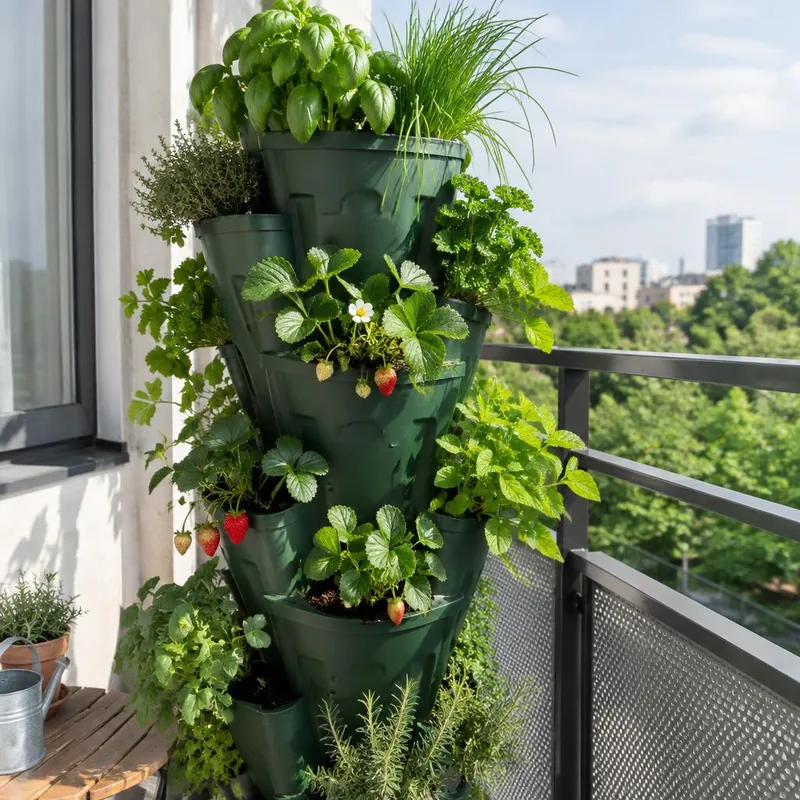
Stackable pocket planters grow a surprising amount in one square foot of floor: herbs in the top pockets, strawberries or flowers in the lower ones. Water the top and gravity does part of the work, but the bottom pockets often stay wet while the top dries out — check each level with a finger. Stand the column on a large saucer, and in strong wind bring it indoors or lay it on its side.
- Good plants: strawberries, herbs, lettuce; avoid anything tall or top-heavy
- Find it: garden stores and online from about $15–30 for a starter set
- No drilling; stacking takes minutes
- Watch out: the finished column is top-heavy — widen its base with a heavier drip tray
9. An outdoor-safe shoe rack as a plant rack
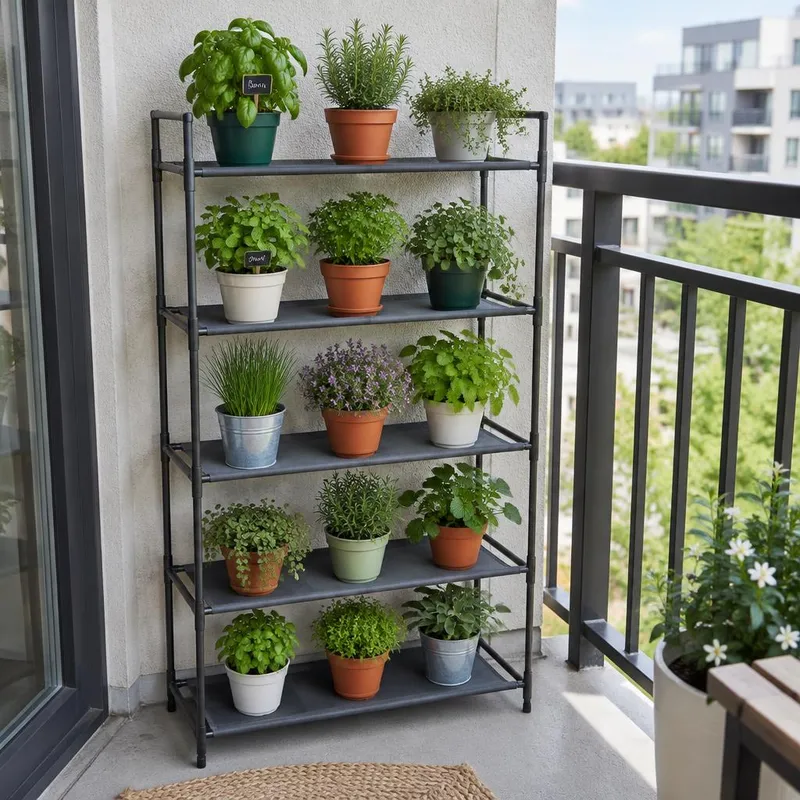
A slatted metal or plastic shoe rack is basically a plant rack in disguise: several levels of narrow shelving with built-in airflow. Pick one rated for outdoor use (mesh or coated metal), and if the shelves are angled for shoes, flip or shim them so pots sit level. It's one of the cheapest ways to test whether vertical growing suits your balcony before buying anything bigger.
- Good plants: small pots — succulents, herbs, seedlings
- Find it: discount stores and online from about $10–25
- Light assembly, no drilling
- Watch out: shallow shelves suit only small pots; keep it out of strong wind
10. A small outdoor storage bench
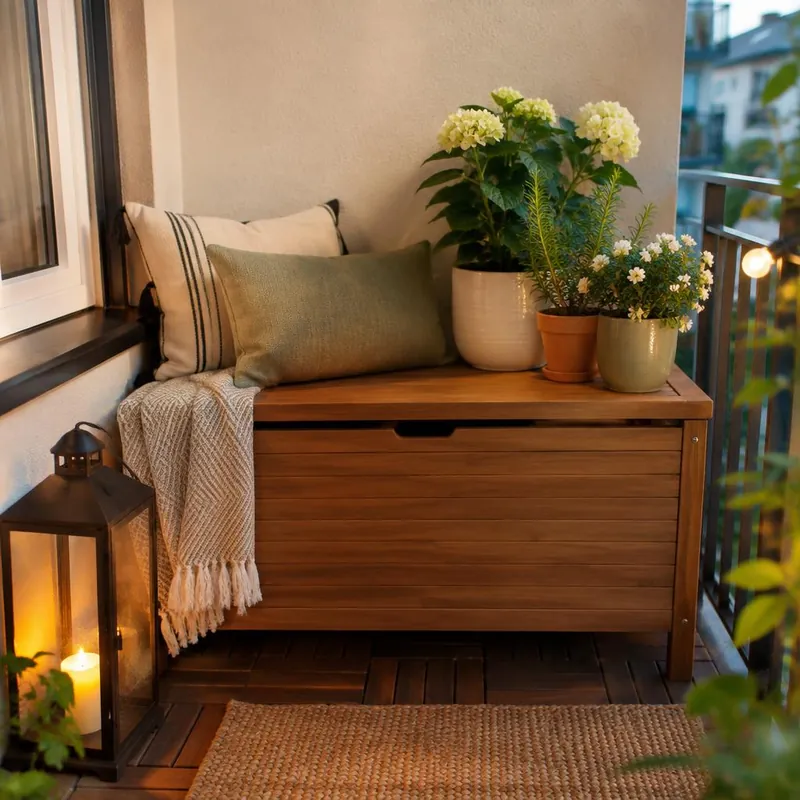
An outdoor storage bench solves two small-balcony problems at once: a place to sit and a weatherproof box for pots, tools and covers. Load the inside with the heavy stuff you don't move often and keep the seat top for two or three feature pots. Resin and treated-wood versions cope with weather; indoor furniture won't, even with a coat of spray sealant.
- Good plants on top: one medium statement pot or a trio of small ones
- Find it: home stores roughly $40–90 new; sometimes secondhand
- Some assembly, no drilling
- Watch out: a seated person plus pots adds up — keep the total modest and mind the weight limit
11. A freestanding trellis in a properly sized planter
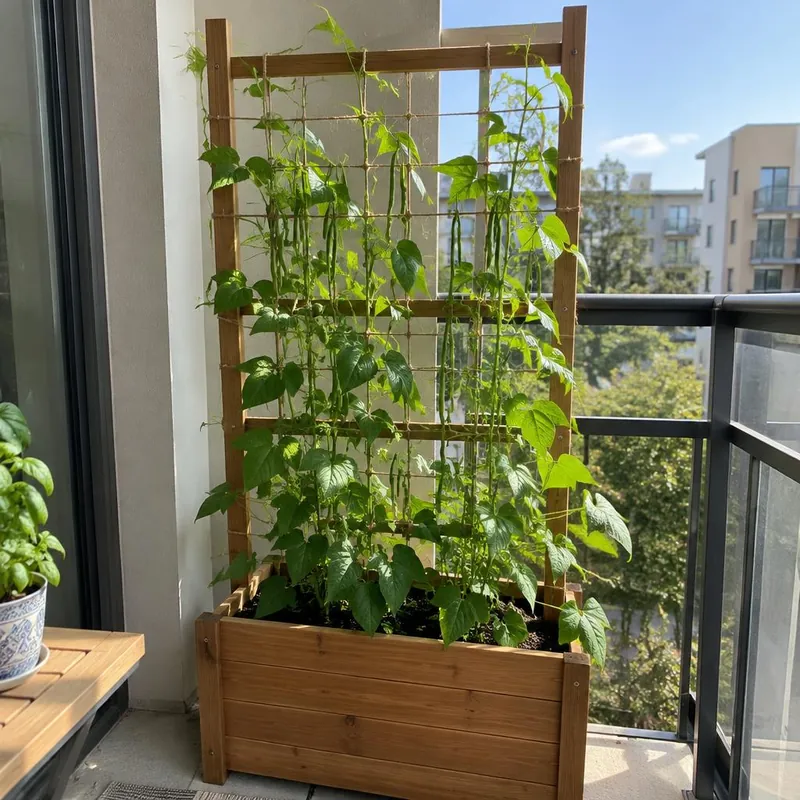
Climbers like beans, peas and some flowers grow up instead of out — the ultimate space saver for a small floor. The trick is stability: the planter must be wide and heavy enough to hold the trellis upright with a full-grown plant catching wind, roughly a 40–50 cm (16–20 in) pot for beans. Push the trellis deep into the mix at planting time so roots aren't disturbed later, and never rely on tying it to the railing.
- Good plants: pole beans, peas, climbing nasturtiums, cherry tomatoes on string
- Find it: trellis and pot together about $25–50; both often secondhand
- No drilling; the planter is the anchor
- Watch out: a leaf-covered trellis is a wind sail — reposition to a sheltered spot in storms
Related guide: 10 Easy Vegetables to Grow in Containers
12. A secondhand outdoor-safe bookcase
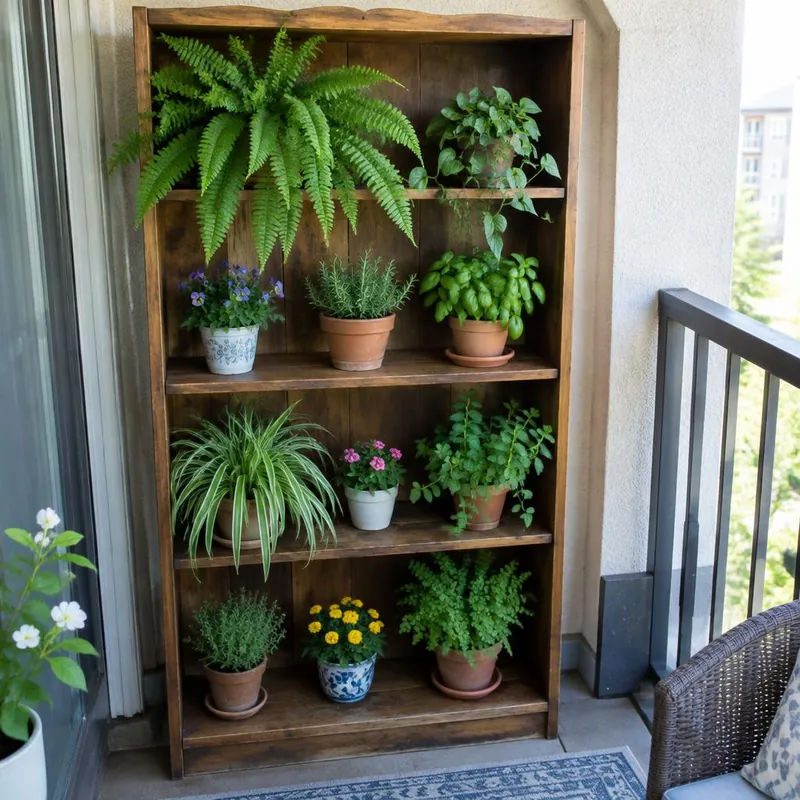
Solid-wood bookcases are everywhere secondhand, and on a sheltered or covered balcony they make superb plant shelves. Accept that untreated indoor furniture will not survive an exposed balcony — water stains, warped boards and lifted veneers come fast — so either choose a covered spot, seal it properly with exterior products, or embrace it as a seasonal piece you refresh. Anchor-height units should lean nothing: check level and keep heavy pots low.
- Good plants: ferns, herbs and flowers in a matched row of pots
- Find it: charity shops and online marketplaces, often $10–30
- No assembly, no drilling
- Watch out: if the balcony is exposed, treat this as a fair-weather shelf and bring pots forward in storms
13. Repurposed sturdy crates
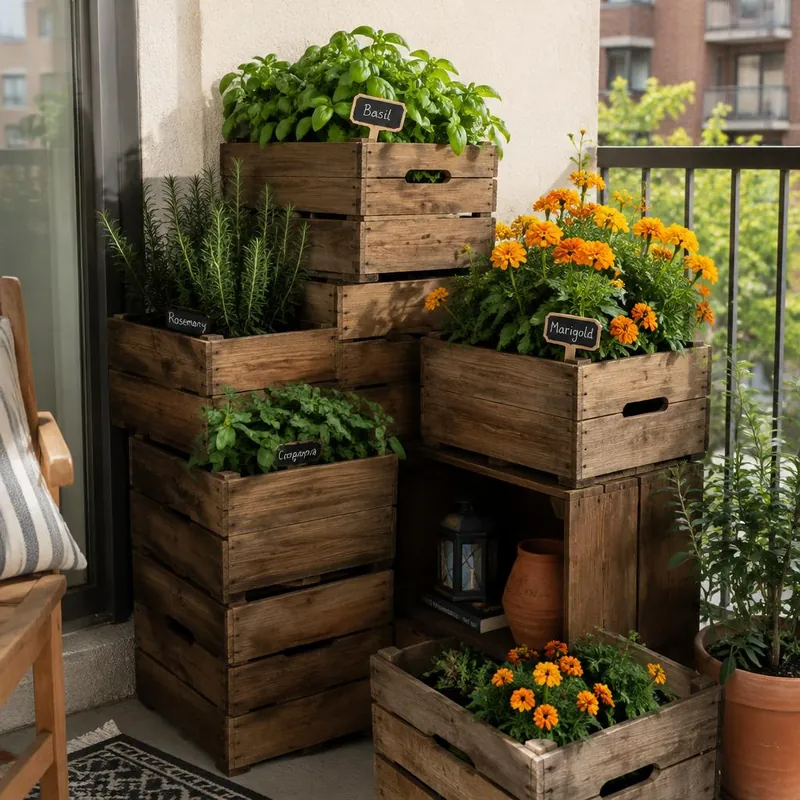
Wooden crates stack into instant rustic shelving, and with a drilled drainage hole each one becomes a planter box deep enough for herbs and flowers. Line the inside with landscape fabric or an old tote bag before adding soil so the wood lasts longer and water doesn't wash soil out of the slats. Stack no higher than two or three, keep the stack against the wall, and check that each crate is genuinely solid — flimsy decorative crates rot and split.
- Good plants: herbs, lettuce, marigolds, strawberries
- Find it: fruit markets, craft stores and secondhand, about $5–15 per crate
- One drainage hole per planted crate (small hand drill or a hot tool); no wall fixing
- Drainage: raise the bottom crate on pot feet so water can escape
14. Hanging baskets on approved freestanding supports
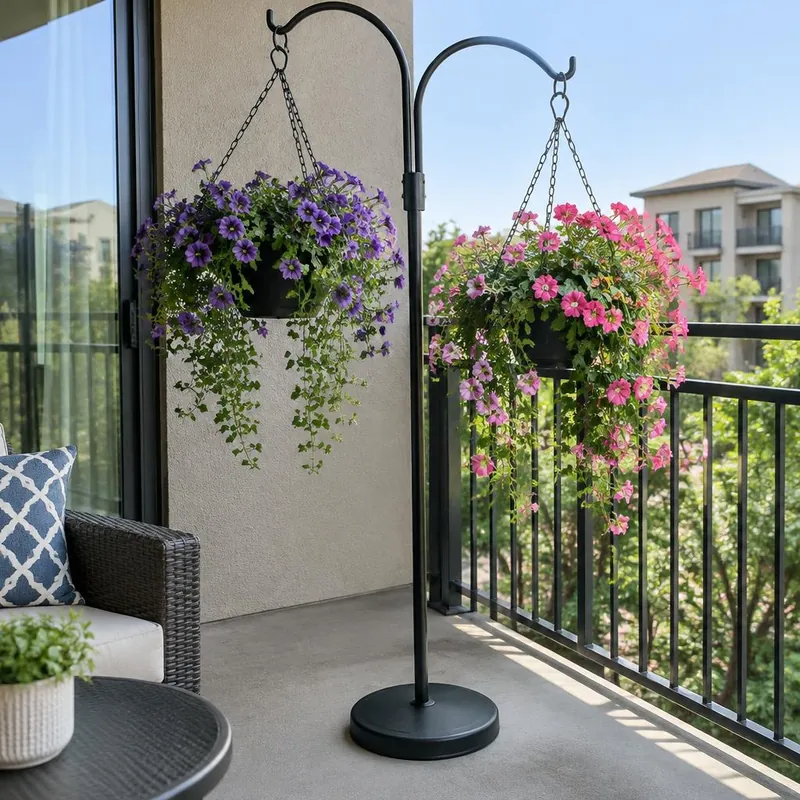
Hanging baskets lift colour to eye level without using any floor at all — but only if they hang from something stable. A weighted freestanding hook stand works well; the balcony above or your building's fixtures only with permission. Baskets dry out faster than any other container on a balcony, so water daily in summer heat and line baskets with coco fibre to slow evaporation.
- Good plants: trailing petunias, calibrachoa, nasturtiums, trailing strawberries
- Find it: basket plus stand about $25–45; baskets often $5 secondhand
- No drilling when using a weighted stand
- Watch out: swinging baskets in wind can shed water and petals — shelter them or size up the stand
Related guide: How Often Should You Water Balcony Plants?
15. A folding outdoor table as a plant workbench
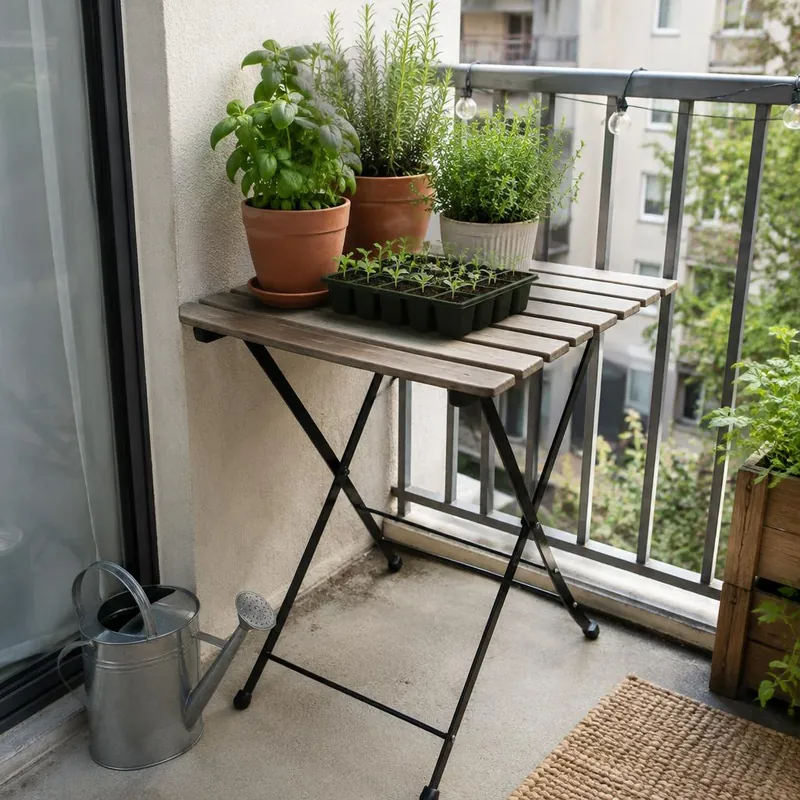
A small folding bistro table is both a display surface and a potting bench: repotting, sowing and deadheading all go better at waist height than crouched on the floor. When you're done, everything folds flat against the wall. Choose a metal or slatted-wood outdoor table, not an indoor one, and keep the legs locked before loading it with pots.
- Good plants: seed trays, small herb pots, anything you're actively working on
- Find it: roughly $20–40 new; very common secondhand
- No drilling; unfolds ready to use
- Watch out: don't overload a small table — a heavy pot on an edge can tip it
16. Compact corner shelving
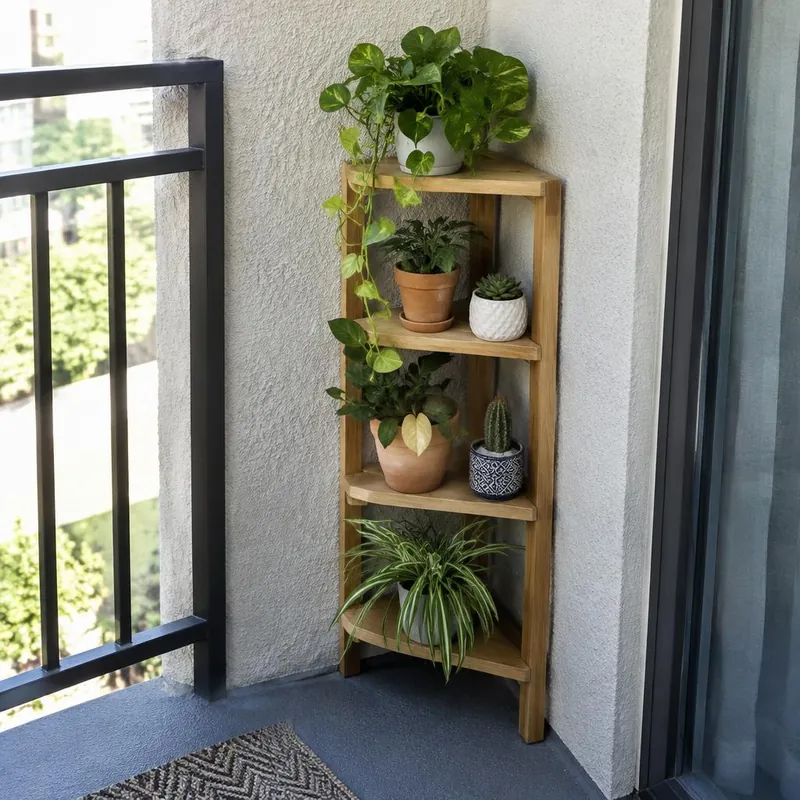
Balcony corners usually sit empty because nothing rectangular fits — corner shelving turns that dead space into four or five tiers of plants. Corner units have a naturally wide footprint relative to their height, which makes them steadier in wind than tall narrow racks. Measure the corner before buying; these units come in surprisingly different footprints.
- Good plants: a mixed collection — foliage, herbs, one flowering pot
- Find it: home stores and online roughly $25–50
- Light assembly, no drilling
- Watch out: keep the unit clear of the door swing and drainage path
17. Reused outdoor-safe containers as planters
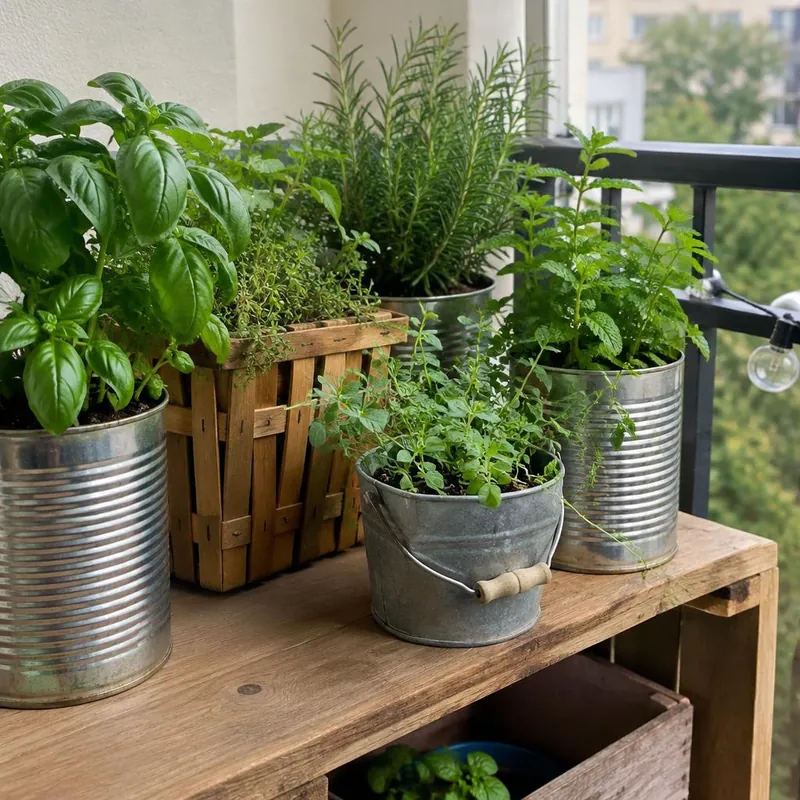
Almost any sturdy, food-safe container — large tin cans, buckets, wooden baskets, old pots — can become a planter if you give it a drainage hole and weather-appropriate finish. Rinse thoroughly, add holes in the base, and skip anything that held chemicals. Metal heats up in direct sun, so use it for tough plants and check water more often on hot days.
- Good plants: herbs and flowers for cans; tomatoes and peppers for 5-gallon buckets
- Find it: free — your own recycling and cupboards
- One drainage hole per container; no drilling into the building
- Watch out: flimsy cans and baskets split or rust within a season — enjoy them as short-term planters
Related guides: Best Pots and Containers for Balcony Gardening · 12 Herbs That Grow Well on Balconies
18. A DIY herb display on small movable stands
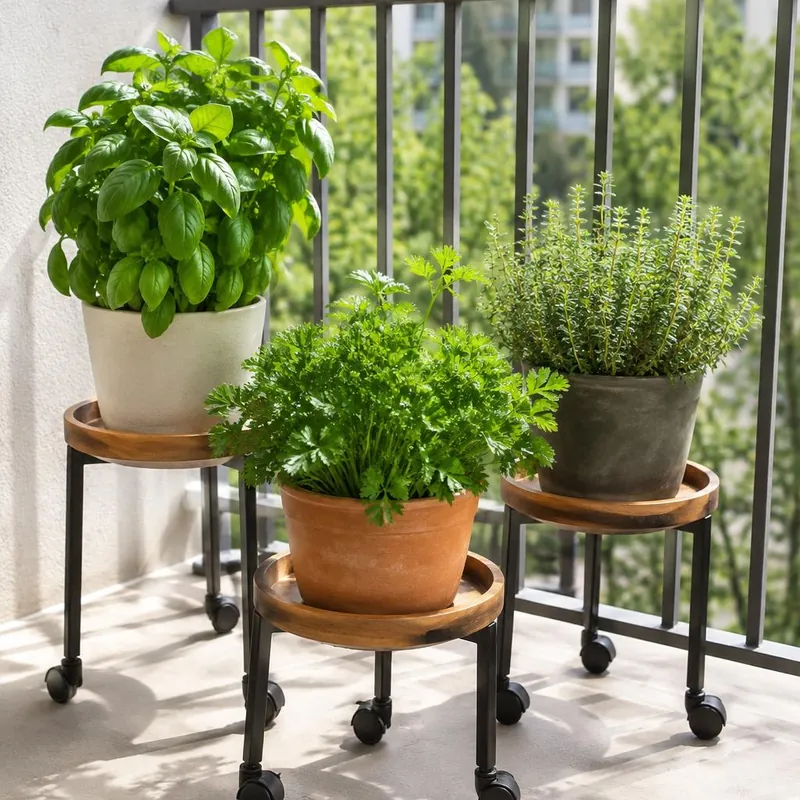
Individual single-pot stands cost little and add up to a flexible herb garden: move each herb to match its light, lift pots off a wet floor, and rearrange the whole display in a minute. Group three or four at different heights near the kitchen door so harvesting becomes automatic. Give mint its own pot on its own stand — it spreads into everything.
- Good plants: basil, parsley, chives, thyme, oregano (mint alone)
- Find it: $8–15 each new; thrifted stools and upturned pots also work
- No drilling, no assembly
- Watch out: raised pots dry faster — check them daily in summer
Related guide: 12 Herbs That Grow Well on Balconies
19. Train pothos vines upward with DIY supports
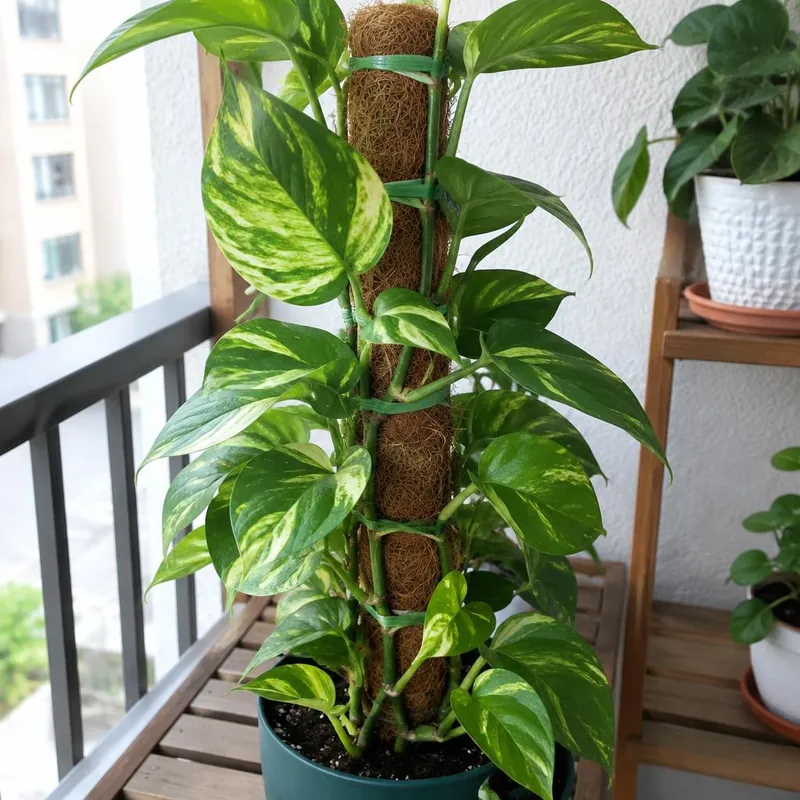
Pothos is famous for trailing over shelves and along floors, but given something to climb it grows upward with bigger leaves — and stays out of your walkways. Push a support into the pot while the roots are small so you don't damage them later: bamboo stakes tied into a tepee, a small wire trellis with safely finished (capped or coated) ends, a moss or coir pole, a mini ladder made from garden stakes, or a sturdy repurposed plant support. Keep the pot itself stable — a top-heavy vine in a light pot tips easily — and guide stems to the support with soft plant ties or twine in loose figure-eights, never tight loops that cut into stems. Pothos climbs naturally when given suitable support, but expect to tuck in new growth now and then and prune back the stragglers.
- Care: pothos wants warmth, bright indirect light and protection from frost and strong direct sun — grow it in a sheltered spot and bring it indoors before cold nights
- Pets: pothos is toxic to cats and dogs if chewed, so skip it or place it well out of their reach
- Safety: avoid sharp exposed wire ends and wobbly supports, and never fasten supports to railings or walls without permission
- Find it: bamboo stakes and coir poles are a few dollars at garden stores; the pothos cutting itself is often free from another plant
Related guide: 15 Best Plants for Apartment Balconies
20. Repurposed bottles as simple drip watering helpers
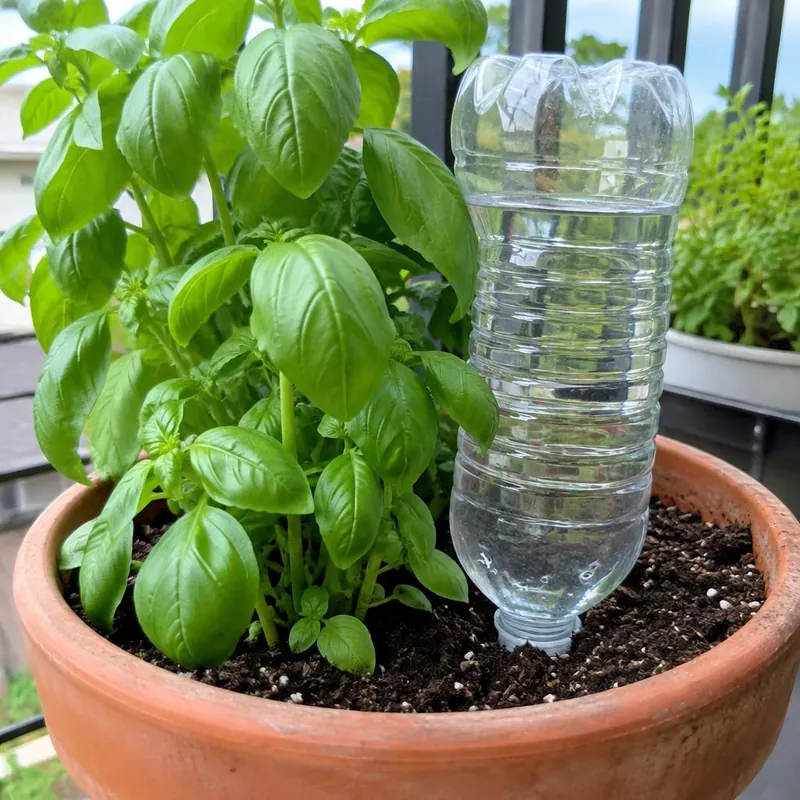
Our one non-furniture idea: a used plastic bottle with a few pinholes in its cap, pushed neck-down into the soil, drips slowly over hours — a cheap buffer for hot days and short trips. It doesn't replace proper watering, and it suits big, thirsty pots far better than small ones, where it can waterlog the mix. Test each bottle once while you're home to see how fast it drains and how many holes you need.
- Good use: large tomato and pepper pots, big herb containers, thirsty flowering plants
- Find it: free — any 1–2 litre bottle from your recycling
- No drilling into anything structural; just pinholes in the cap
- Watch out: never leave a drip bottle running against a pot with no drainage or an empty saucer to overflow
Related guides: How Often Should You Water Balcony Plants? · How to Grow Tomatoes on a Balcony
Safety, drainage and renter rules checklist
Whatever you build, run through this list before you call the garden finished.
Common questions
How can I garden on a balcony without drilling anything?
Choose freestanding pieces — ladder shelves, folding stands, carts, crates and weighted hanging-basket stands — and keep them against the wall side of the balcony. Stability comes from the piece's own footprint and weight distribution, not from fixings. Anything attached to the building needs permission first.
What should I look for when buying secondhand furniture for plants?
Solid metal or solid wood rather than particleboard, a stable base, no deep rust or rot in load-bearing joints, and a size that fits the spot with room to walk past. Assume indoor furniture is fair-weather: without real weatherproofing it will warp or rust on an exposed balcony.
Do I need drainage holes in every container I plant?
Yes — any container with roots in it needs an open drainage hole, or sit a draining nursery pot inside it as a liner and empty collected water after watering. Decorative covers without holes are fine only as outer cachepots.
How do I know if my balcony can handle the weight?
Wet potting mix, pots, plants and stored water all add up — a large wet container can be surprisingly heavy. Follow your building's rules and any confirmed load limit, and if nobody can confirm the capacity, ask building management or a qualified structural professional before installing heavy planters.