Choose the exact observation spots
Mark two or three safe pot positions, including the one under an overhang. On clear days note when direct sun arrives and leaves each spot. Record morning and afternoon intervals separately, then add them. Cloudy-day brightness does not replace the direct-sun record.
Over a week, add notes about wind, reflected heat and rain reaching the pot. You are not measuring a permanent annual condition: shadows shift with the sun’s seasonal position. Recheck before a different-season planting.
Turn observations into modest plant choices
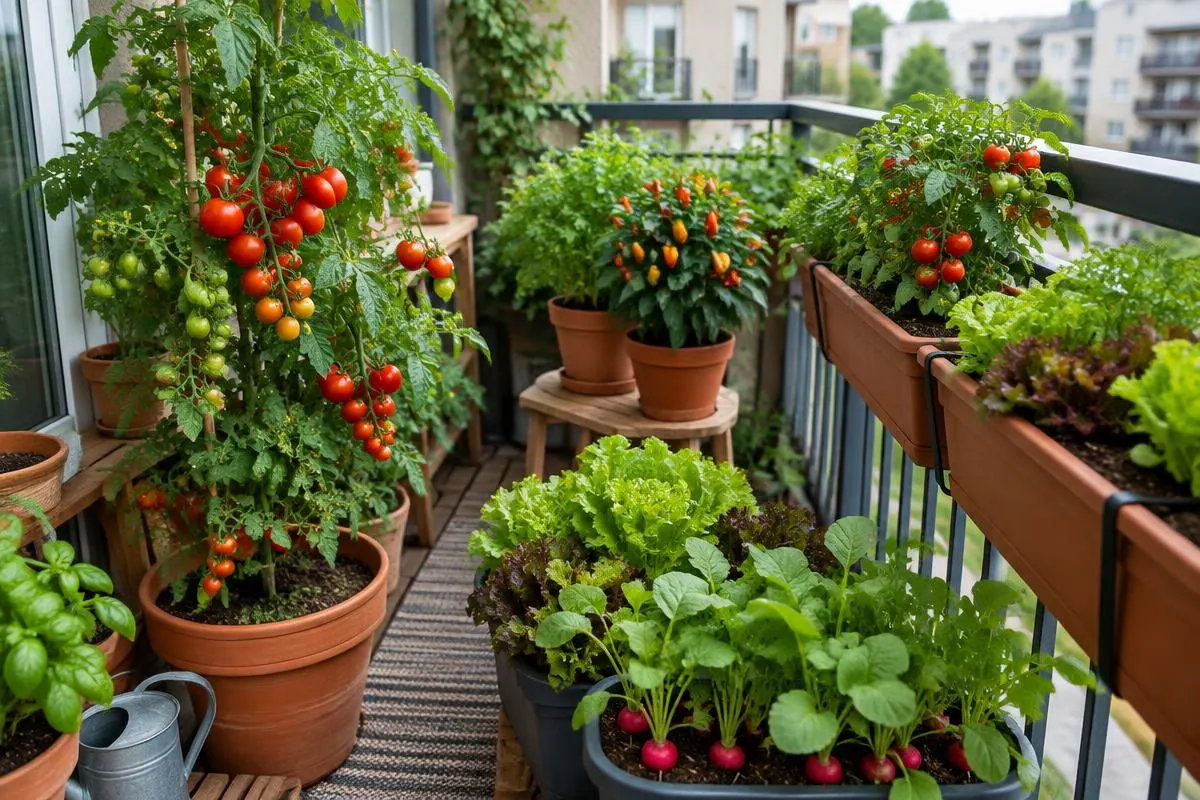
UC container guidance suggests around 6–8 hours of direct sun for most vegetables, with some leafy crops tolerating partial shade. Treat that as a useful starting point. A tomato needs both light and enough root space; a deeply shaded spot cannot be made productive simply by applying fertilizer.
If the record shows limited direct sun but useful bright light, try one small leafy planting or parsley and watch its growth. Do not buy a full tomato collection because the balcony faces south. Record results before expanding.
Add the city-specific stress you actually see
In Los Angeles, dry summer conditions make moisture observations important, especially on inland or west-facing balconies. In Tokyo, rainy-weather patterns do not mean an overhung pot receives water. In Kyoto, JMA’s hotter midsummer station averages make reflected heat worth checking, but actual balcony exposure remains decisive.
Add one sentence to your log: “After the hot afternoon, this pot was…” or “After rain, the mix was…”. Observe first, then change one thing, such as pot position or crop choice.
Make the next planting easier
Keep your dates and short notes in My Garden or on paper. Include the plant variety and location so you can compare like with like. The free planner can organize the measured conditions, but local growing instructions and your observations still guide decisions.
Read the city guides for climate context, then share a question in the moderated community if you are unsure. Describe your light hours and general region without posting an address.
Sources
- UC Cooperative Extension — Growing vegetables in containers
- Japan Meteorological Agency — 1991–2020 climate normals
Climate normals are long-term context. Current weather, cultivar instructions and building rules take priority.
See sample pages and current purchase details in the shop.