Start with the rules, not the catalogue
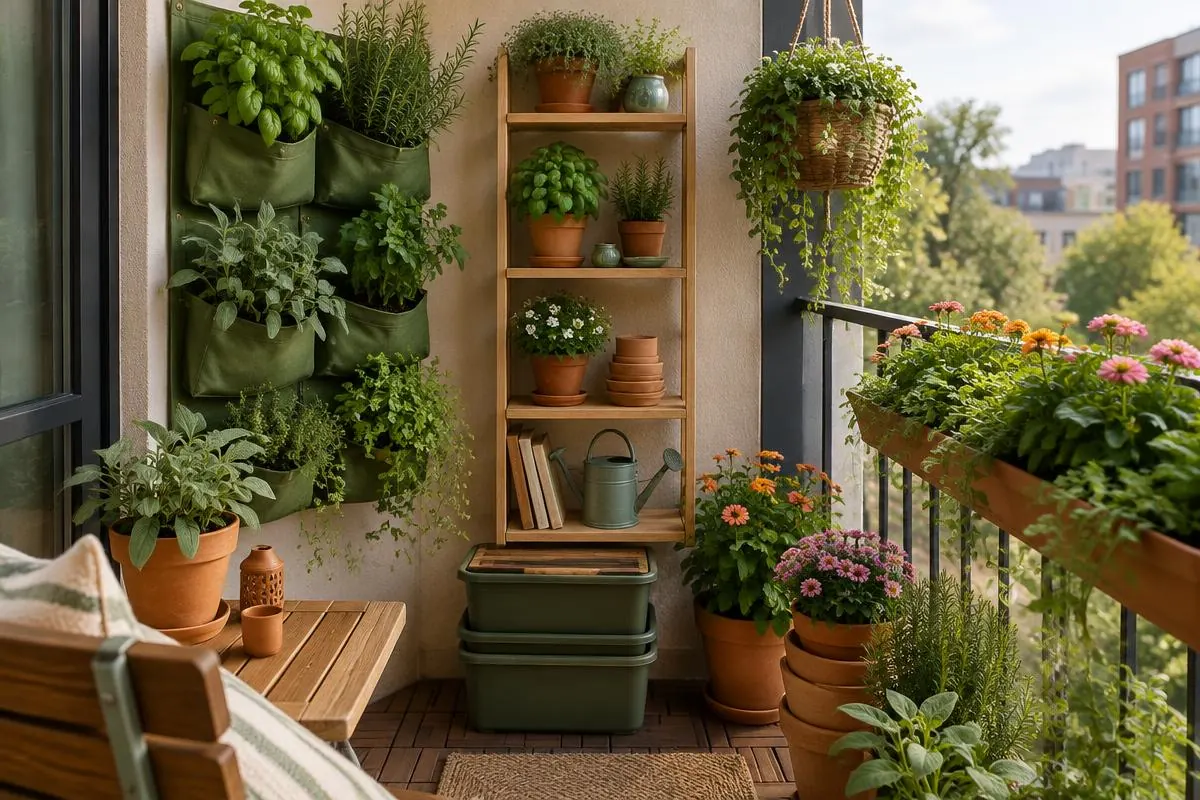
Read your lease or condominium rules and ask management about container placement, floor loads, attachments and water drainage. Rules vary between buildings and countries. A photograph of someone else’s hanging garden is not proof that the same installation is allowed at your home.
If the permitted load is unclear, ask a qualified professional rather than dividing a guessed weight across the floor. Planters, wet growing mix, stored water, supports and mature plants all contribute. Lightweight materials can reduce weight but do not establish structural safety.
Mark the space that must stay empty
Keep the door and access route usable. In Japanese shared housing, check where the escape hatch, ladder and breakaway partitions are located. UR guidance warns against obstructing evacuation features and placing pots on railings. Follow your own building’s requirements even if no one else seems to.
Do not use an emergency hatch as a shelf or cover a partition with trellis plants. Draw these areas first, then measure the space left for pots and for you to water them comfortably.
Think about a windy day
Keep pots inside the balcony boundary and away from exposed edges. Choose a stable floor position rather than balancing a narrow pot on a railing. Supports and wind screens can catch wind; do not attach them to shared structures without permission.
Before a strong-wind forecast, move manageable containers to the safer approved spot you planned. If a system is too heavy to move or its fastening is uncertain, consult management before installing it.
Test the watering route
Use pots with drainage holes, but route runoff safely. Empty saucers after watering instead of keeping roots in standing water. Keep loose soil and leaves out of drains and never discharge dirty water over the edge.
Before buying more, water your first pot and check where excess water goes. If you cannot water without wetting neighbors or blocking access, change the layout. A two-pot garden you can maintain safely is a better start than a crowded collection.
Sources
- UR Community — Balcony use and evacuation safety
- UC Cooperative Extension — Growing vegetables in containers
Climate normals are long-term context. Current weather, cultivar instructions and building rules take priority.
See sample pages and current purchase details in the shop.