Start with your actual light, not the city skyline
Observe the exact pot position over several clear days. Record direct morning and afternoon sun separately, including shadows from neighboring buildings and the roof. A bright view across Seattle is not proof that sunlight reaches leaves under an overhang.
Choose a first crop from the light you measure. Leafy greens can be a more modest trial than fruiting vegetables in partial shade, but deep shade is not a reliable food-growing space. Recheck the position as seasonal shadows shift.
Use local frost guidance before buying warm-season starts
WSU King County explains that Puget Sound frost timing varies with location, including elevation and proximity to water and urban areas. A regional planting window is a planning aid, not a guarantee for a windy balcony or a colder neighborhood.
For lettuce or other cool-season crops, follow the cultivar’s temperature and spacing instructions. Postpone tender warm-season plants until conditions suit them; one warm afternoon does not establish safe overnight temperatures. Check local forecasts and WSU advice instead of using a fixed nationwide planting date.
Give each crop root space and real drainage
WSU container guidance emphasizes adequate drainage and sufficient root room. Use a container with open drainage holes and a growing mix intended for pots. Larger plants generally require more root space, while shallow containers can dry more quickly.
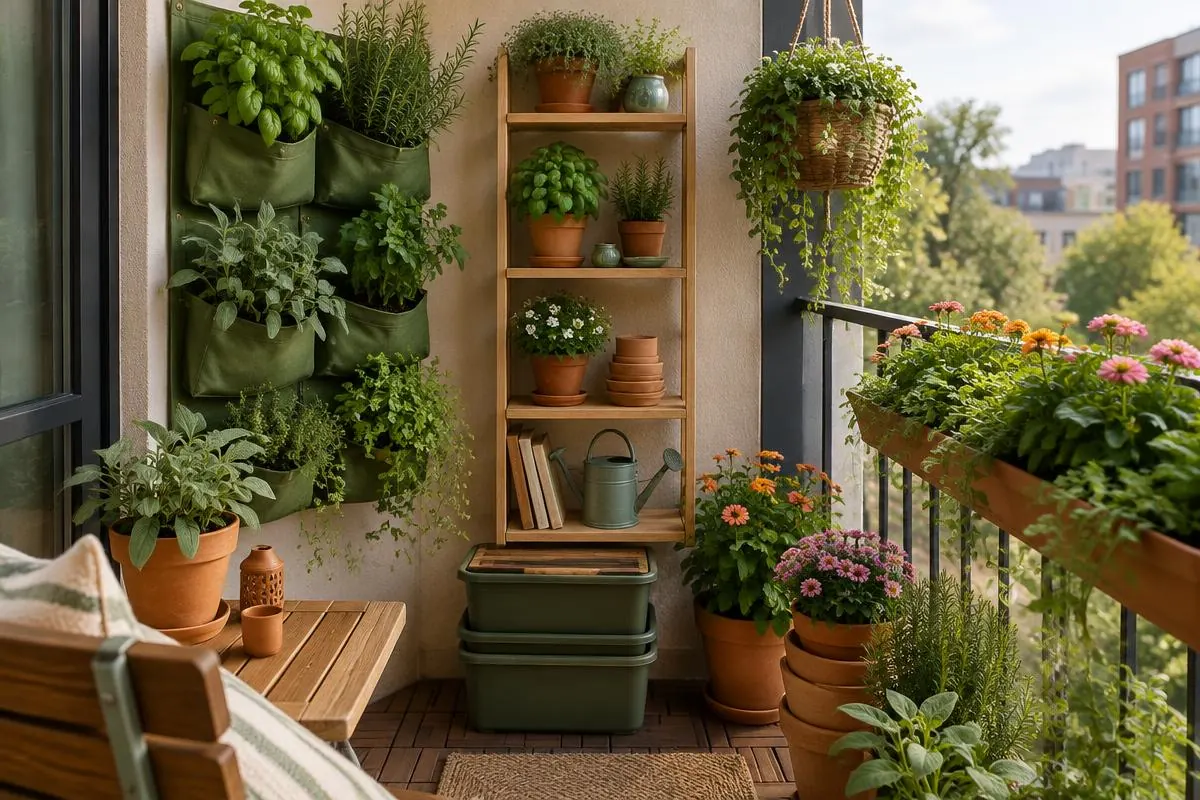
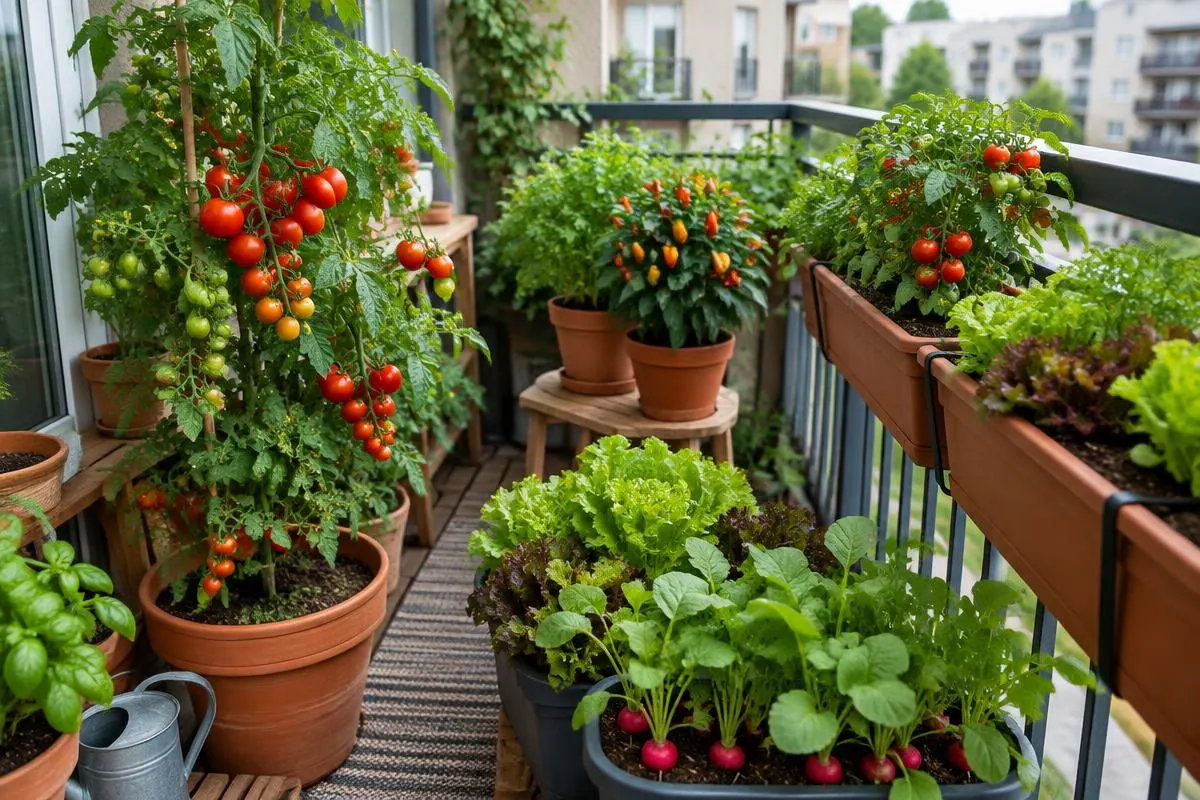
Check the mature size of a compact tomato before choosing its pot and support. If space or useful sunlight is limited, begin with one leafy crop and a suitable herb rather than squeezing a full-sized plant into a decorative bowl. Keep pots stable inside the balcony.
Rainy weather and summer drying need different checks
A covered pot may remain dry while rain wets the street. Inspect its growing mix rather than assuming the forecast supplies water. For an exposed pot, check drainage after prolonged rain and empty collected saucer water without sending runoff to neighbors.
In warmer or windy spells, check moisture more closely; do not carry a wet-season watering habit unchanged into summer. Note the pot location, weather and moisture in My Garden. A reminder is a prompt to inspect, not an instruction to water.
Keep winter expectations small and the space safe
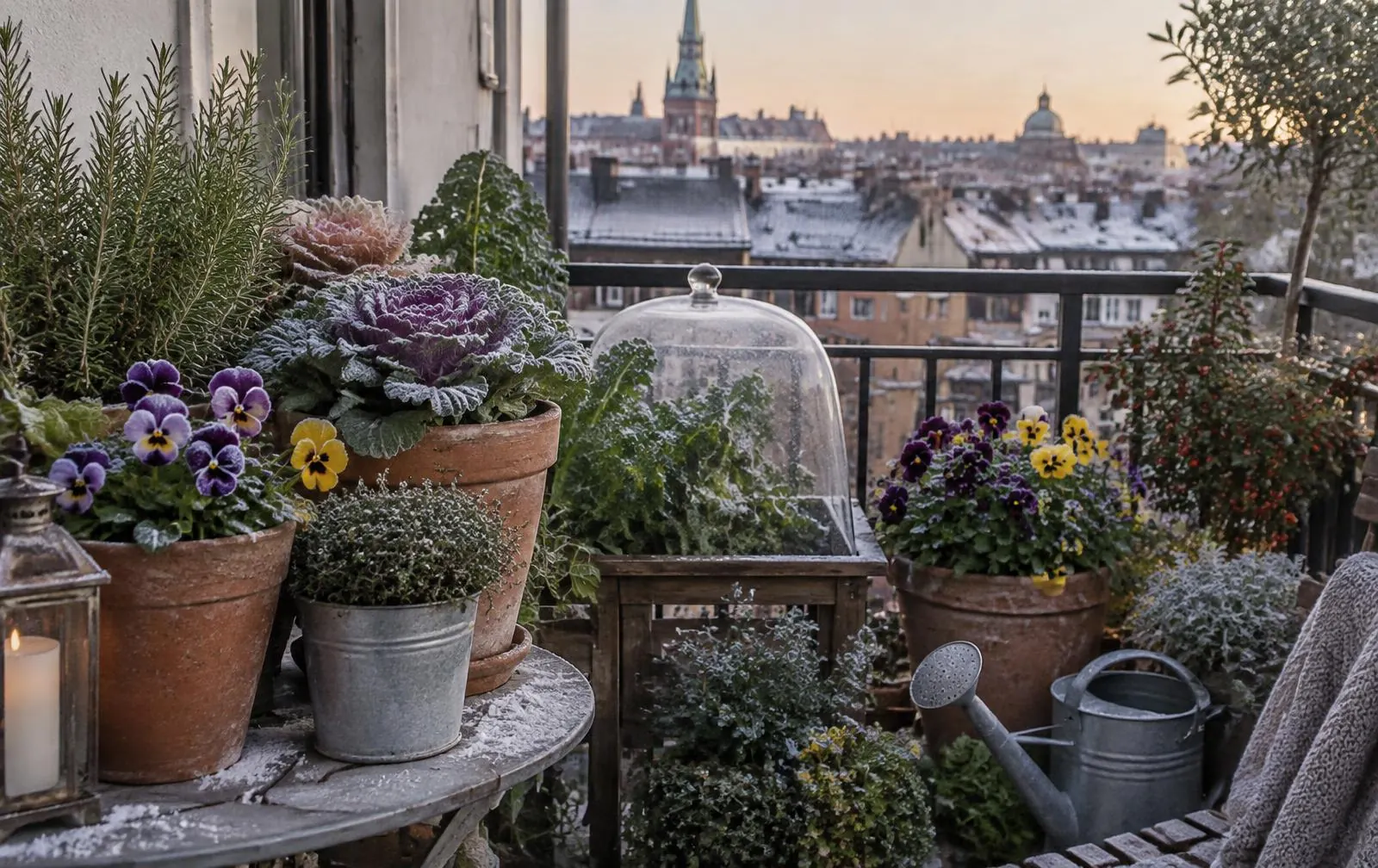
Lower seasonal light can slow growth even where a plant tolerates cool weather. Above-ground container roots do not have the same protection as roots in garden soil. Check each plant’s cold tolerance and prepare for forecasts rather than promising continuous winter harvests.
Before adding large planters, ask management about the lease, drainage, permitted loads and attachments. Wet mix, water and supports contribute weight; no generic pot-size rule proves structural safety. Keep doors and access routes open, then use the free planner to organize the conditions you recorded.
Sources
Climate normals are long-term context. Current weather, cultivar instructions and building rules take priority.
See sample pages and current purchase details in the shop.