Plan for hot midsummer pots
JMA 1991–2020 normals put Kyoto’s July and August mean temperatures above Tokyo’s. That station comparison supports paying attention to summer heat, not a prediction that every Kyoto balcony is hotter than every Tokyo balcony. Walls, sun hours and wind can change your actual conditions.
Observe reflected afternoon heat before placing containers. Roots in small pots can heat and dry quickly. Keep drainage open, check moisture rather than following a fixed daily dose, and avoid crowding plants into a stagnant corner. Move small pots away from harsh reflected heat where useful light remains.
Grow for the season and the light together
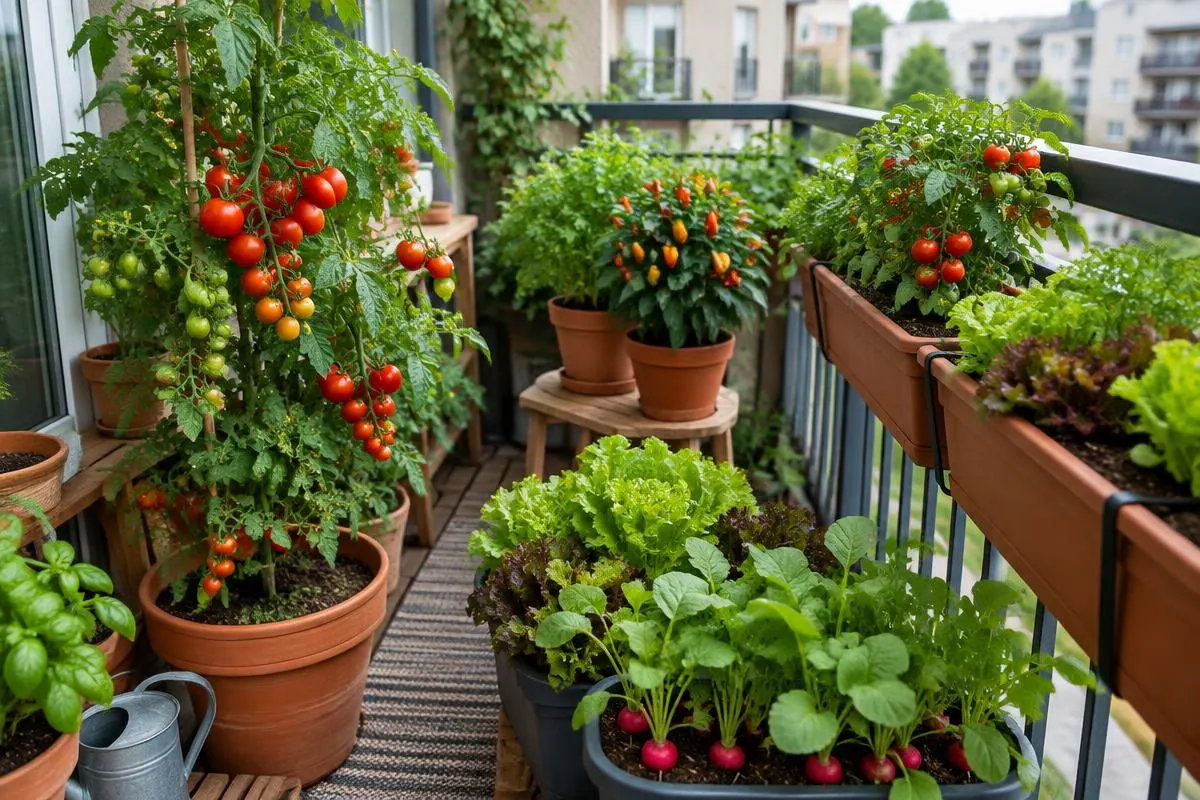
For useful tomato or pepper crops, plan around strong direct light—UC guidance suggests roughly 6–8 hours for most vegetables—and an appropriate container size. Partial shade may make modest leafy crops or parsley more sensible candidates. Too little light cannot be corrected by more fertilizer.
Cool-season greens are not automatically summer crops. Choose the variety and timing from local advice and its label, then compare those instructions with your balcony’s temperature and sun. If a heat wave arrives, adjust your expectations rather than trying to force a harvest.
Use Kyoto calendars as guidance, not guarantees
JA Kyoto explains that suggested sowing and planting periods are guides and vary across its service area. A calendar for the prefecture does not prove that a Kyoto City balcony, a hillside location and a colder northern area share identical dates.
Before buying seedlings, check the variety’s recommended temperatures and local forecast. Start a small planting first. Record when growth began, when you moved the pot and whether harvest timing matched your expectations; repeat observations become your own practical calendar.
Winter requires exposure checks
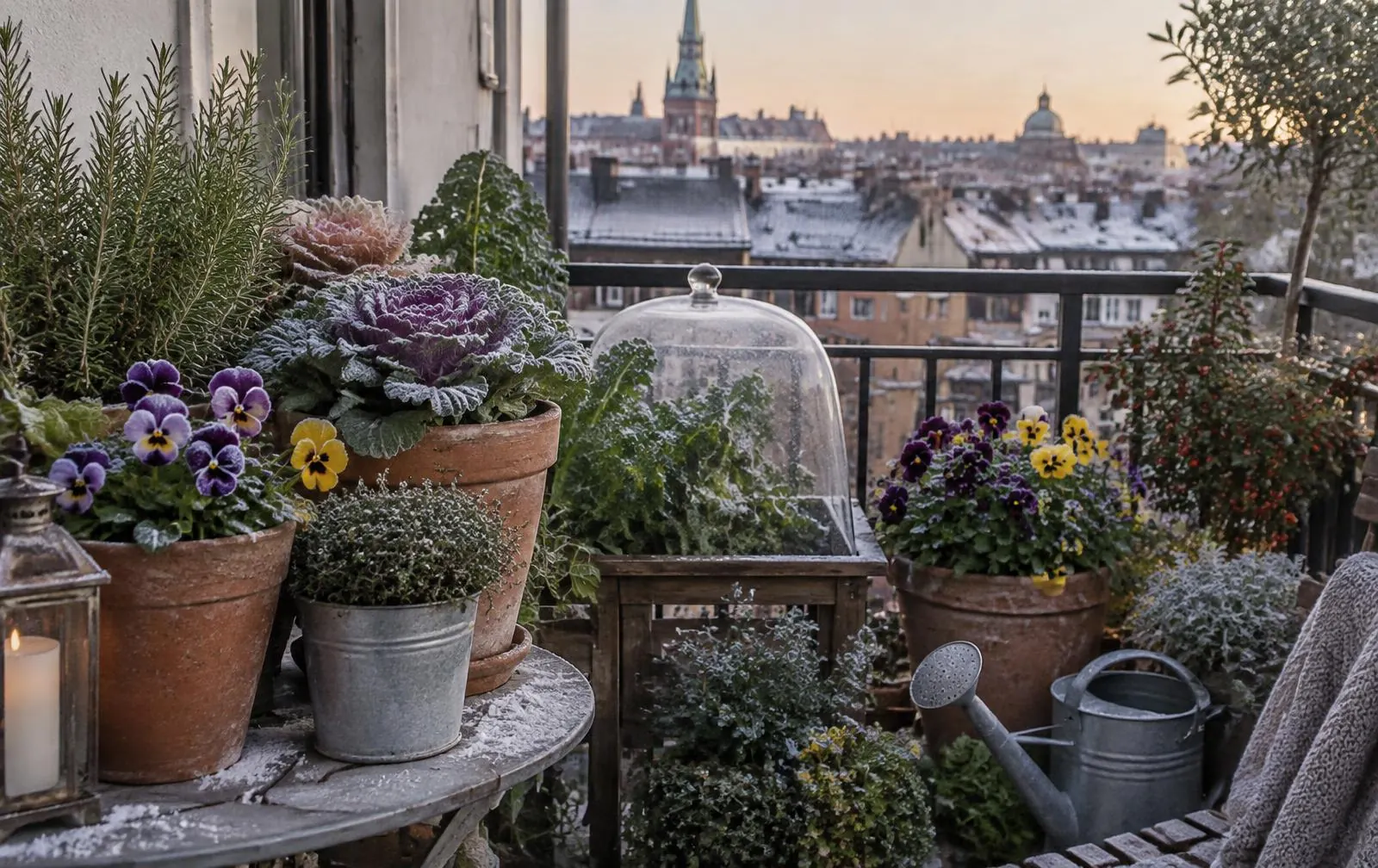
Inspect pot moisture before a cold spell and check the cold tolerance of the particular plant. Roots in above-ground containers are not insulated like roots in garden soil. Wind, rain exposure and short winter sun can affect survival and slow growth.
JA Kyoto’s protection guidance cautions that covers do not guarantee complete frost protection. Do not promise year-round basil or uninterrupted winter harvests. Any temporary covering must be safely placed, ventilated as appropriate and permitted by the building.
Keep the garden compatible with shared housing
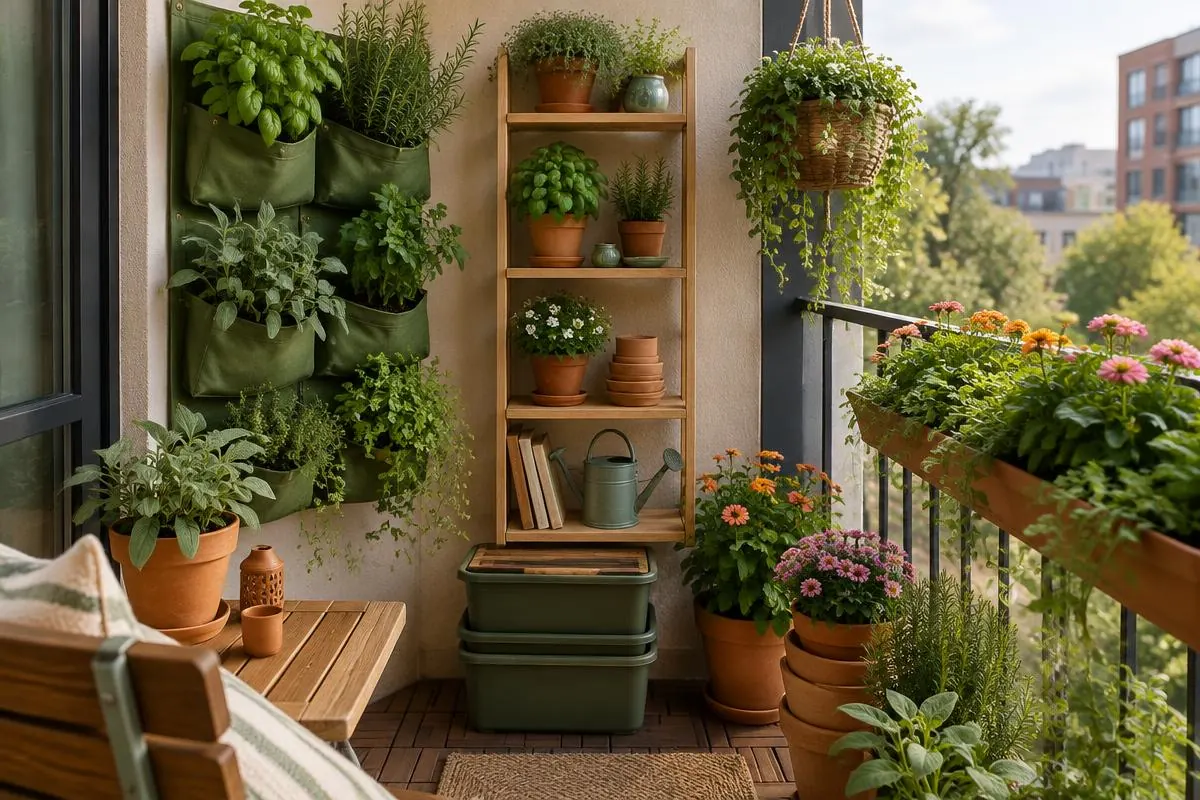
Keep pots away from railings, emergency hatches and the route to breakaway partitions. UR guidance is a useful safety reference, but your own lease and management rules govern the space. Ask about structural loads before adding large wet containers.
Check drains for soil and leaves, prevent runoff to neighbors and bring movable containers to a safer position ahead of strong winds. Begin with a small garden you can inspect easily. Use My Garden to note observations and the free planner to organize options—not to replace local weather or building advice.
Sources
- Japan Meteorological Agency — 1991–2020 climate normals
- JA Kyoto — Planning the growing year
- UC Cooperative Extension — Growing vegetables in containers
- UR Community — Balcony use and evacuation safety
Climate normals are long-term context. Current weather, cultivar instructions and building rules take priority.
See sample pages and current purchase details in the shop.