Use Osaka climate as context, not a planting guarantee
JMA’s 1991–2020 Osaka normals show mean temperatures of 27.7°C in July and 29.0°C in August. These are long-term station averages—not daytime highs, this year’s forecast or temperatures inside a pot. Kinki’s rainy-season pattern also makes drainage worth planning before you plant.
Choose timing from the cultivar’s instructions and current weather. Do not apply one planting month to all of Japan, or assume that a warm city guarantees frost-free container growing. Record the light reaching your balcony as well as the forecast.
Begin with crops matched to light and season
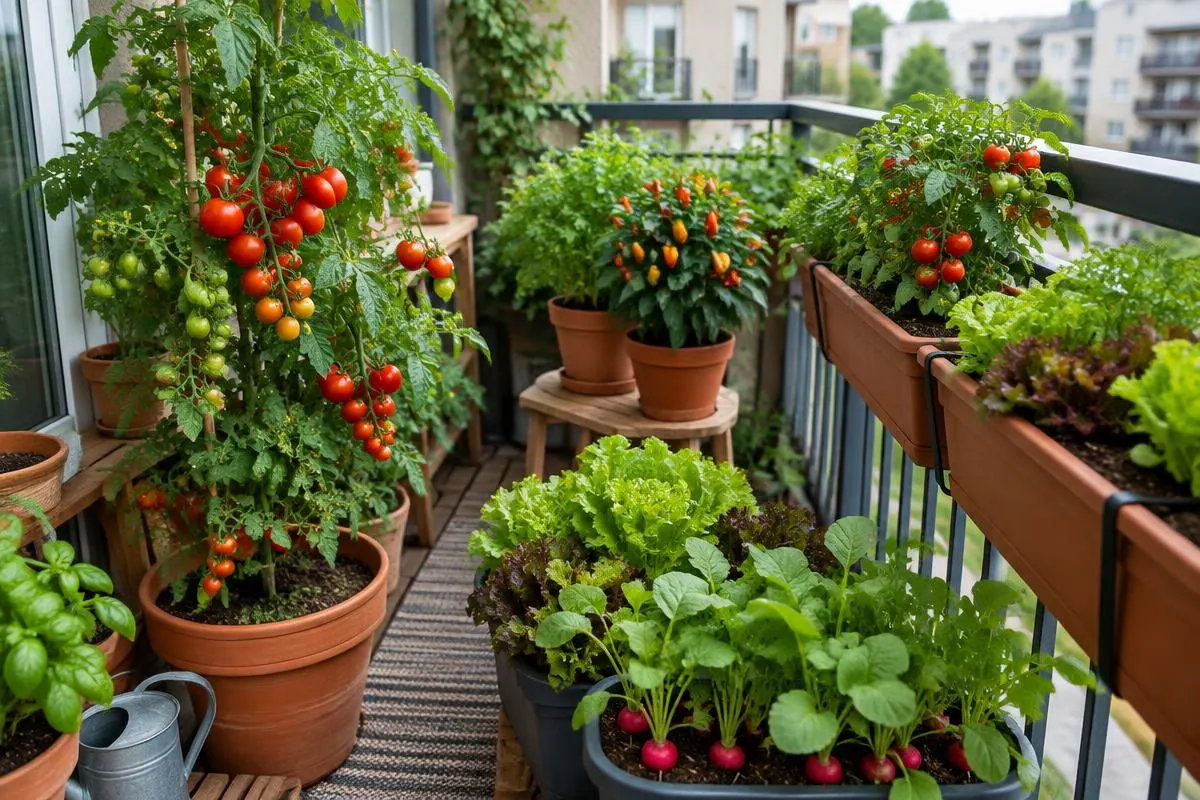
With adequate direct sun and root space, a compact fruiting crop can be a small trial in suitable warm conditions. With partial shade, modest leafy crops or parsley may be more realistic; too little light is not corrected by extra fertilizer.
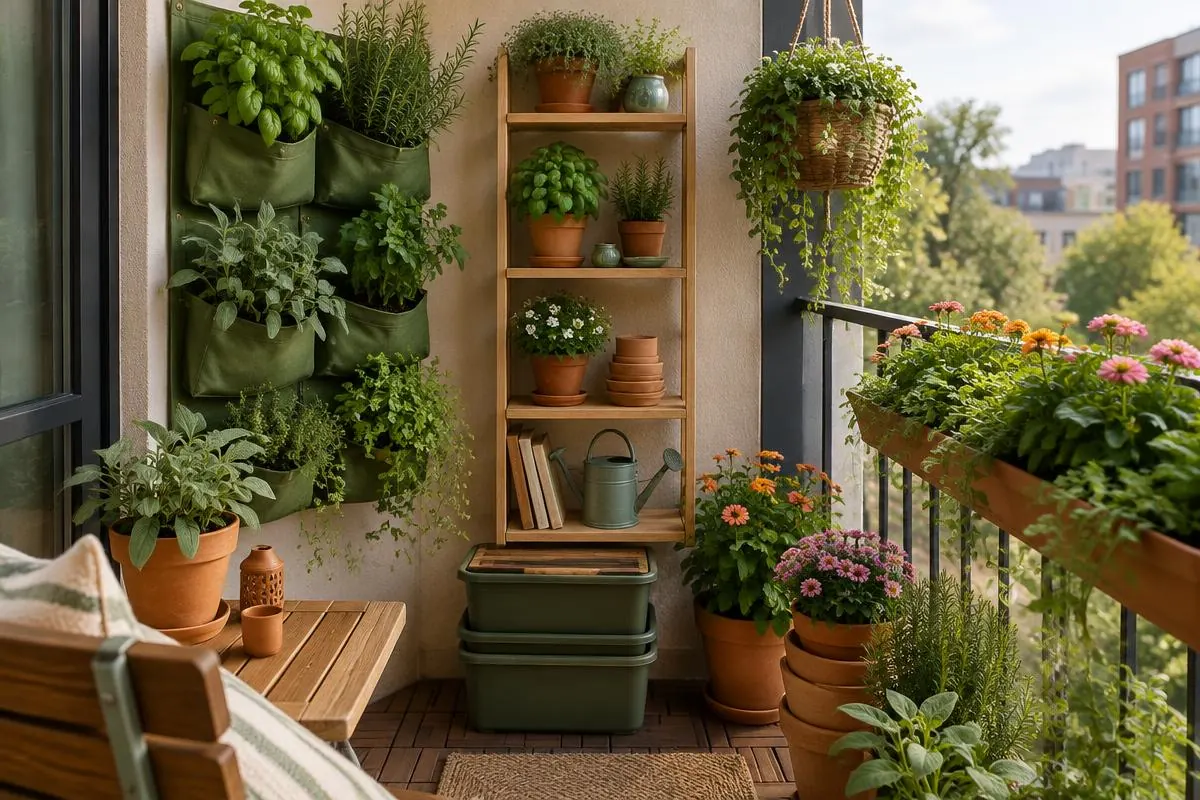
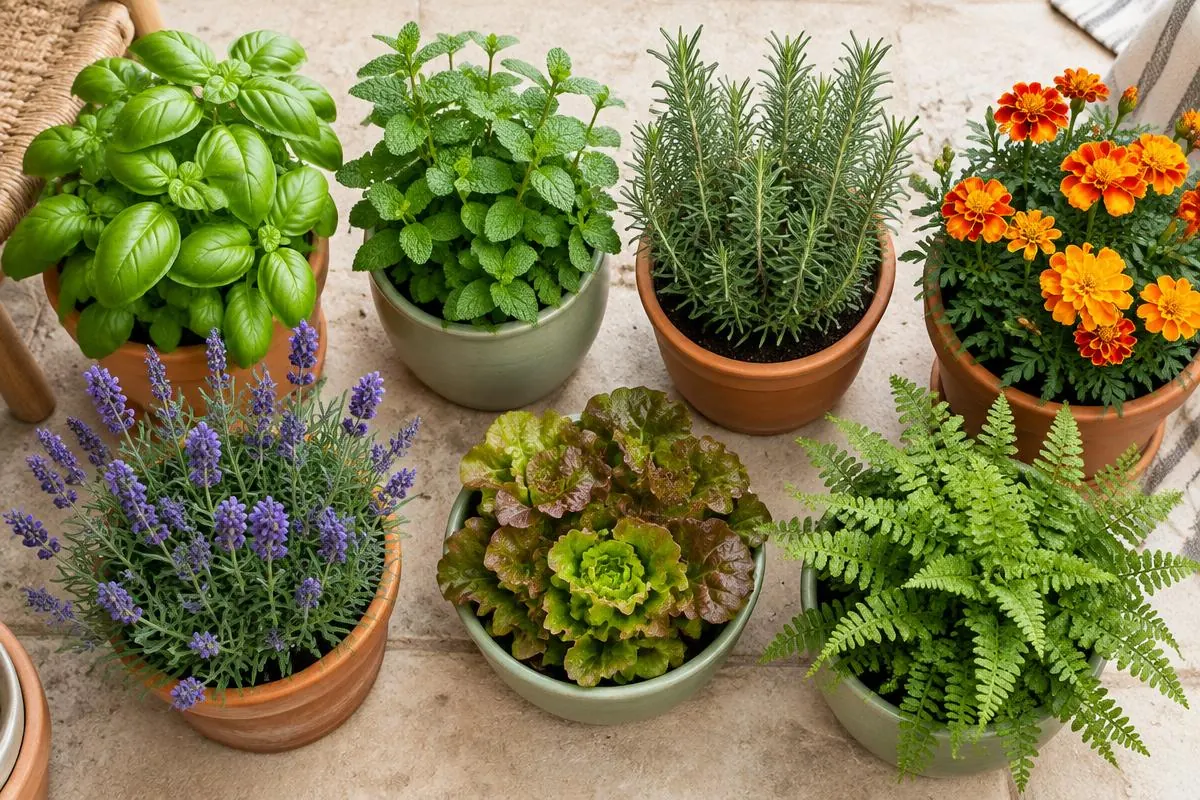
Cool-season lettuce is not automatically a good midsummer crop in Osaka. Read the variety’s temperature needs before buying. Keep herbs with different moisture preferences in separate pots so a thirstier crop does not dictate every plant’s watering.
Keep summer roots out of harsh reflected heat
A west-facing wall or hot floor can add stress beyond the regional air temperature. Observe pots during hot afternoons. Where possible, move a manageable pot away from harsh reflected heat while keeping useful light for its leaves. Any fixed shade equipment needs building approval.
Inspect soil moisture and drainage before watering a wilted plant. Heat and overly wet roots can also cause stress. Give plants room for airflow and avoid increasing fertilizer simply because summer growth has slowed.
Manage rain without flooding shared space
Rain may miss a covered pot or soak an exposed one. Use drainage holes and potting mix suitable for containers, check moisture after rain and empty standing water from saucers. A rainy forecast is not a reason to skip inspection.
UR guidance warns against clogged balcony drainage and careless water use that can cause leakage. Keep soil and leaves out of drains and manage runoff rather than washing water across the floor or over the edge. Your own building rules take priority.
Prepare before strong winds, keeping exits clear
Osaka City disaster guidance cautions against planters where they could fall. Keep containers inside the balcony, off railings, in stable approved positions. Before strong winds, move manageable pots to the safer position you planned; do not add unauthorized railing fastenings.
Leave escape hatches and routes to breakaway partitions completely clear, following UR guidance and your own management instructions. Check permitted loads before increasing planter size. Keep short weather and plant notes in My Garden, and ask the moderated community about general conditions without posting an address.
Sources
- JMA — Osaka 1991–2020 monthly climate normals
- JMA — Climate of Kinki
- UR — Balcony use, drainage and evacuation safety
- Osaka City — Everyday disaster preparedness
Climate normals are long-term context. Current weather, cultivar instructions and building rules take priority.
See sample pages and current purchase details in the shop.