Coastal shade is not inland afternoon sun
Los Angeles has a dry-summer pattern, but a roof overhang, neighboring tower or shaded courtyard may matter more to a pot than the regional forecast. Coastal cloud can reduce light; inland and west-facing spaces may receive stronger afternoon heat. Neither “south-facing” nor “Los Angeles” guarantees enough light for tomatoes.
For a week, record when direct sun reaches each proposed pot position. Note reflected heat from glass or masonry and whether wind crosses the balcony. Repeat the check when the season changes: winter light can be blocked even where summer light is plentiful.
Choose the first two pots by light
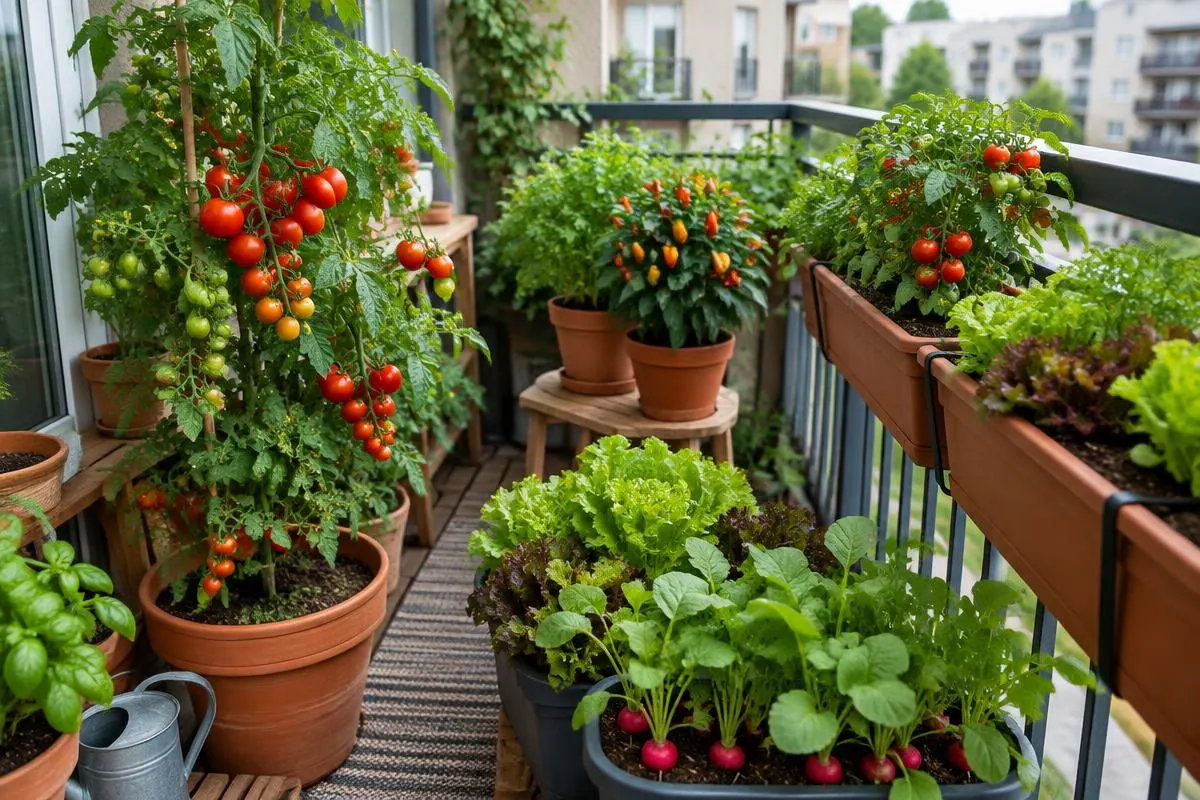
UC container guidance puts most vegetables at about 6–8 hours of direct sun. With that exposure, a compact tomato or pepper is a reasonable trial if you can provide its recommended pot size and support. With partial shade, try a small leafy crop or parsley before buying several fruiting plants. Deep shade is not a reliable vegetable-growing space.
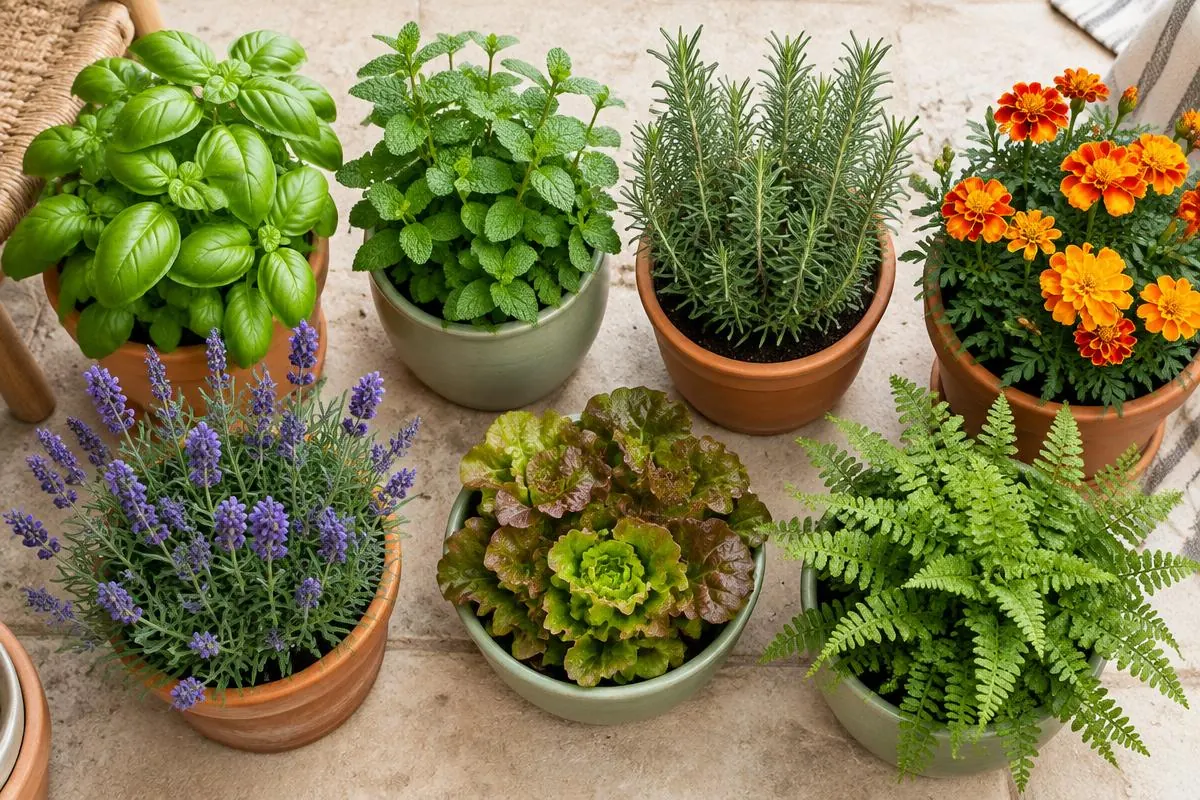
For sunny herbs, rosemary or thyme can be useful candidates in a freely draining container. Basil needs suitable warmth and closer attention to moisture; do not treat all herbs as having the same watering needs. Read cultivar labels for mature size and keep plants with different moisture needs in separate pots.
Dry summers call for observation, not automatic watering
Check potting mix and pot weight during hot, dry spells. Small containers and wind can accelerate drying, while a sheltered pot may stay moist longer. Water when the root-zone moisture indicates a need, wet the mix thoroughly and let excess drain. Control runoff and empty standing water from saucers.
UC guidance warns that midsummer container heat can stress roots. Place a pot where roots are less exposed to reflected afternoon heat without removing all useful light from the leaves. Temporary shading or moving a small pot can help, but do not install screens or fixtures without building approval.
Treat the cooler season as a different experiment
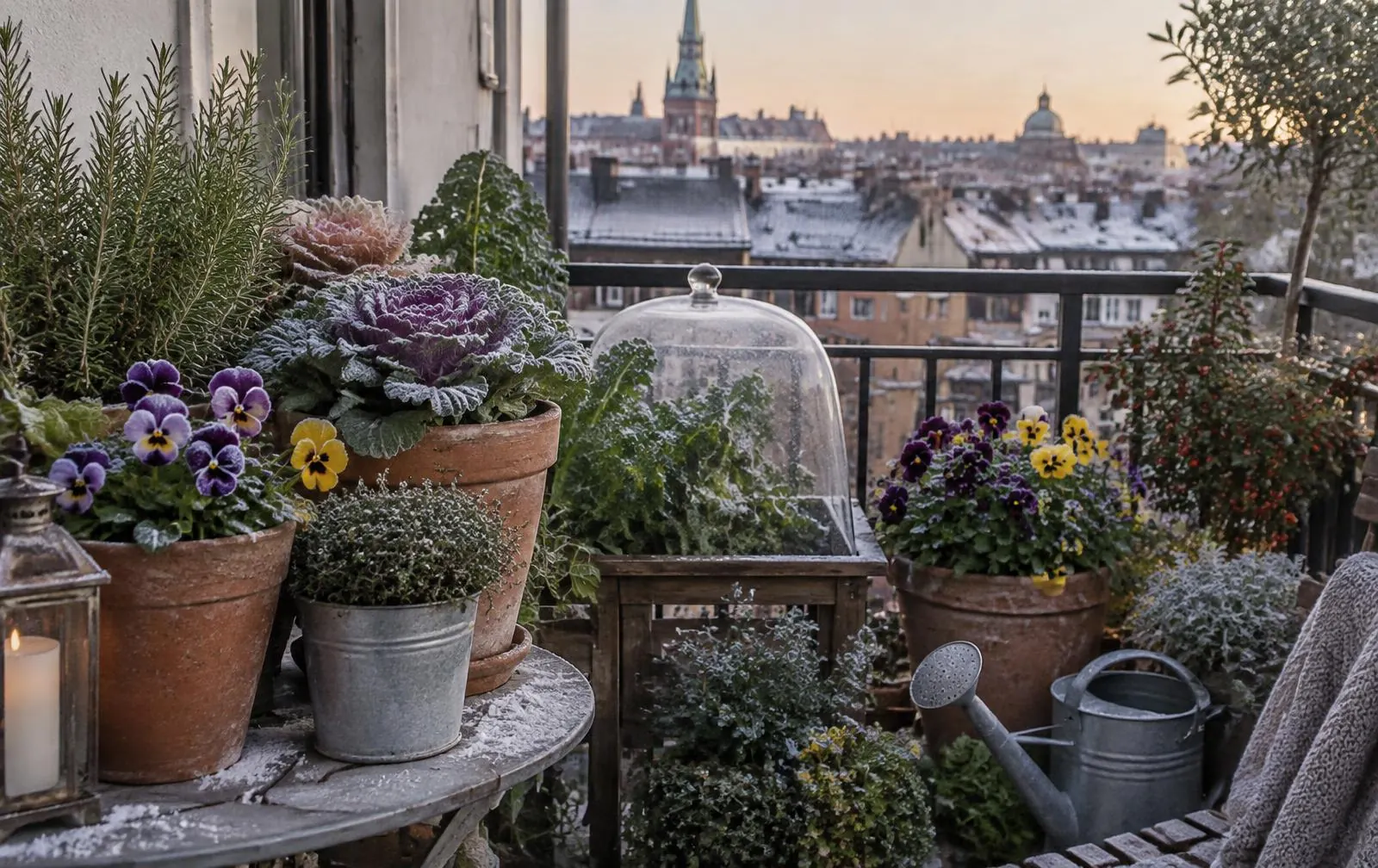
Mild weather can offer a useful window for lettuce and other cool-season crops, but cold spells, elevation and exposure still matter. Do not assume every Los Angeles balcony is frost-free. Follow local weather, the seed packet and LA extension guidance rather than importing a planting date from another city.
Start one small succession rather than filling every pot at once. Record the sowing date, sunlight and first harvest in My Garden; that is a more useful next-season reference than a generic calendar.
Apartment safety comes before a bigger harvest
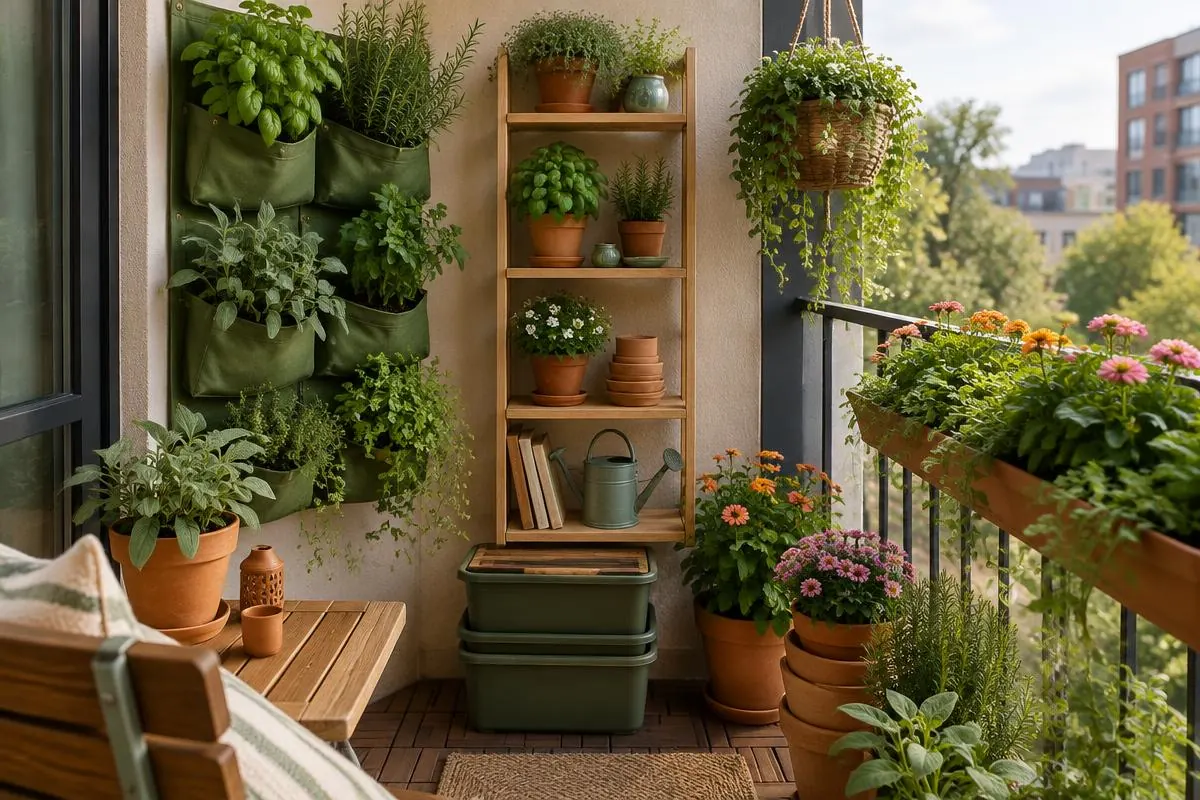
Check the lease and building rules before adding large planters, supports or railing attachments. Wet potting mix and water add weight; ask management or a qualified professional about permitted loads. Keep containers inside the balcony and walking routes unobstructed.
Keep a watering route clear and prevent water reaching neighbors. A manageable first garden is two stable floor pots, not a hanging system above a public walkway. Use the free planner to organize your measured conditions, then compare its suggestions with local guidance.
Sources
- UC Cooperative Extension, Los Angeles — Grow LA Gardens
- UC Cooperative Extension — Growing vegetables in containers
- Japan Meteorological Agency — 1991–2020 climate normals
Climate normals are long-term context. Current weather, cultivar instructions and building rules take priority.
See sample pages and current purchase details in the shop.