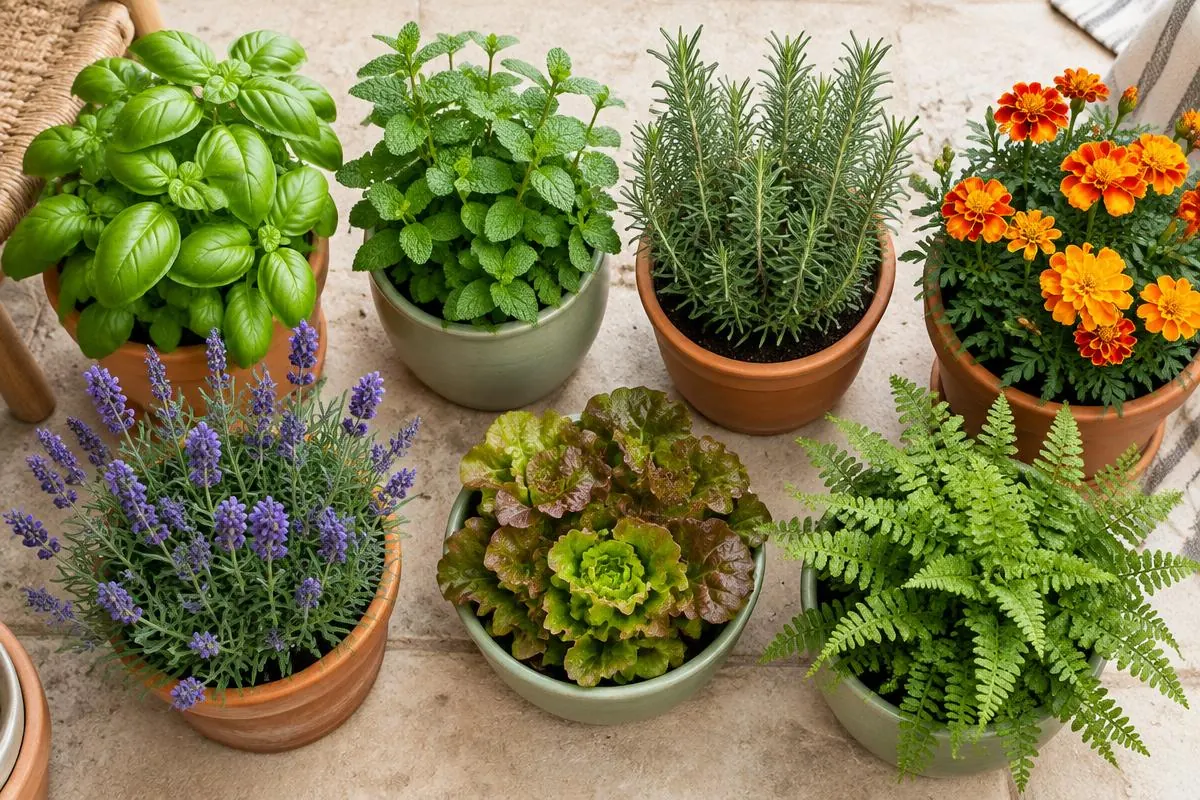
Grow basil separately from rosemary and thyme when their watering needs differ. Start with herbs you cook with, not a large mixed planter chosen only for its appearance.
Begin with the sun your pots really receive
Count direct sun at leaf level, not on the far side of the railing. Around six or more hours is a useful sunny-site starting point for many culinary herbs, but a sunlit wall can also reflect intense heat onto a small pot. Watch for afternoon stress rather than assuming more heat always means better growth.
A balcony with strong morning sun and some afternoon shade may be easier to manage than one that gets only harsh late-day exposure. Wind dries leaves and mix quickly. Arrange pots where they remain reachable and stable, with taller plants behind lower ones only if they do not shade them.
Separate plants with different water needs
A mixed planter can look convenient while hiding a practical problem: watering for basil may leave woody herbs too wet. Separate pots let you check each root zone and move a stressed plant without disturbing its neighbors. If you combine herbs, match their moisture needs, mature size and container requirements first.
Use drainage holes and a container mix. Read the mature size rather than putting a perennial herb in a tiny decorative cup. A larger suitable pot usually buffers moisture changes better than a very small one, but it must still fit your balcony’s permitted load. Do not leave water standing in saucers.
Water thoughtfully and harvest modestly
Check the mix before watering and adjust to weather, plant size and exposure. Basil should not repeatedly wilt from lack of water. Rosemary and thyme should not sit in persistently soggy mix. The difference is not a reason to ignore either plant: inspect both, then water when their conditions call for it.
Once a plant is established, take small amounts and leave enough healthy growth for recovery. Pinching basil’s growing tips can encourage branching; remove flower buds if your main goal is continued leaf production. With woody herbs, cut usable young growth rather than stripping a plant back to old bare stems. Clean scissors and a light harvest are easier on a small plant than taking everything for one meal.
Use US climate conditions to plan the season
Basil is frost-tender. In cold-winter regions, treat it as a warm-season crop or move a suitable plant indoors before cold weather, understanding that indoor light may limit growth. In a mild region, the outdoor window may be longer. Rosemary is not reliably outdoor-hardy everywhere; select a suitable cultivar and have a winter plan before buying.
In hot, dry areas, containers can heat and dry very quickly. During humid or rainy periods, drainage and airflow matter as much as sun. USDA zones help assess perennial cold exposure, not the dates to plant basil. Consult local extension guidance and read the nursery label instead of following one nationwide monthly schedule.
A practical three-pot layout
Place one basil pot where it gets useful sun and is easy to inspect, one rosemary or thyme pot in a well-drained sunny spot, and one parsley or chive pot where conditions suit it. Leave room between pots for air, a watering can and your hands. This is a trial collection, not a promise of a constant household supply.
Keep pots inside the railing, away from escape routes and protected from tipping. Record where each plant sits and how quickly its mix dries. If a plant struggles, check drainage and light before buying fertilizer. The free planner can organize the choices; My Garden can hold the observations that make next season’s choices easier.
Learn from your first harvest
Taste a few leaves and note which herb you actually use. If thyme sits untouched while basil gets picked often, expand the useful crop next time instead of expanding the number of species. Replace a struggling plant only after identifying whether the issue was water, exposure or an unsuitable season.
A printable weekly planner can complement this routine by giving you a place to write checks and small harvest goals. View the $9 USD planner’s sample pages and current checkout details in the shop; a calendar is an organizing aid, not an automatic care service.
Common questions
Can basil and rosemary share one pot?
They are often easier to manage separately because their moisture needs differ. Only combine plants when you can provide suitable root space, drainage and care for all of them.
Does full sun mean herbs cannot overheat?
No. A small container beside a reflective wall can become very hot. Inspect moisture and plant stress, especially during heat waves.
Is rosemary guaranteed to survive winter outside?
No. Cultivar, winter temperatures, drainage and container exposure matter. Check local guidance and make a protection or relocation plan.
Are culinary herbs all safe for pets?
No blanket claim is appropriate. Check the exact species with a veterinary poison-information source and prevent chewing.
Sources and further reading
These sources support the light, container-care and climate principles used here. Local crop and cultivar advice takes priority over general guidance.