Choose by local temperatures and available daylight, not a national month-by-month calendar. Roots in exposed pots are more vulnerable to cold than roots in the ground.
Choose between growing, overwintering and pausing
Cool-season planting means growing crops when conditions are mild enough for useful development. Overwintering means keeping an established plant alive through unfavorable weather; it may make little new growth. Pausing means cleaning and storing equipment until the next suitable window. All three are sensible balcony-gardening outcomes.
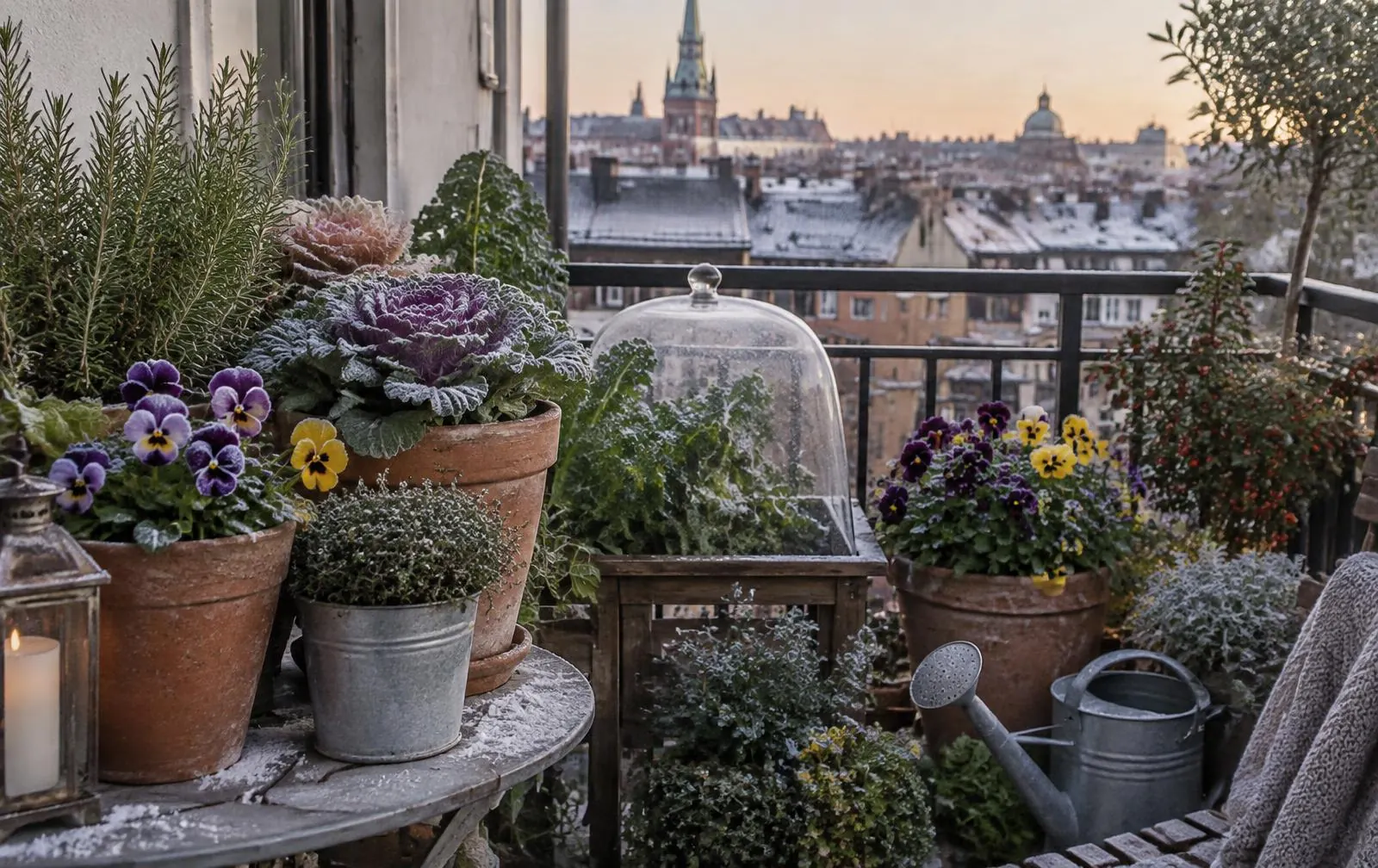
Short days and cold temperatures slow growth. A plant that tolerates a light frost is not guaranteed to survive repeated hard freezes, especially in a small exposed pot. Do not turn a photograph of a winter display into a promise of outdoor harvests in every US region.
Read your US climate before choosing the crop
In cold-winter inland and northern regions, autumn can be a short growing window before frozen containers make outdoor crops impractical. In milder coastal or southern conditions, some cool-season crops may remain usable for longer. In hot regions, the cooler part of the year can be a better opportunity for leafy crops than summer—but occasional frost still matters.
Check local extension guidance for crop timing, first-frost expectations and winter limits. USDA hardiness zones describe average annual extreme minimum temperatures; they are not sowing calendars and do not account for all balcony exposure. An upper-floor pot with wind and little protection can behave differently from a garden bed in the same zone.
| Your local conditions | Possible project | Main limit |
|---|---|---|
| Mild cool weather, useful daylight | Trial a cool-season leafy crop | Crop-specific heat or frost sensitivity |
| Occasional light frost | Protect suitable established plants and monitor forecasts | Light-frost tolerance is not hard-freeze tolerance |
| Repeated freezing or long dark periods | Relocate suitable plants or pause outdoor food growing | Exposed roots and very slow growth |
| Warm winter with occasional cold snaps | Use local cool-season crop guidance | Do not assume frost is impossible |
Choose crops or color with realistic expectations
Leafy crops such as lettuce, spinach or kale can be candidates for a locally suitable cool-season window. Varieties differ in their cold tolerance, and a seedling needs time to establish before severe weather. Use the seed packet and local guidance to decide whether to sow, buy plants or wait. A mature kale plant’s tolerance does not tell you what a new lettuce seedling can survive.
For seasonal color, pansies and violas can tolerate cool weather and some light frost, but conditions and cultivars still matter. Check plant labels and veterinary poison information if pets can reach ornamental plants. Rosemary is not a universal winter survivor; cultivar, drainage and actual cold exposure decide whether it needs protection or relocation.
Protect roots and drainage before decorating
Container roots have less insulation than roots in the ground. Use a pot material suitable for your climate and inspect for damage. Water expands when it freezes, so unsuitable waterlogged containers can crack. Keep drainage holes open; do not wrap or cover a pot in a way that traps water around its base.
Where permitted and safe, grouping suitable pots in a sheltered position can reduce exposure. Protection can moderate conditions but cannot guarantee survival in a hard freeze. Do not add heavy insulation or improvised structures without checking loads, wind and fire/access safety. Keep all pots inside the balcony boundary and leave escape routes and building drains open.
Check moisture and forecast changes
Cool-weather pots may need water less often, but dry winter winds can still remove moisture. Inspect the mix during suitable unfrozen conditions, water when needed and allow drainage. Do not use a fixed summer schedule through winter. Avoid letting saucers hold water that can keep roots wet or freeze.
A light cover may help a suitable crop through a short cold spell, but it is not a heated greenhouse. Secure any permitted cover safely, ventilate when conditions warm and keep it from damaging foliage. Weather forecasts and the actual plant condition should guide the response, not a weekly reminder alone.
Move tender plants only if indoors is suitable
Bring frost-tender plants inside before cold damages them if you have appropriate light and space. Inspect for pests before moving a plant into the home, and keep it away from pets if its safety is uncertain. Indoor conditions differ from an outdoor summer balcony; warmth without useful light does not ensure healthy growth.
If you cannot provide suitable indoor conditions, it can be reasonable to finish the season and restart later. Remove failed or spent growth, clean reusable containers and tools, and follow local disposal guidance for diseased material. Keeping an empty, safe balcony is better than maintaining unstable pots simply to avoid a seasonal pause.
Write a seasonal decision, not a watering promise
In My Garden, record the plant variety, forecast lows, protection you used and the condition afterward. These observations help you learn what your particular balcony can support. Revisit the free AI planner when changing crops, and confirm any suggestion with local frost and plant-label advice.
If you prefer paper, view the sample pages and current checkout details for the $9 USD weekly planner. Use the seasonal checklist to decide what to keep outside, what to move and what to pause. The planner organizes your observations; it does not guarantee winter survival or send care automatically.
Common questions
Can every US balcony grow vegetables all winter?
No. Local cold, daylight and exposed roots can make outdoor growing impractical. Mild climates offer more possibilities, but crop and variety still matter.
Does frost-tolerant mean freeze-proof?
No. Light-frost tolerance does not guarantee survival through prolonged hard freezes, especially in pots.
Should I stop watering in winter?
Do not use a blanket rule. Inspect moisture when the mix is unfrozen and conditions are suitable; plants can still dry out, particularly in wind.
Does a USDA zone give my fall sowing date?
No. It describes average annual extreme minimum temperatures. Use local crop timing and frost guidance instead.
Sources and further reading
These sources support the light, container-care and climate principles used here. Local crop and cultivar advice takes priority over general guidance.
- Oregon State University Extension — Container vegetables
- University of Minnesota Extension — What hardiness zones tell you
- 農林水産省・東北農政局 — 東北の野菜生産と気候
- University of Minnesota Extension — Bringing plants indoors for winter
- University of Illinois Extension — Container size
- University of Minnesota Extension — Watering and fertilizing containers