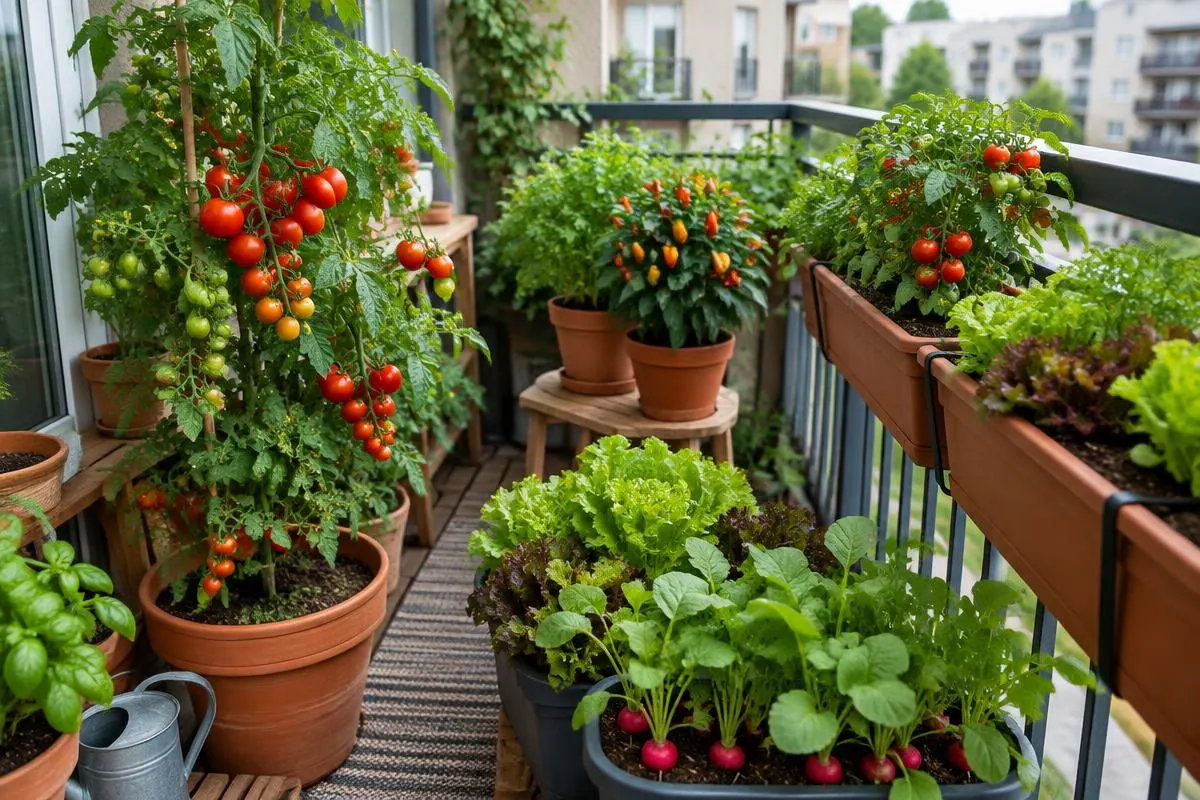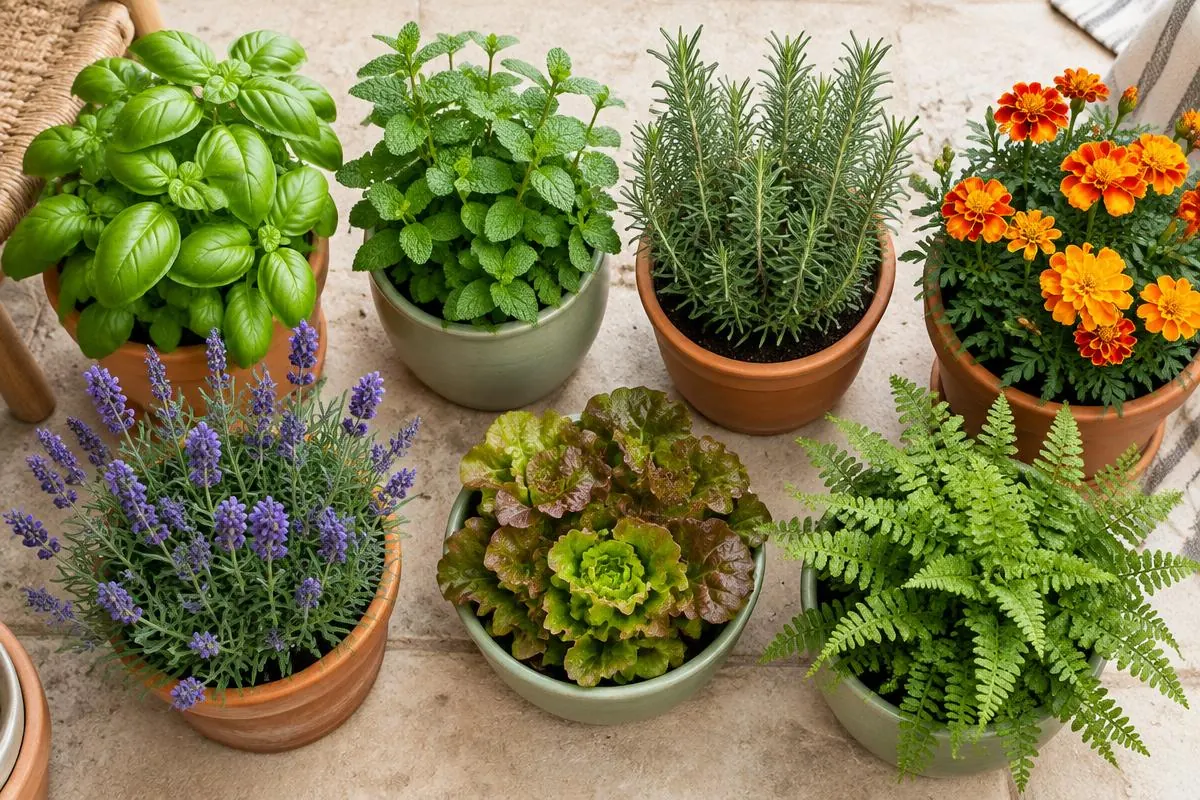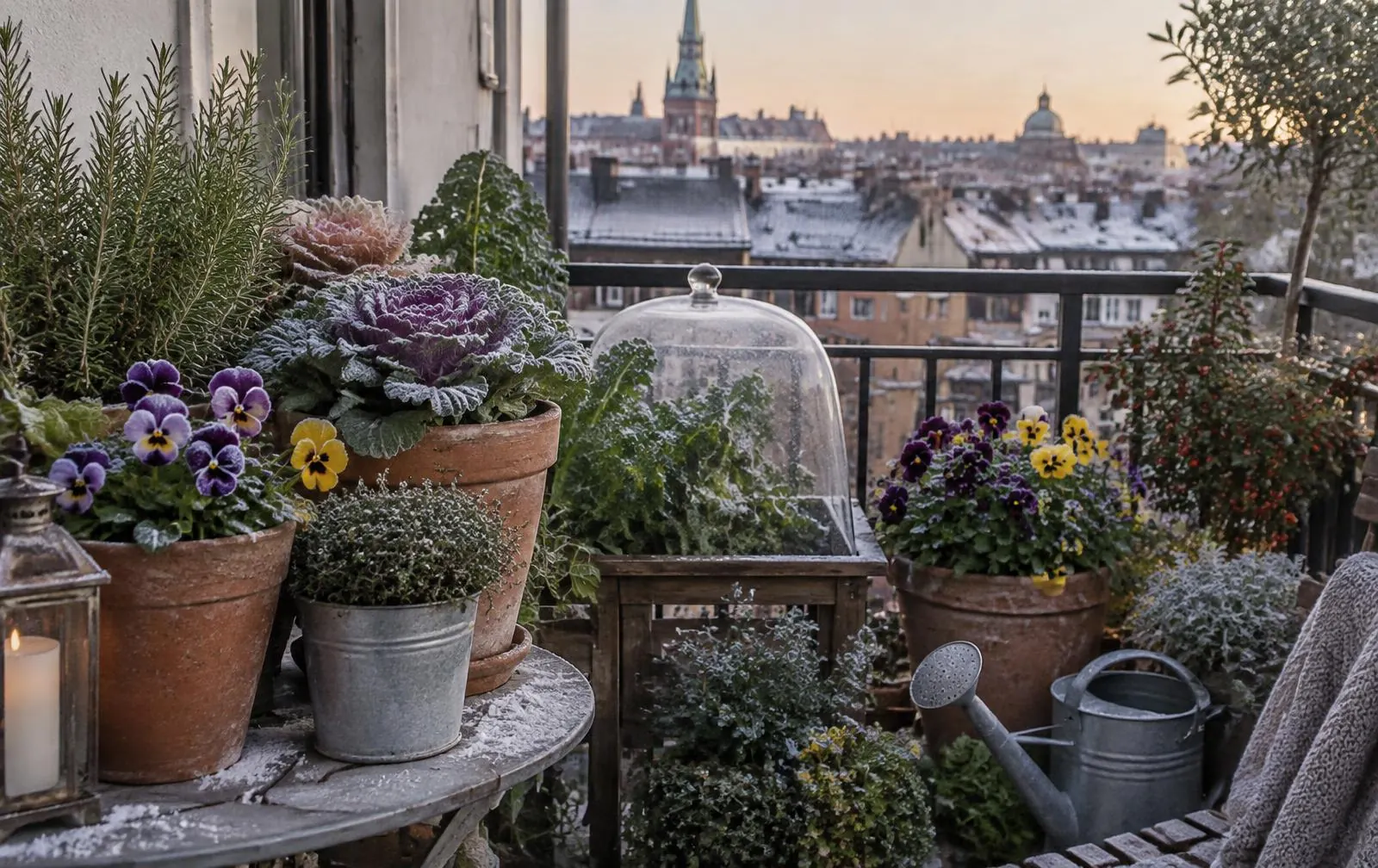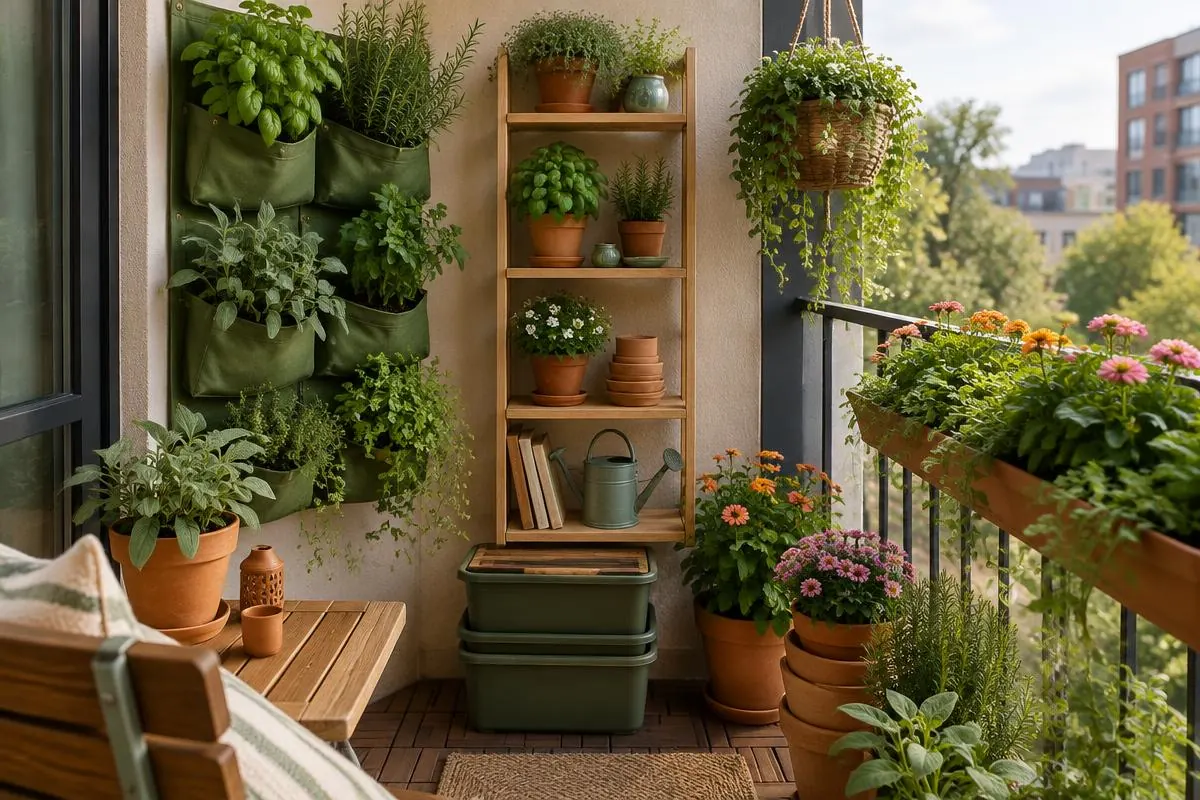
First distinguish a few hours of direct sun with bright shade from dense shade all day. Choose a small trial planting and judge the new growth before adding more.
1. Make a light map, not a compass guess
Observe the pot’s intended position at several points during a clear day. Record direct sunlight separately from bright indirect light. A north-facing balcony may receive some summer sun; a south-facing one may sit behind an overhang or neighboring building. Orientation alone cannot tell you whether a lettuce plant will grow.
Repeat your check when the season changes or trees leaf out. A shelf close to the wall can be much darker than the floor near the balcony opening. Avoid moving plants outside the railing to gain light: safety and building rules still come first. Take a photograph from the same spot to make seasonal changes easier to compare.
2. Choose the goal that matches the light
With some direct sun and bright conditions for the rest of the day, leafy crops are a more sensible first trial than tomatoes and peppers. Leaf lettuce, mustard greens and parsley are possible candidates, with slower growth and smaller harvests than a well-lit planting. The exact result depends on season, variety and the strength of the available light.
In dense shade, do not promise an edible garden. A locally suitable shade-tolerant foliage plant may be a better goal, but shade tolerance is not tolerance of no light. Use a reputable local plant label for outdoor hardiness and verify pet toxicity for any ornamental species you consider.
| Light pattern | A useful first step | Expectation to avoid |
|---|---|---|
| A few hours of direct sun, then bright shade | Trial a small leafy crop or parsley pot | The same yield as a sunny site |
| Little direct sun, but an open bright outlook | Assess suitable shade-tolerant foliage; trial cautiously | Reliable fruiting vegetables |
| Deep enclosed shade all day | Find a brighter approved location | Plants that thrive without useful light |
3. Use a small leafy-crop trial
Start one container instead of filling the whole balcony. Choose the sowing season recommended locally for that crop, and give seedlings the spacing on their packet or label. Record where the pot sits, then watch new growth. Long weak stems, leaning or very slow development are reasons to reconsider the spot rather than automatically adding fertilizer.
Harvest modestly once plants are established. Taking a few outer lettuce leaves is a different goal from expecting full heads on a low-light balcony. Keep the trial long enough to learn whether the space is useful, but do not keep replacing failed crops without changing the conditions.
4. Adjust water and airflow, not just plant choice
A shaded pot often loses water more slowly than one in sun. Check moisture before watering; do not copy a sunny-balcony daily schedule. Drainage holes remain essential, and standing water in a saucer should be emptied. Air can be still in a sheltered balcony, so leave space between plants and check leaf undersides and crowded growth.
Do not overfeed in the hope of replacing light. Fertilizer supplies nutrients; it does not supply the energy a plant gets from sunlight. Pale or yellow foliage can have several causes, including wet roots, nutrient problems or insufficient light. Check the whole situation rather than diagnosing from one leaf.
5. Use season and region to refine the choice
In colder parts of the US, winter sun is shorter and temperatures may prevent useful outdoor crop growth even if a summer trial worked. In hot areas, some afternoon shade can reduce stress, but it does not make all low-light sites productive. A leafy crop suited to cool conditions can still struggle in a hot balcony microclimate.
Use local extension guidance for sowing windows and local frost conditions. USDA hardiness zones describe minimum winter temperatures, not how much sun your balcony receives or when vegetables should be planted. For Japanese regional examples, switch to the Japanese edition; do not transfer a US planting month to a different climate.
6. Improve the usable space without unsafe shortcuts
Try the brightest approved floor position and avoid overcrowding. Low shelves can help only if they are stable, permitted and do not block escape routes; a plant stand does not create sunlight. Keep drainage and access clear and do not install heavy overhead structures or reflective panels without considering safety, neighbors and building rules.
If the site cannot support the crop you want, change the goal. Grow a locally suitable foliage plant, use a brighter permitted indoor position with appropriate conditions, or postpone food growing until you have a better spot. Choosing not to buy an unsuitable tomato is a successful planning decision, not a gardening failure.
Make a two-part record: light and growth
Put your measured direct-sun hours into the free AI planner rather than selecting a sunnier option to get more plant suggestions. Its recommendations still need checking against the actual site and plant label. Save the plant choice and your observations in My Garden so next season’s trial starts from evidence.
A written weekly check can focus on new leaves, moisture and changing shadows. View sample pages and current checkout details for the $9 USD weekly planner if you prefer paper. No calendar or AI response can turn dense shade into a fruiting-crop site.
Common questions
Can I grow tomatoes with two hours of sun?
You may keep a plant alive, but useful fruit production is unlikely compared with a site receiving about 6–8 hours of direct sun. A small leafy-crop trial is more realistic.
Is a north-facing balcony always too dark?
No. Nearby buildings, overhangs, latitude and seasonal sun angles matter. Measure the light at the actual pot position.
Should I water shade plants less often?
They may use water more slowly, but inspect the mix rather than adopting a fixed interval. Pot size, wind and plant growth still affect drying.
Will fertilizer fix a lack of sunlight?
No. Nutrients cannot replace light. Check exposure, drainage and crop suitability before changing the feeding routine.
Sources and further reading
These sources support the light, container-care and climate principles used here. Local crop and cultivar advice takes priority over general guidance.