Begin with one leafy crop and one herb. Add a fruiting vegetable only if your balcony gets enough direct sun and can safely hold a larger pot.
1. Check the balcony before buying plants
Measure the floor space you can use without blocking the door, access routes or drainage. Check the lease and building rules before placing heavy containers or attaching anything to a railing. Wet potting mix, water and a mature plant all add weight; ask building management or a qualified professional about permitted loads rather than estimating from a photograph.
A broad-based pot on the floor is often easier to keep stable than a tall, narrow planter. Keep containers inside the balcony boundary and away from exposed edges. If wind funnels around the building, start with low-growing crops and do not install a wind screen without checking its fixings and your building’s rules.
- Keep an unobstructed walking and watering route.
- Avoid runoff onto neighboring balconies.
- Do not drill, fasten to shared railings or hang pots outside the balcony without permission.
2. Match crops to direct sunlight
Watch the exact spot where each pot will sit on a clear day. Note when direct sun begins and ends; the hours can be split between morning and afternoon. Check again as the season changes. A south-facing balcony can still be shaded by a building, and a bright view does not necessarily mean direct sunlight reaches the leaves.
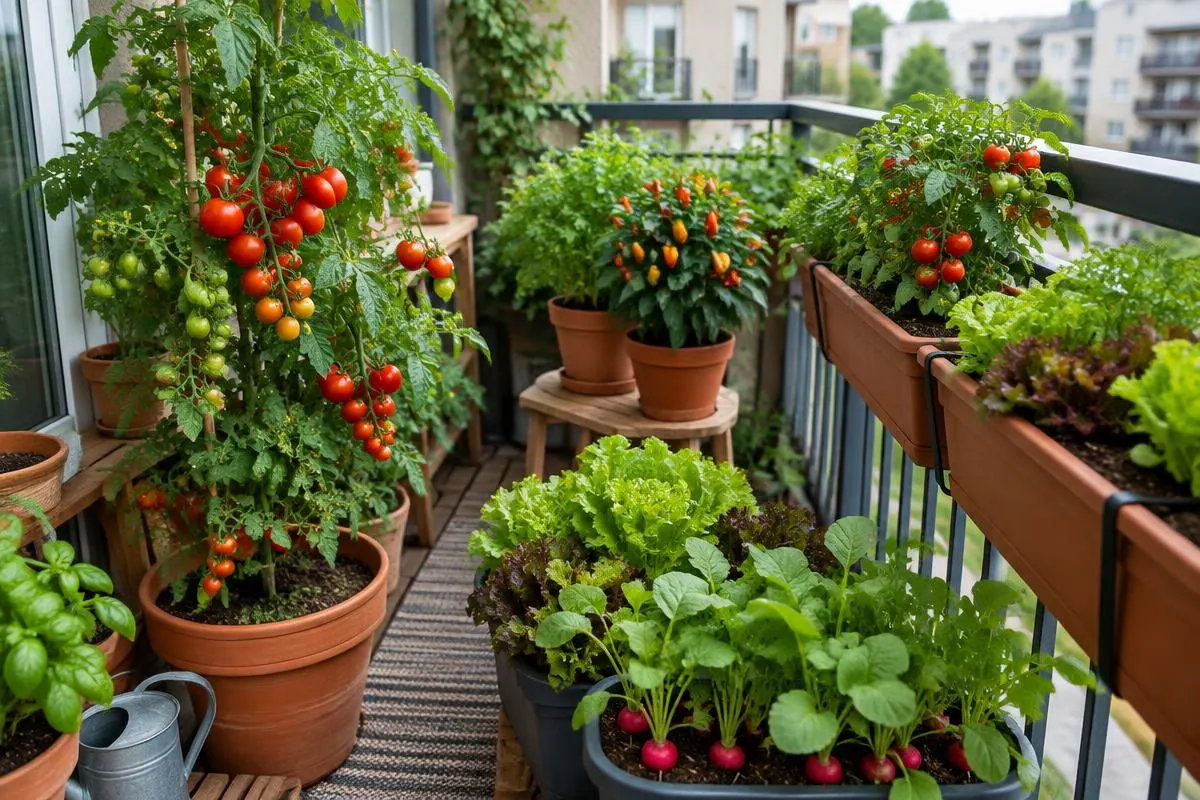
Tomatoes and peppers generally need about 6–8 hours of direct sun for useful fruit production. With less sun, start with leafy greens rather than expecting a tomato harvest. Some leafy and root crops tolerate light shade, but they still need useful light; a deeply shaded balcony is not a reliable food-growing space.
| Your conditions | A reasonable first trial | What to postpone |
|---|---|---|
| Around 6–8 hours of direct sun | One compact tomato plus a separate herb pot | Several large fruiting plants |
| Some direct sun and bright shade | Leaf lettuce or a small parsley planting | High-yield tomato promises |
| Dense shade for most of the day | Assess whether another spot is brighter | Buying a full vegetable collection |
3. Choose crops you will actually use
Choose one quick, modest crop and learn from it. Leaf lettuce lets you harvest a few outer leaves while leaving the growing center intact. Radishes are another small-space option, but crowded roots and low light can disappoint, so follow the packet’s spacing and sowing guidance. Parsley is useful when you want small, repeated kitchen harvests.
If the light and space are suitable, choose one compact or container-labeled tomato rather than a vigorous plant that needs a very large support. “Dwarf” does not mean rootless: read the mature size and container guidance on the nursery label. A healthy seedling is often a simpler first step than starting every crop from seed.
4. Give roots drainage and room
Use containers with open drainage holes and a fresh potting mix intended for containers. Ground soil can compact in pots and make drainage unpredictable. Match pot size to the mature crop, not to the small seedling you bring home; a tomato needs much more root room than a few salad leaves.
Follow the variety’s container recommendation and keep the drainage route clear. Do not add a gravel layer as a substitute for drainage holes. Use a saucer only where needed to control runoff, then empty collected water rather than leaving roots standing in it. Plan supports before a plant becomes tall and difficult to move.
5. Plant for your US climate, not a universal month
In a cold-winter region, warm-season vegetables such as tomatoes go outside after local frost risk has passed and temperatures suit the crop. In a mild coastal climate the useful window may be longer. In hot areas, summer heat can make cool-season lettuce a poor choice even when the balcony gets plenty of light. Local extension guidance and the seed packet are more useful than a nationwide “plant in April” rule.
USDA hardiness zones describe average annual extreme minimum temperatures, mainly to help assess perennial winter survival. They are not vegetable sowing calendars. Your elevation, frost dates, exposure and the heat reflected from walls affect the conditions a pot actually experiences. If you are gardening in Japan, use the Japanese edition for regional examples rather than importing US dates.
6. Build an observation habit, not a rigid watering schedule
Feel the potting mix and check how heavy the pot feels before watering. When it needs water, wet the root zone thoroughly and let excess drain away. A windy sunny balcony may dry containers quickly, while a cool shaded one may stay damp. Neither daily watering nor weekly watering is right for every pot.
Feed according to the potting-mix and fertilizer labels; more fertilizer does not repair poor light. Check leaf undersides and new growth for pests before problems spread. Avoid spraying edible plants with a household remedy or pesticide unless it is labeled for that crop and use. Record what you see so you can adjust one thing at a time.
Your first-week plan
Use the first few days to learn the space rather than fill it. Measure sunlight, confirm building rules and choose your two initial crops. Then buy suitable pots, plant at the recommended depth and spacing, and make the first watering check part of an existing routine.
In My Garden, note the crop name, planting date, sunlight and observations. Treat a care task as a prompt to inspect the plant, not proof it needs water. The free AI planner can help organize your choices, but confirm its suggestions against your local conditions and the plant label.
- Day one: measure light and usable space.
- Before planting: confirm pot size, drainage and crop timing.
- After planting: observe moisture, wind and leaf condition.
- End of the week: keep what works and adjust one variable.
Common questions
Can I grow vegetables on a rented balcony?
Often, but the lease and building rules decide what is allowed. Check load limits, drainage, shared access and railing restrictions before setting up containers.
Should a beginner start with seeds or seedlings?
Seedlings can simplify a first herb or tomato crop. Direct sowing suits crops such as radishes when local conditions are suitable. Follow the crop’s planting instructions rather than using one method for everything.
How many pots should I start with?
Two or three is a manageable trial if the balcony can safely hold them. Space them so you can reach every plant and check its moisture.
Will the AI planner guarantee a harvest?
No. It can suggest a plan, but sunlight, weather, plant health and daily care determine the outcome. Check the advice against local guidance.
Sources and further reading
These sources support the light, container-care and climate principles used here. Local crop and cultivar advice takes priority over general guidance.